
Why Your Microservices Are Failing: 5 Common Architectural Pitfalls
Learn why microservices fail and how to fix common architectural mistakes in distributed systems.

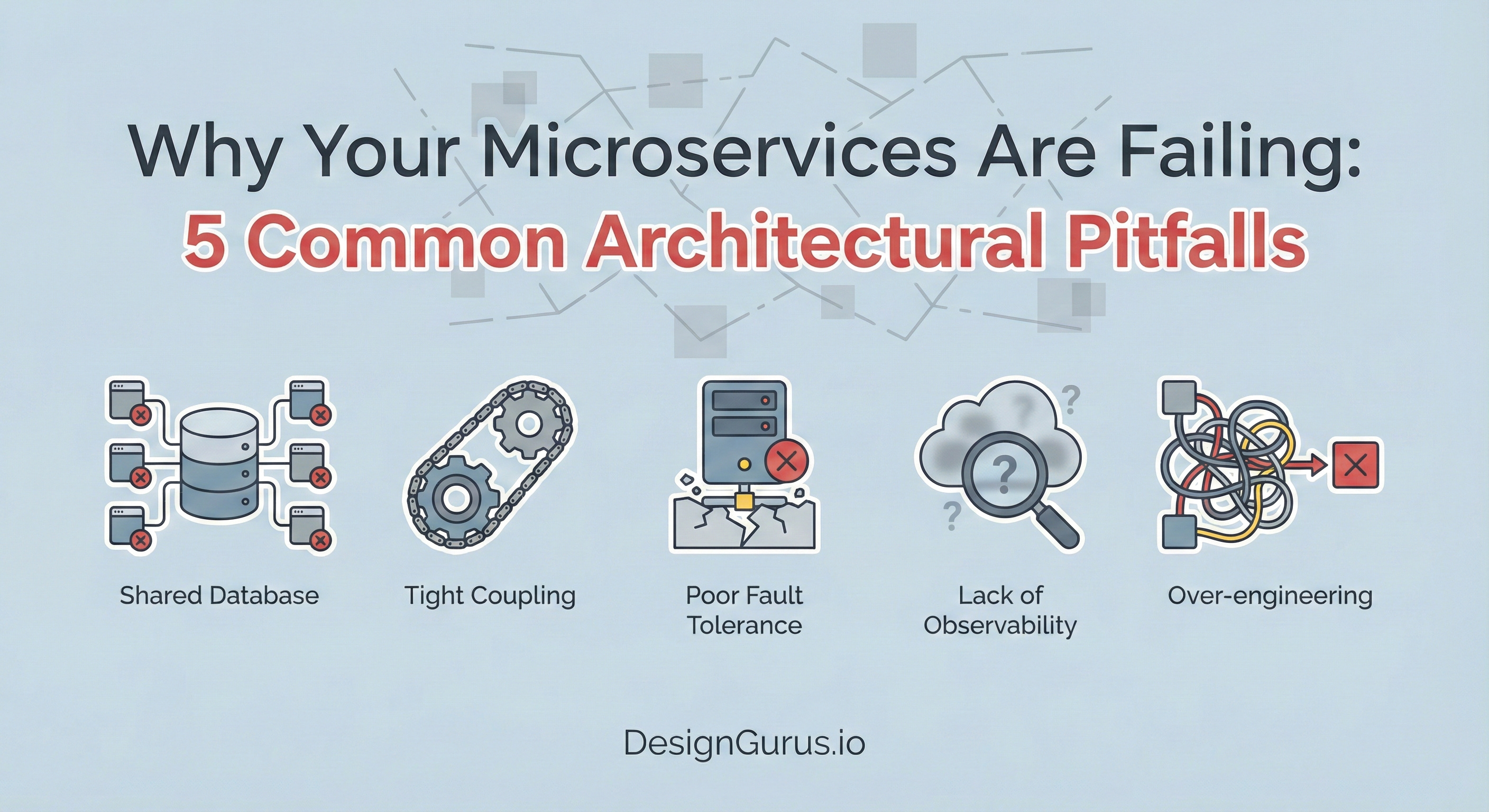
A high-traffic e-commerce platform crashes during a major sale event despite having bug-free code and powerful servers.
The database is not overloaded, and the network is stable, yet requests are timing out, and the system is unresponsive. This scenario is a classic example of a failure caused not by implementation details, but by architectural design.
As organizations transition from monolithic applications to distributed systems, they often encounter a paradox where the system becomes more fragile despite being composed of independent parts.
The shift to microservices introduces a set of complex challenges that do not exist in single-process applications.
In a monolith, function calls are instant and reliable. In a distributed architecture, components communicate over an unreliable network, introducing latency and failure modes that can cascade through the entire ecosystem.
Without a fundamental understanding of these distributed patterns, engineering teams risk building a system that incurs all the costs of microservices without reaping any of the benefits.
1. The Distributed Monolith
The most prevalent error in modern system design is the creation of a distributed monolith.
This occurs when an application is split into separate deployable services, yet those services remain tightly coupled in their logic and behavior.
A true microservice is autonomous; it should be able to function, fail, and be updated without coordinating with other services. When this autonomy is missing, the system loses its agility.
The Mechanism of Coupling
Coupling describes how much one module depends on another.
In a distributed system, tight coupling is dangerous because it binds the availability of one service to another. This often happens when services are separated by technical layers rather than business domains.
For instance, creating a “Data Service” that only handles database queries and a “Business Service” that contains logic creates an immediate dependency.
The Business Service cannot function if the Data Service is down.
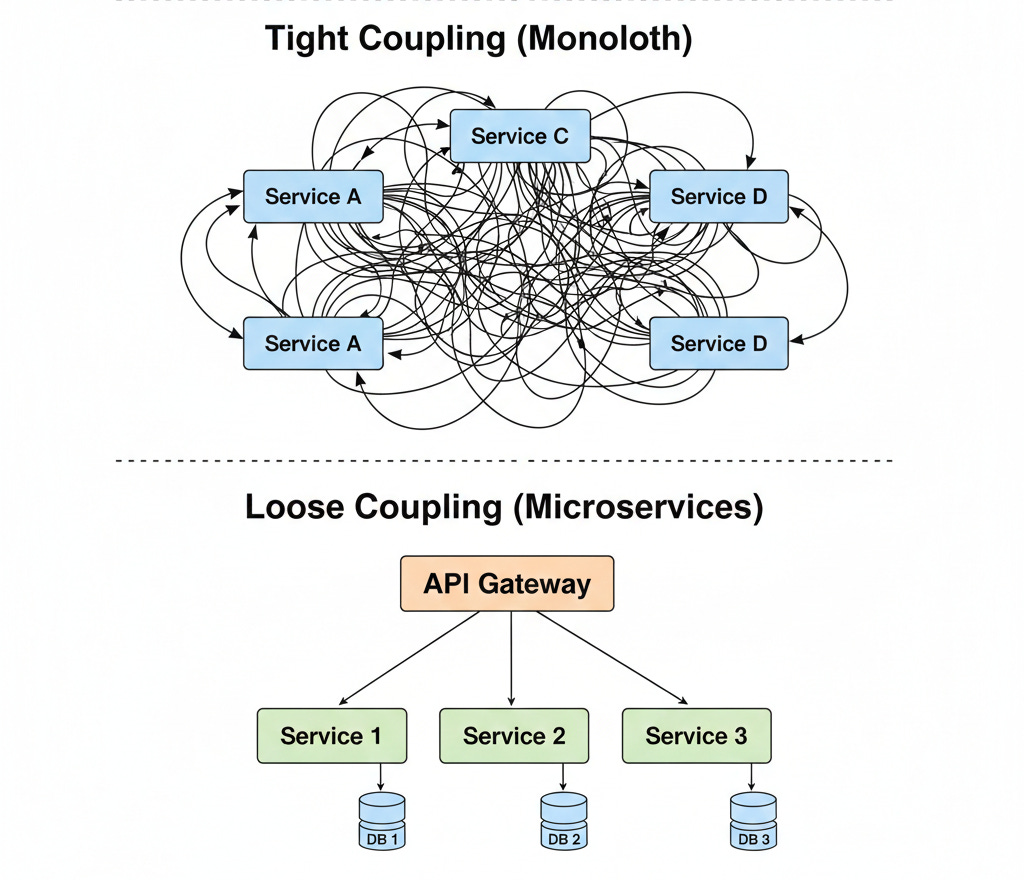
Furthermore, any change to the Data Service API forces the Business Service to be updated. This defeats the purpose of splitting them in the first place.
The network boundary adds latency, but the logic remains as entangled as it was in the monolith.
The Consequence: Deployment Deadlocks
The clearest symptom of a distributed monolith is the inability to deploy a single service independently.
If an update to Service A requires a simultaneous update to Service B to avoid errors, the architecture has failed.
This forces teams to coordinate release schedules, creating “lock-step” deployments.
Instead of enabling teams to move faster, the architecture slows them down. The organization incurs the operational complexity of managing multiple servers but retains the slow release cycles of a legacy application.
The Solution: Bounded Contexts
To solve this, architects must define service boundaries using Bounded Contexts. This principle ensures that a service contains everything it needs (data, logic, and interface) to perform a specific business function.
A “Pricing Service” should calculate prices, store pricing history, and validate currency without needing to query a “Product Service” for every request.
By keeping internal mechanics hidden and exposing only a stable API, services can evolve independently.
2. The Shared Database Trap
Data management is often the most difficult aspect of distributed system design.
A frequent mistake made by teams transitioning from a monolith is to spin up multiple microservices that all connect to a single, centralized database. This approach seems efficient because it simplifies reporting and ensures data consistency, but it is a critical architectural flaw.
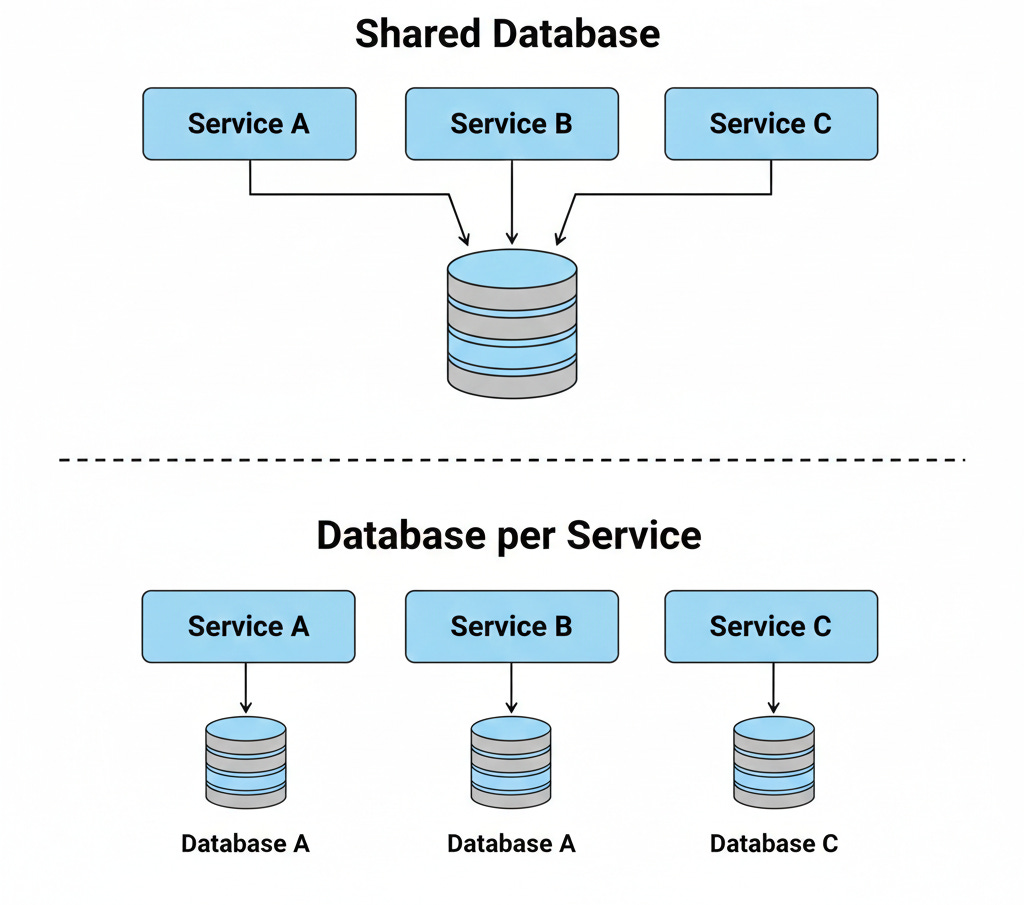
The Illusion of Decoupling
When multiple services read and write to the same database tables, they are coupled at the data layer.
Keep reading with a 7-day free trial
Subscribe to System Design Nuggets to keep reading this post and get 7 days of free access to the full post archives.