
A Guide to Modern Microservices [2026 Edition]
A guide to moving from monoliths to microservices: API gateways, service boundaries, sync vs event driven communication, and real world design tips.

Modern tech companies love to talk about microservices.
But if you are preparing for interviews, it can feel confusing.
You hear phrases like service mesh, gateway, saga, and event-driven.
You see complex diagrams filled with boxes and arrows.
And you think, “Do I really need all of this just to build an app?”
This guide will make microservices feel clear, visual, and practical.
You will see how requests move through a system, why services are split, and what patterns interviewers want to hear.
Think of it as a map of how real-world microservice architectures look and behave.
Let’s get started!
What Microservices Really Are
Microservices are not just “breaking a monolith into many small pieces.”
They are a way to organize your system around business capabilities.
Each microservice is a small, focused application.
It owns one clear responsibility and its own data.
Instead of one big codebase and one big database, you have many smaller ones.
Teams can work on different services in parallel without stepping on each other.
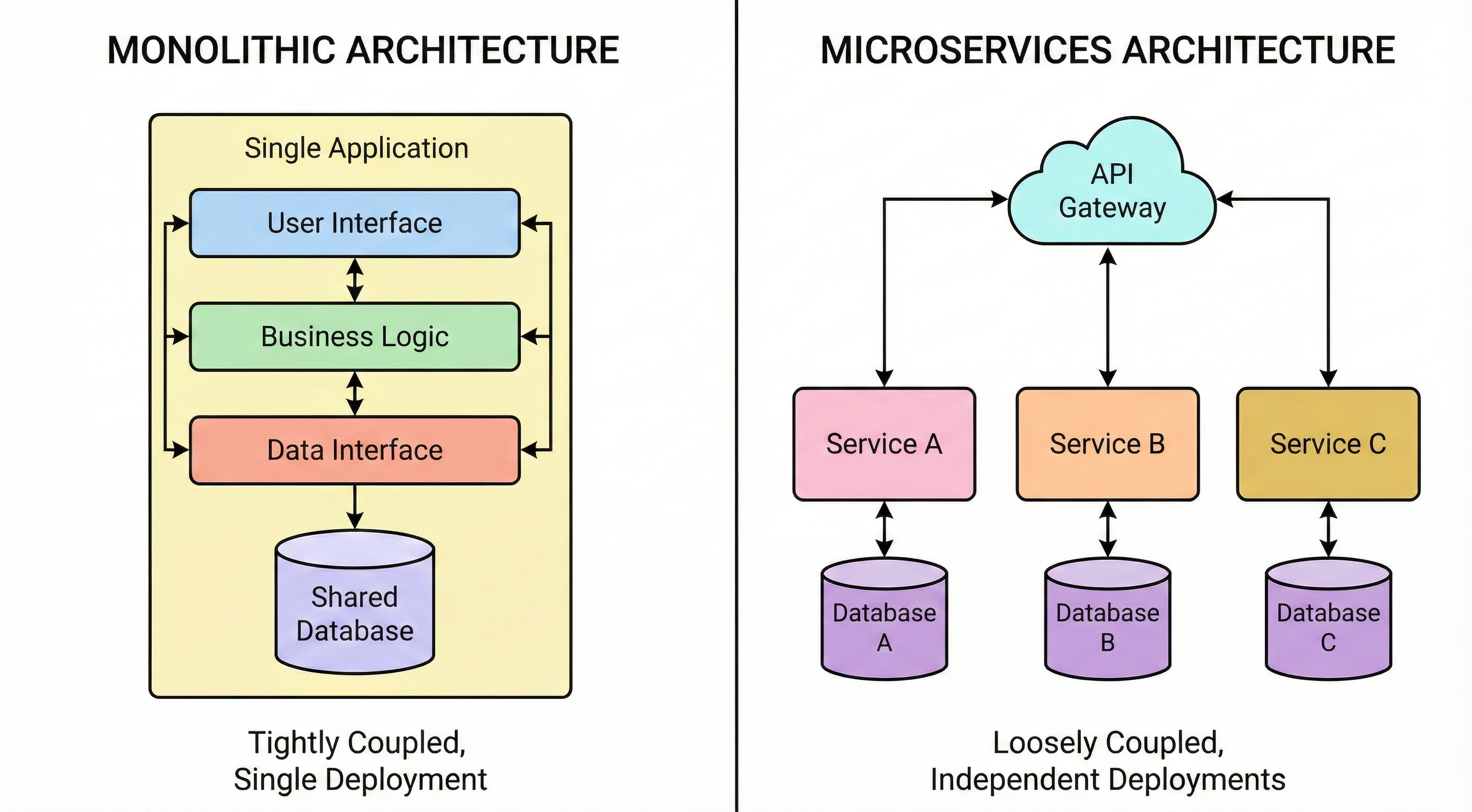
In interviews, you should think in terms of responsibilities, not just splitting code.
For example, a “Payments Service” handles payments.
It does not also try to handle user signup or search.
Why Companies Choose Microservices
There are three big reasons companies move to microservices.
First, independent deployment.
You can deploy one service without redeploying the entire system.
Second, team ownership.
Each team can own a service end to end, from code to storage to alerts.
Third, scaling flexibility.
You can scale the hot services more than the cold ones.
For example, scale the “Search Service” more than the “Admin Service.”
Of course, microservices also add complexity.
You now have network calls between services, more failure points, and more monitoring. That is why you should learn how to design them properly.
From Monolith to Microservices
Before microservices, most systems start as a simple monolith.
One codebase.
One database.
For a small product or early startup, this is totally fine.
The problems show up when the team grows and features explode.
You start to see:
Releases blocked because different teams share the same code
A single bug taking down the entire application
One slow query affecting every endpoint
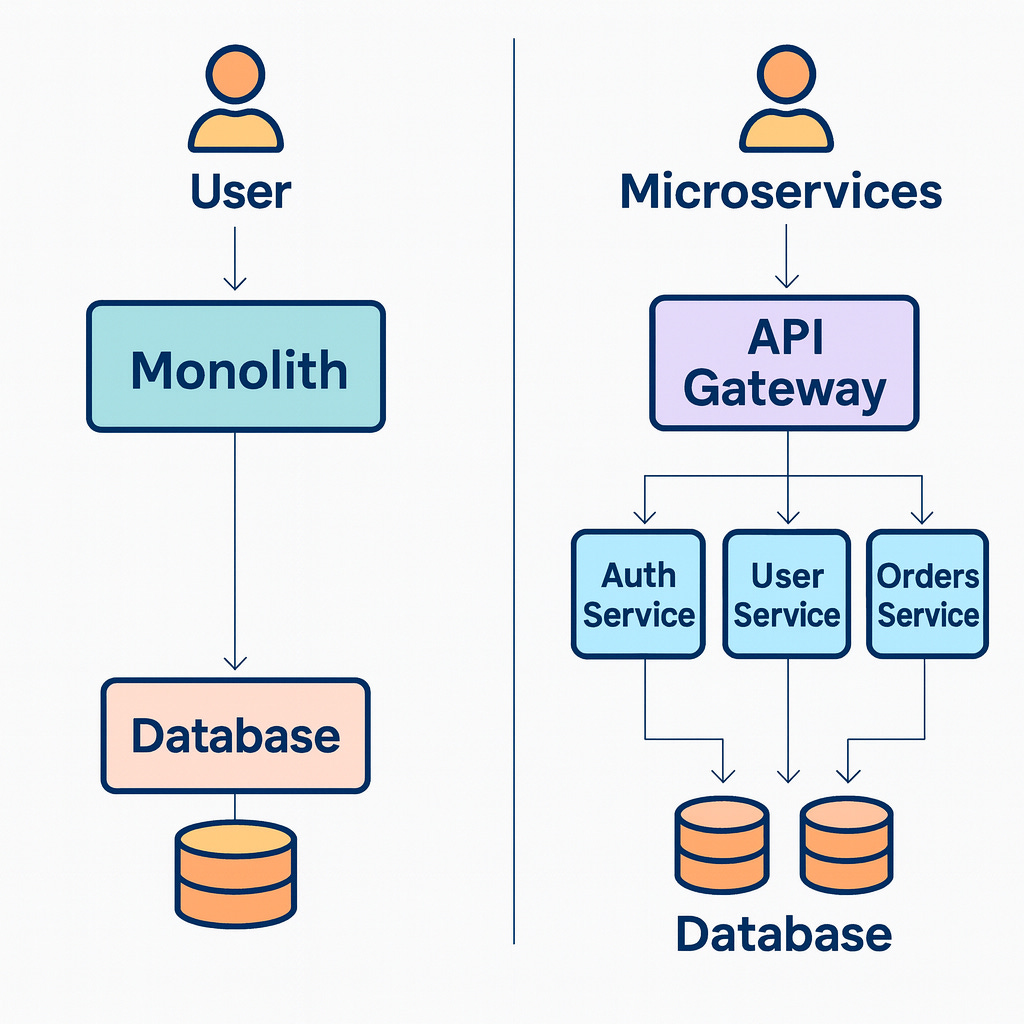
In interviews, it is good to say that you would start simple.
Then move to microservices when you feel pain in deployment, ownership, or scaling.
How To Find Good Service Boundaries
The core question in microservices is “Where do we draw the lines?”
Good boundaries usually follow business capabilities.
Examples are: Auth, User Profile, Catalog, Orders, Payments, Notifications.
Each service:
Owns its own data
Has a clear API
Can be understood by one small team
Bad boundaries are often technical only.
For example, “Controller Service,” “Repository Service,” “Util Service.”
These do not match how the business thinks or works.
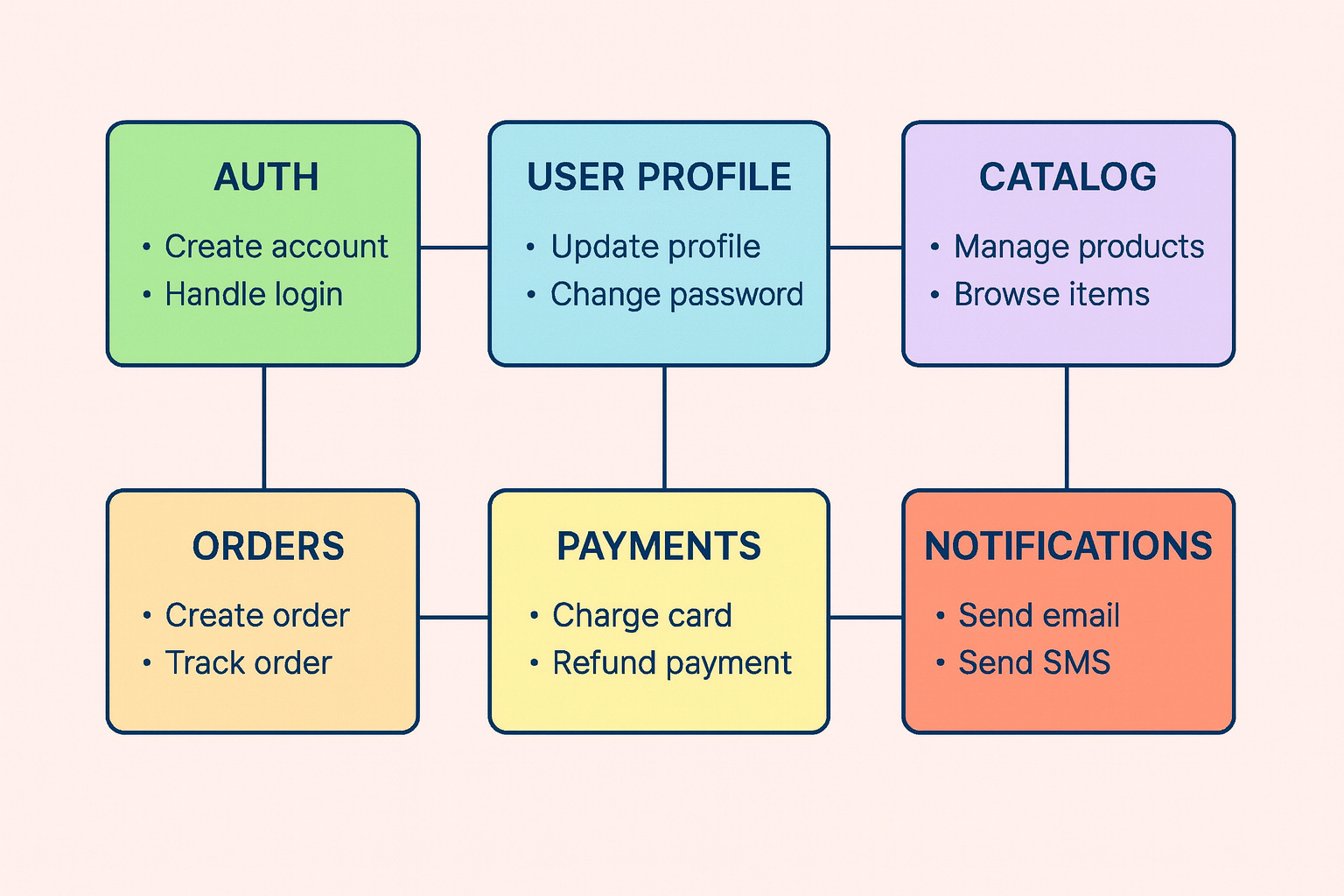
In interviews, you can say you use domain-driven thinking.
Start from the user journey and split services around real user actions and workflows.
Sync vs Async Communication
Microservices must talk to each other.
There are two main ways to do that.
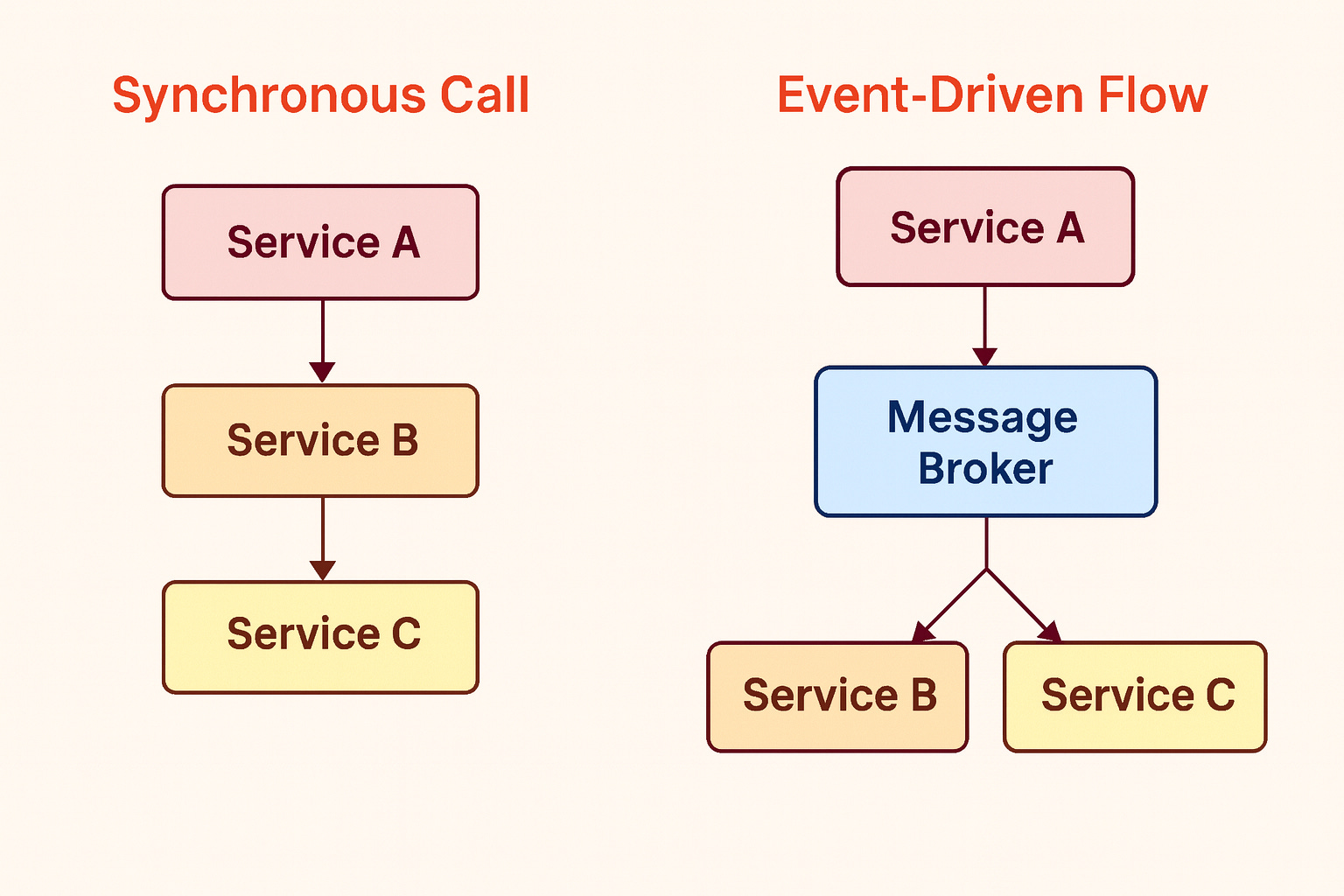
Synchronous calls are direct.
Service A calls Service B and waits for a response.
This is common for user-facing requests that need fast answers.
Asynchronous calls use events or messages.
Service A publishes an event.
Service B picks it up later from a queue or topic.
Use synchronous calls when:
The user is waiting for a response
You need an immediate answer
The chain is short and small
Use asynchronous events when:
You are doing background work
You want loose coupling
You can tolerate a slight delay
In interviews, it is impressive if you mention both. For example, “I will use synchronous calls for the main request path and events for sending email or analytics.”
The Role of the API Gateway
Users do not talk to every service directly. That would be chaos.
Instead, clients talk to one entry point called an API Gateway.
The gateway routes the request to the correct service.
The gateway often handles:
Authentication and authorization
Rate limiting and quotas
Routing to different services and versions
Basic request validation
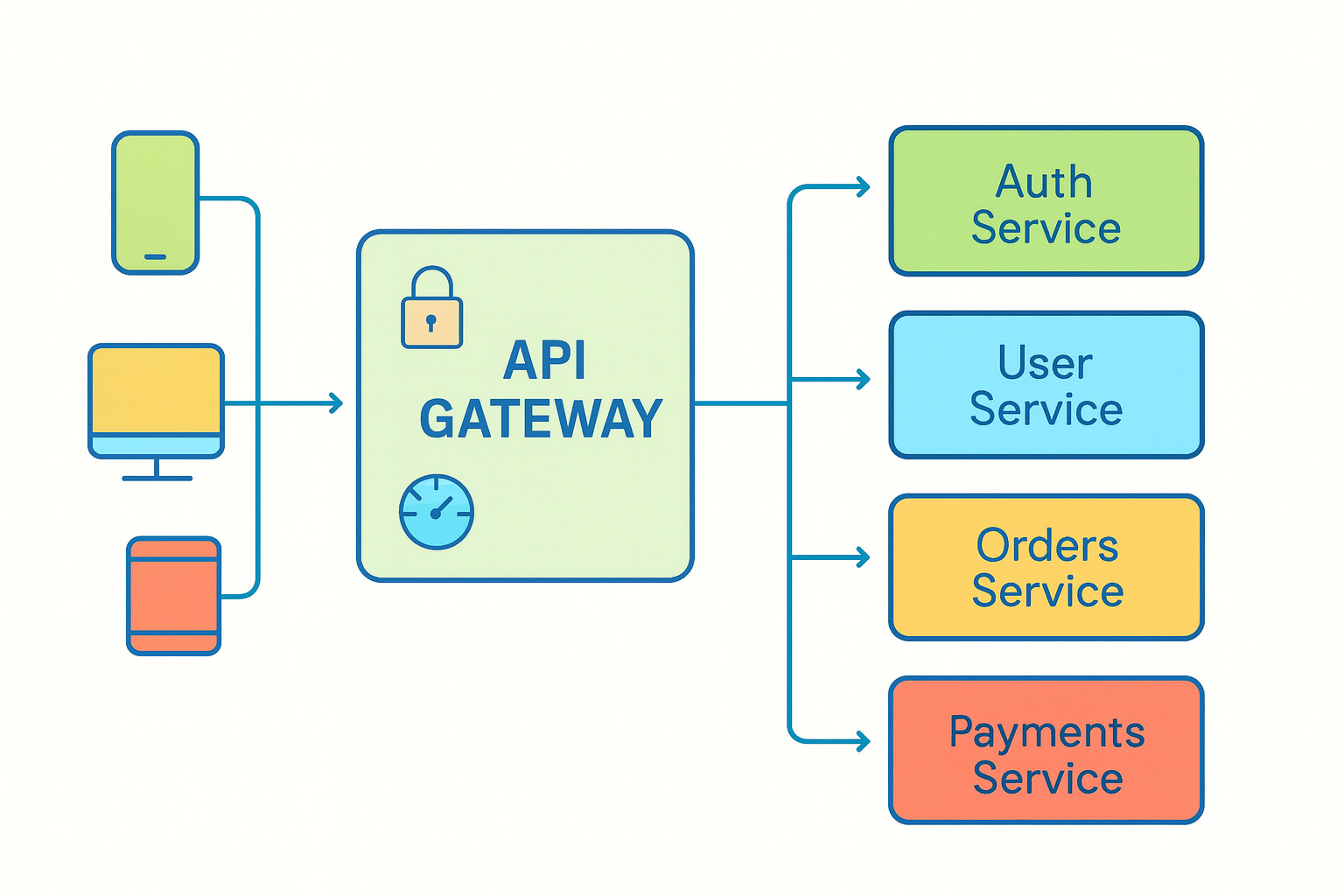
In interviews, you can say the API Gateway helps simplify clients.
They do not need to know every service address.
They only call one endpoint and let the gateway handle routing and cross-cutting concerns.
Data Ownership and Database Per Service
One of the biggest rules in microservices is this.
Each service should own its own data.
This usually means each service has its own database or logical schema.
For example, the “User Service” stores user profiles.
The “Orders Service” stores orders.
You should avoid many services that directly share the same tables.
Shared tables create tight coupling and complex failure modes.
But what if one service needs data from another?
Then it calls that service through an API or consumes events that the service publishes.
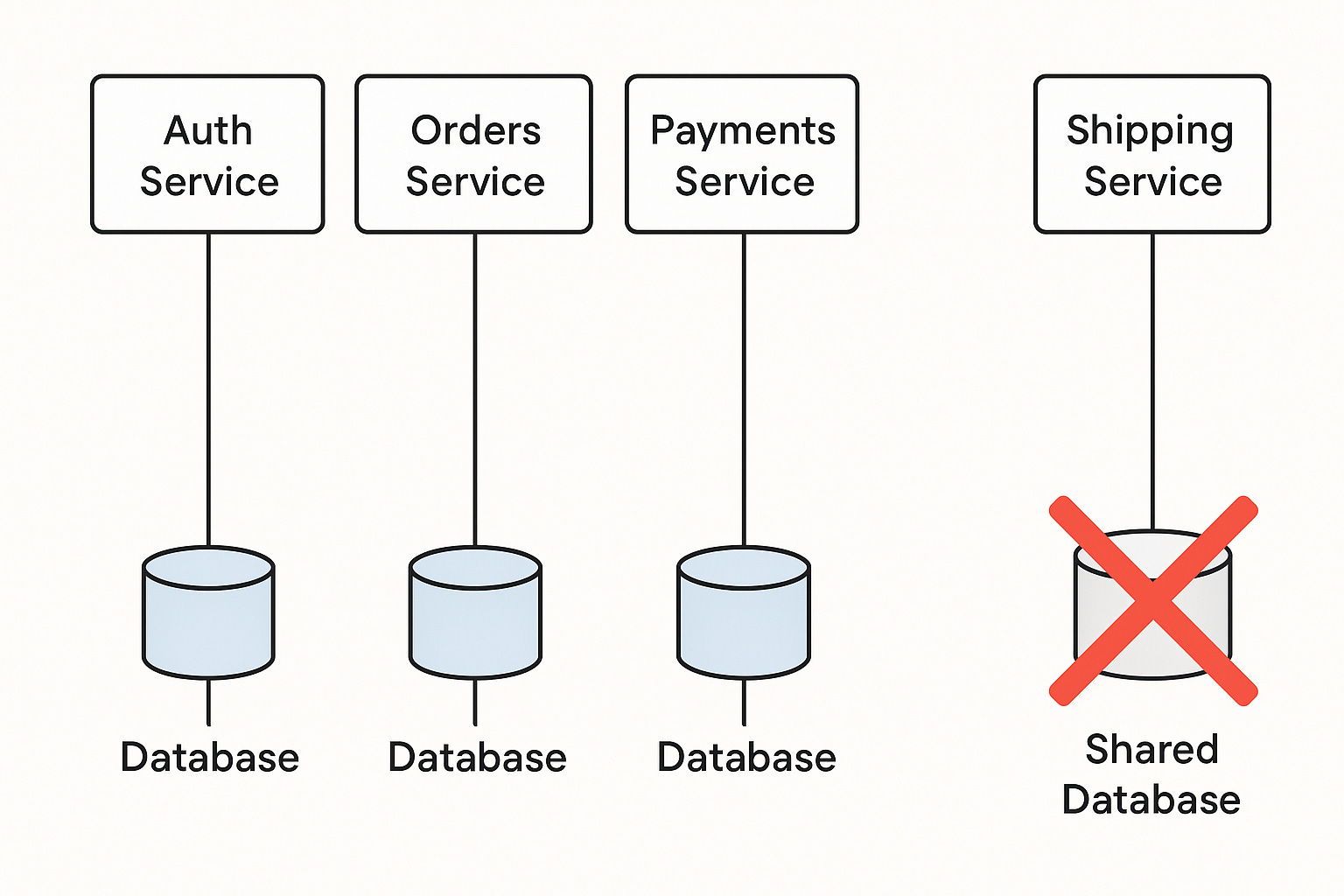
This design makes it easier to change the internals of a service without breaking others.
You only need to keep the external contract stable.
Distributed Workflows And Sagas
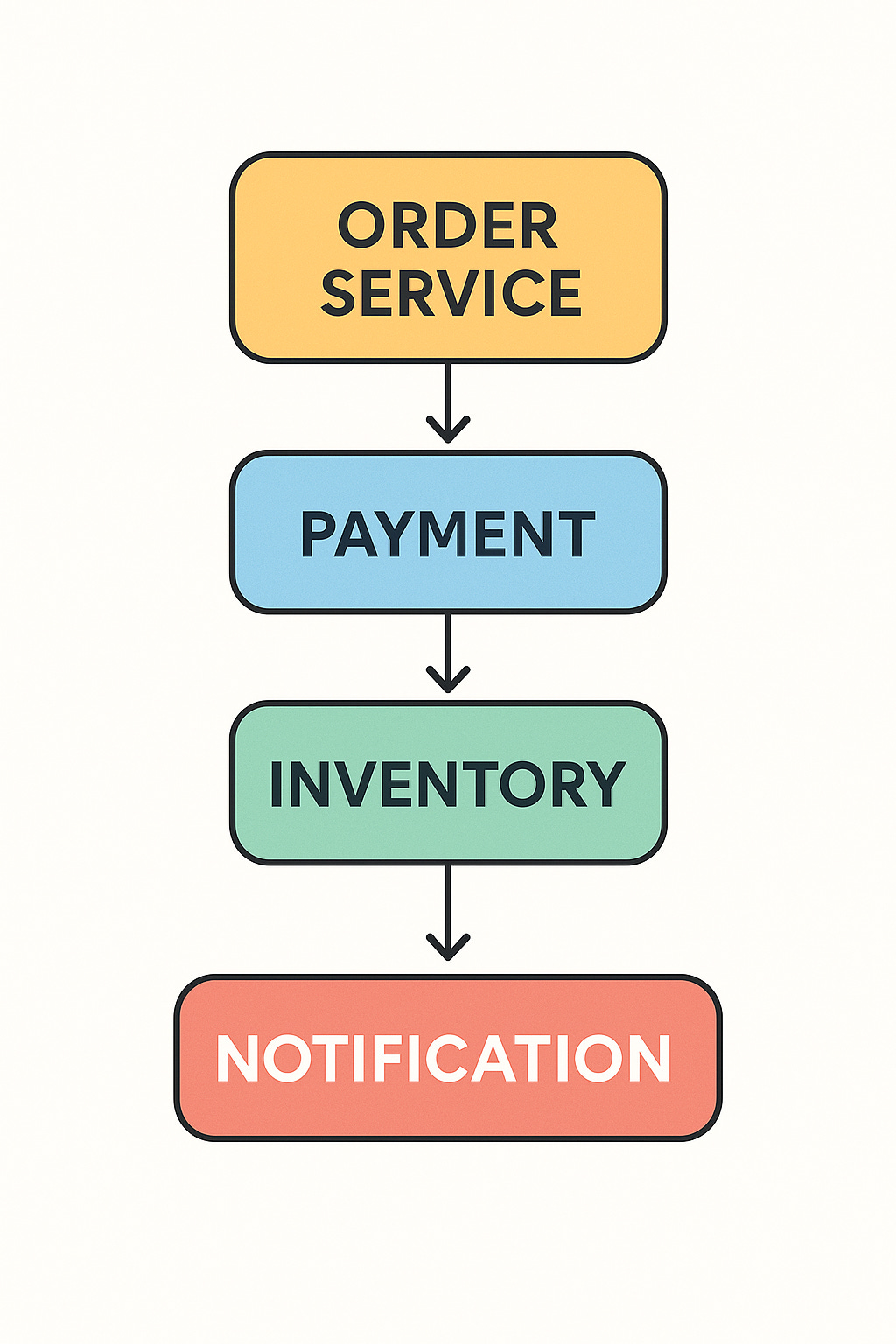
Sometimes a single user action touches many services. For example, placing an order might involve Orders, Payments, Inventory, and Notifications.
In a monolith, you might wrap it all in one transaction.
In microservices, that is not so easy.
Instead, we use a pattern called a saga.
A saga is a sequence of steps across services that either complete or roll back.
There are two common styles.
First, orchestration.
A central “orchestrator” service calls each participating service one by one.
If something fails, it calls compensating actions.
Second, choreography.
Services listen to events and react to them.
There is no central brain.
Each service knows how to move the workflow forward.
In interviews, mentioning sagas shows you understand distributed transactions.
You can say, “I will not use a global transaction across services. I will model the workflow as a saga with compensating steps.”
Reliability Patterns For Microservices
When you add network calls between services, failures become normal.
So you need patterns to keep the system stable.
Common reliability patterns are:
Timeouts
Retries with backoff
Circuit breakers
Dead letter queues
Timeouts avoid waiting forever for a broken service.
Retries help in transient failures, like a short network glitch.
Circuit breakers stop calls to a failing service for a while.They prevent a cascade of failures.
Dead letter queues store messages that could not be processed even after retries. You can inspect and fix these later.
In interviews, be explicit about timeouts and retries.
Mention that you will use idempotency keys when retrying to avoid duplicate side effects.
Observability: Seeing What Your Services Are Doing
In a microservices world, bugs are harder to trace.
One user request can touch many services.
You need good observability. This means metrics, logs, and traces.
Metrics answer “how healthy is the system?”
Logs answer “what exactly happened.”
Traces answer “how did one request flow across services.”
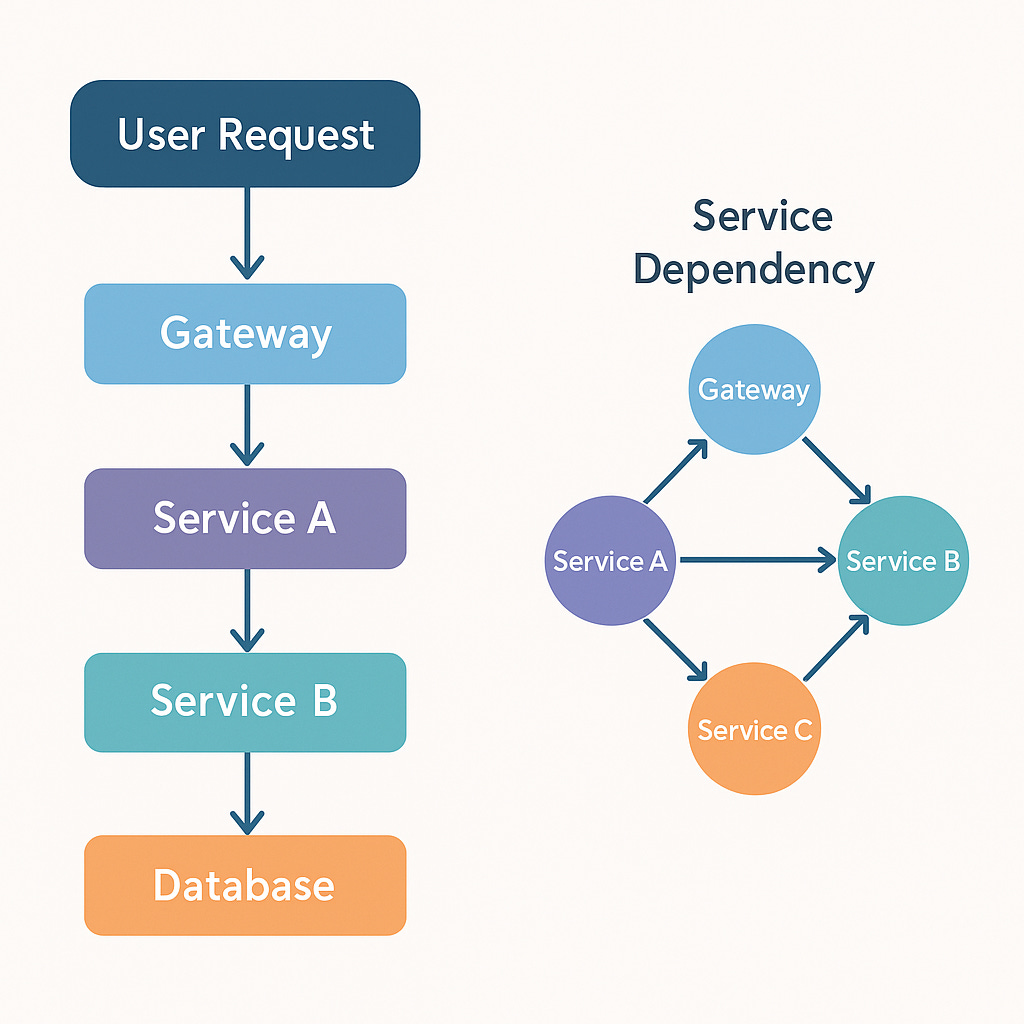
In interviews, mention correlation ids or trace ids. These are identifiers that travel with the request through all services.
They help you connect logs and traces for one user action.
When Microservices Are A Bad Idea
Microservices are powerful, but not always the right choice.
They are usually a bad idea when:
You have a very small team
The product is simple
You are still searching for product market fit
In those cases, a simple modular monolith is often best. You move faster with less overhead.
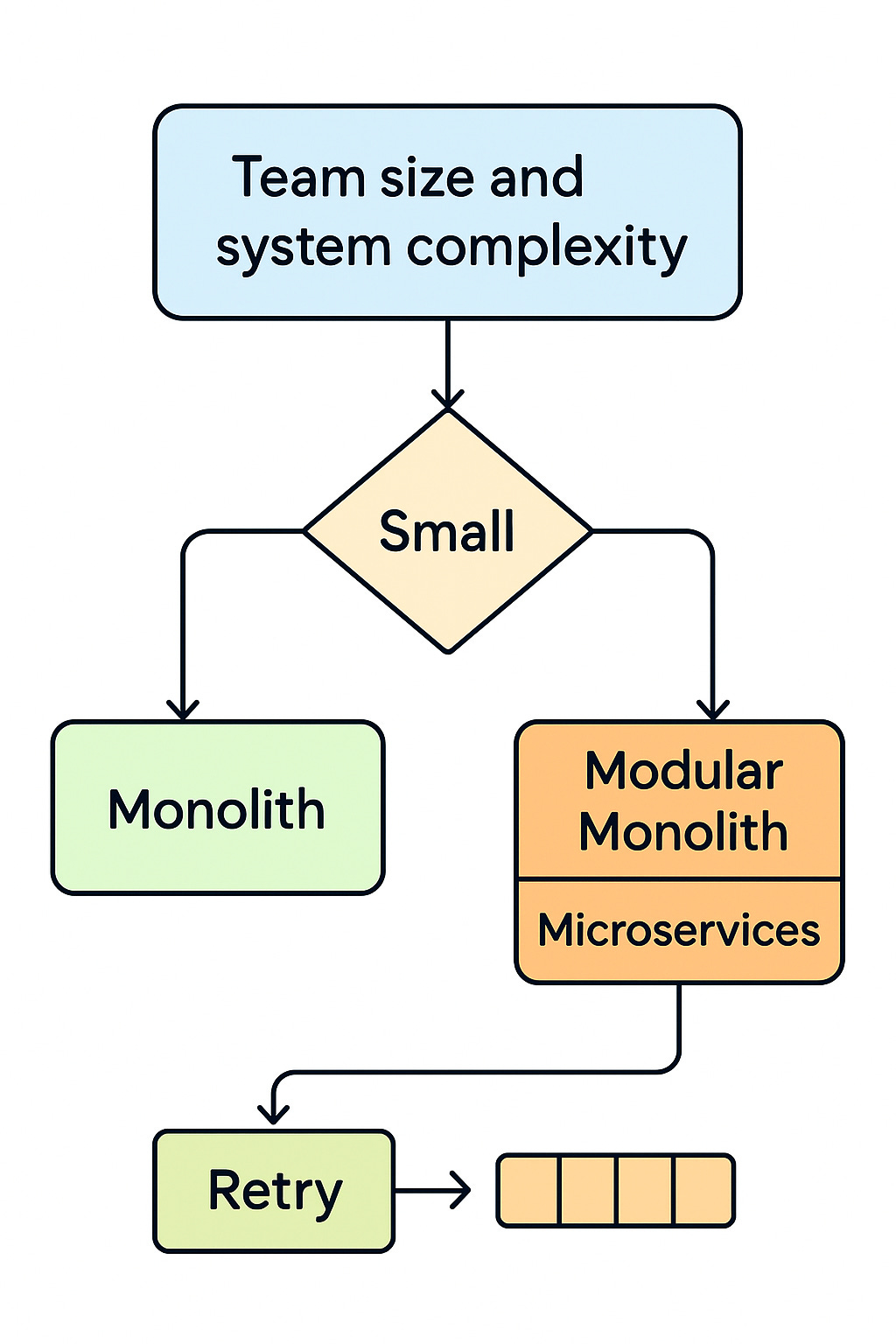
In interviews, it is smart to say that you would not start with microservices from day one.
You would grow into them as the system evolves. This shows maturity and practical thinking.
Bringing It All Together
Microservices are about more than just adding more services. They are about clear boundaries, ownership, and thoughtful communication.
You learned how:
Services map to business capabilities
Gateways simplify the edge
Databases belong to services
Sagas manage multi-step workflows
Reliability and observability patterns keep the system healthy
The next time you get a system design question, try to picture the diagrams.
Think of services as small focused units with their own data and clear APIs. Then connect them with the right patterns for your use case.
If you can talk through these ideas with confidence, your microservice answers will stand out in interviews.
Can u tell how beginner starting with this