
5 System Design Projects to Level Up Your Engineering Portfolio
Stop memorizing academic theory and start building scalable systems. Learn the top software projects that teach caching and data replication.


Software applications often fail when network traffic suddenly spikes.
A basic computer server handles a small number of concurrent requests without any trouble.
The internal memory has plenty of space, and the database executes reading queries instantly. However, when a massive volume of simultaneous requests hits that same server, the internal processor reaches maximum capacity.
The system memory fills completely, databases lock up, and the entire application goes offline. Users see blank error pages, and data fails to save properly. Preventing these catastrophic system failures requires a deep understanding of software architecture.
This engineering discipline is known as system design. It is the complex process of defining the architecture, software components, and data flow to satisfy specific technical requirements.
System design provides the exact architectural blueprint for making multiple computers work together seamlessly as a single unit.
Understanding this technical discipline is critical for building software applications that can grow without breaking.
Why Building Projects Matter
Reading textbooks provides a good foundational starting point for absolute beginners. However, theoretical knowledge rarely prepares junior engineers for actual software implementation.
Designing software exclusively on a whiteboard hides the messy realities of hardware limitations and sudden network latency.
When you write the actual code for these distributed systems, you face these hardware realities directly. You must write specific application logic to handle network timeout errors.
You must configure database connection pools properly to prevent server exhaustion. Building practical projects bridges the massive gap between knowing a technical concept and actually implementing it in production.
Building software projects provides critical hands on exposure to the backend protocols that power modern web applications. It forces you to troubleshoot the exact bottlenecks that crash large software applications.
We will thoroughly explore five specific software projects that teach the most important concepts in distributed system design.
We will look at the exact technical details for each application and explain how the underlying technology functions.
Project 1: A Scalable URL Shortener
The Core Technical Problem
Long web addresses are difficult to share and consume massive amounts of database storage space.
Applications need a dedicated service that converts a long web address into a very short text string.
When a client device clicks the short string, the system must instantly redirect the network request. The request must route to the original long address seamlessly.
What Happens Behind the Scenes
When your client application submits a long link, the backend server must generate a unique string of characters. The server runs the long link through a hash function to generate a short text code.
A hash function is a mathematical algorithm that converts variable input data into a fixed size output string. The system then stores the original long link and the new short code together in a primary database.
Millions of people might click the new short link at the exact same second.
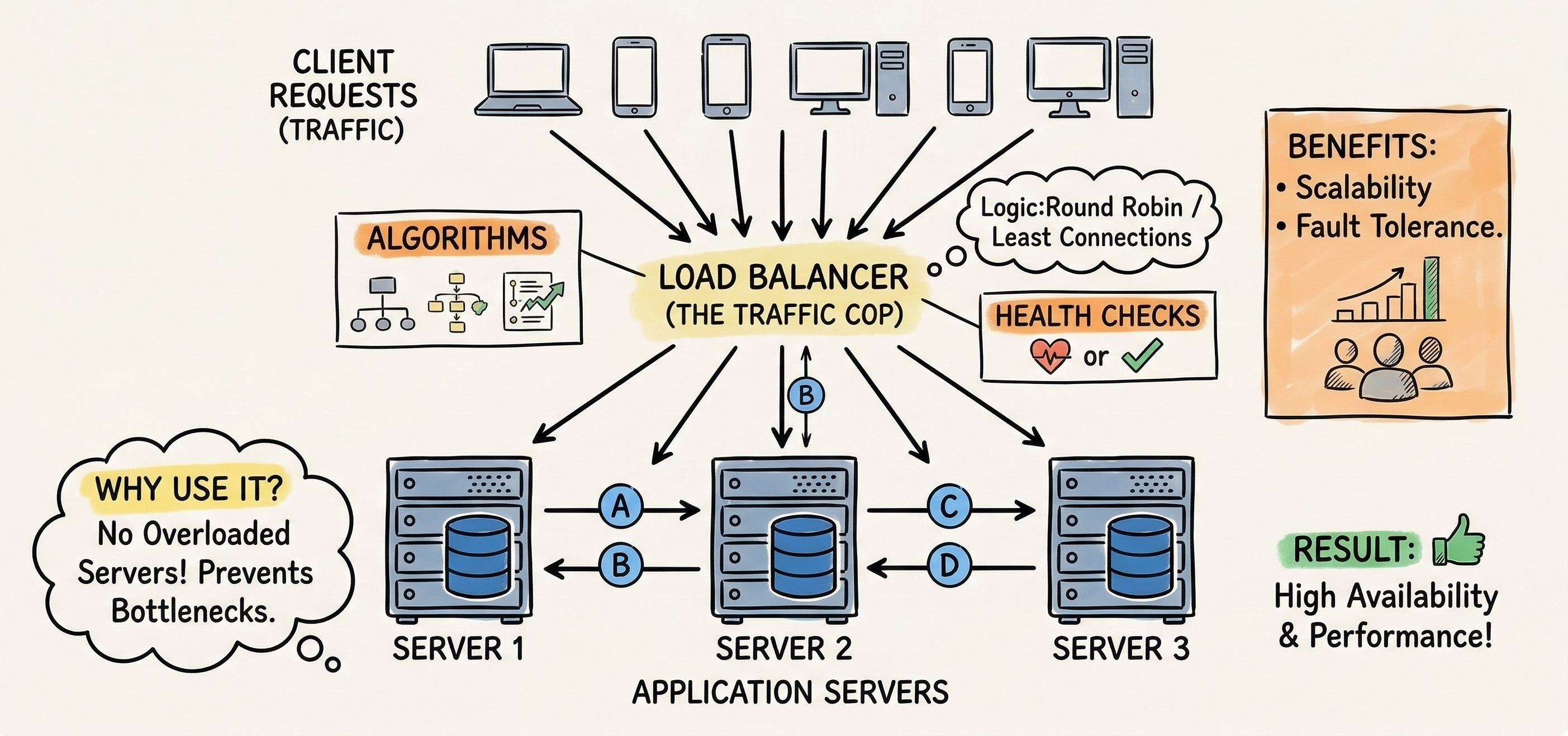
A single backend server will absolutely crash under this massive volume of continuous network traffic. To handle this immense traffic, you must introduce a load balancer.
A load balancer is a networking tool that distributes incoming network traffic evenly across multiple active backend servers.
Handling Heavy Data Traffic
This intelligent network distribution prevents any single server from becoming permanently overwhelmed. However, the primary database can still crash from too many reading requests. You solve this specific data bottleneck by adding a memory cache.
A cache is a temporary storage layer that keeps frequently accessed data in extremely fast computer memory.
By checking the memory cache first, the backend system avoids querying the slow main database for every single link click.
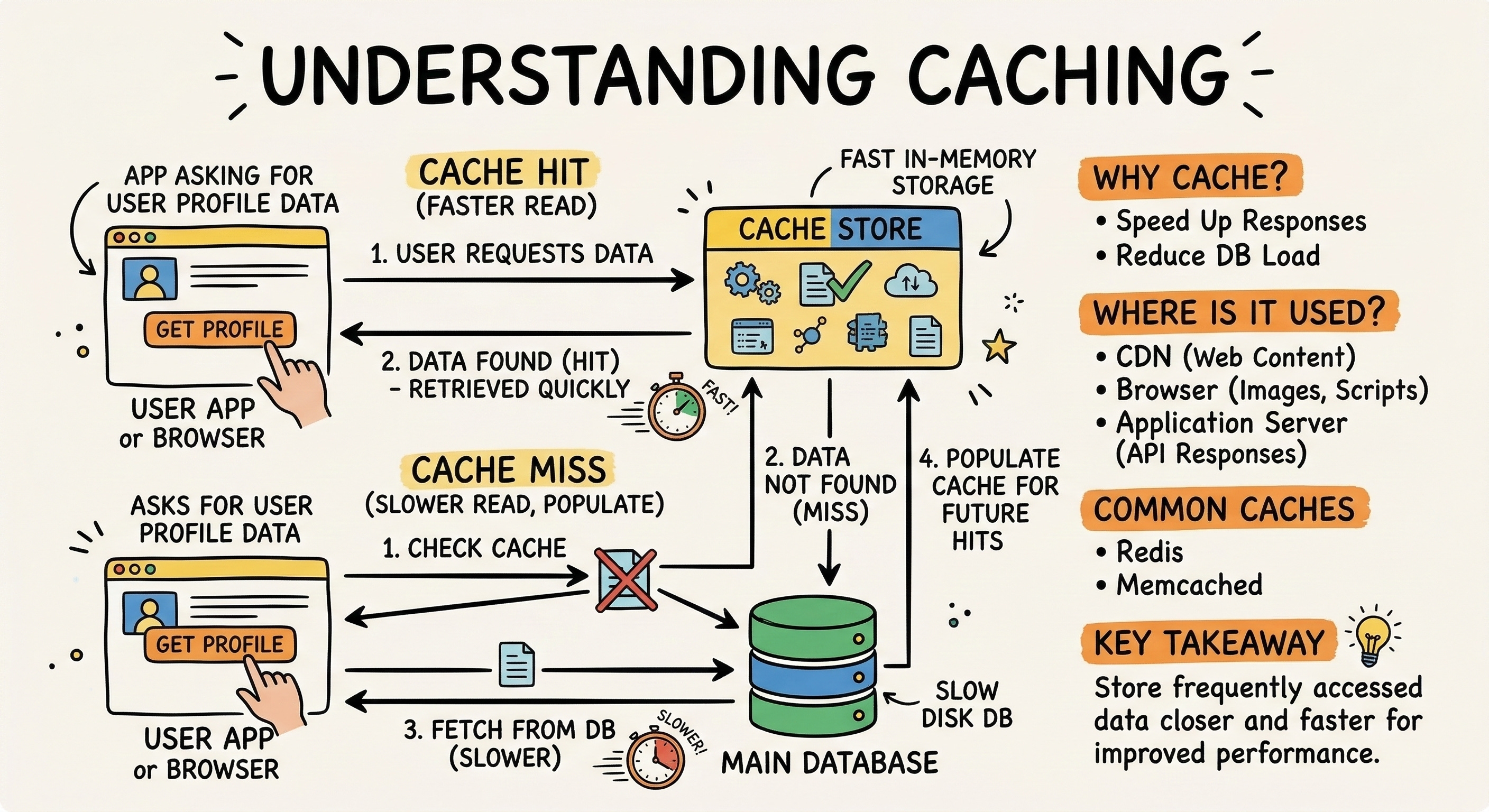
If the requested short code is found in the cache, the server instantly redirects the user.
This simple architectural step drastically reduces the heavy processing load on the permanent database. It guarantees the application remains online during massive traffic spikes.
Project 2: A Real-Time Chat Application
The Core Technical Problem
Users expect to send and receive digital text messages instantly. Traditional web protocols require the client software to constantly ask the remote server if new data exists.
Keep reading with a 7-day free trial
Subscribe to System Design Nuggets to keep reading this post and get 7 days of free access to the full post archives.