
System Design Interviews: Think Like a Staff Engineer (Not a Junior)
Level up your system design interview answers. Learn how Staff Engineers simplify architecture by choosing modular monoliths, database indexes, stateless servers, and rate limiting.

This blog will explore:
Scaling systems without adding chaos
Keeping databases fast and reliable
Choosing boring and proven technology
Designing for easy future deletion
Every growing software application eventually hits a performance wall.
Servers begin to slow down under heavy computing loads. Databases struggle to keep up with massive amounts of incoming data.
Development teams must figure out how to keep the application running smoothly.
The natural instinct is to solve these scaling issues by adding more software tools. Engineers often introduce multiple new infrastructure layers to handle the increased traffic.
However, this reflex to add extra moving parts is exactly why software systems become impossible to maintain over time. Understanding how to simplify technical solutions is a critical skill in system design.
The most experienced engineers spend their time removing complexity rather than adding it. They know that every new tool introduces new ways for the system to break.
The Trap of Adding Too Many Layers
One of the most common debates in software development is how to structure a growing codebase.
As an application gains more features, the code becomes harder to organize. Different development teams might step on each other while writing code.
Monoliths Versus Microservices
A common reaction to a growing codebase is to split it apart immediately. Junior engineers often suggest moving to a Microservices Architecture.
A Microservices Architecture is a system design where an application is split into many small independent programs that run on different servers.
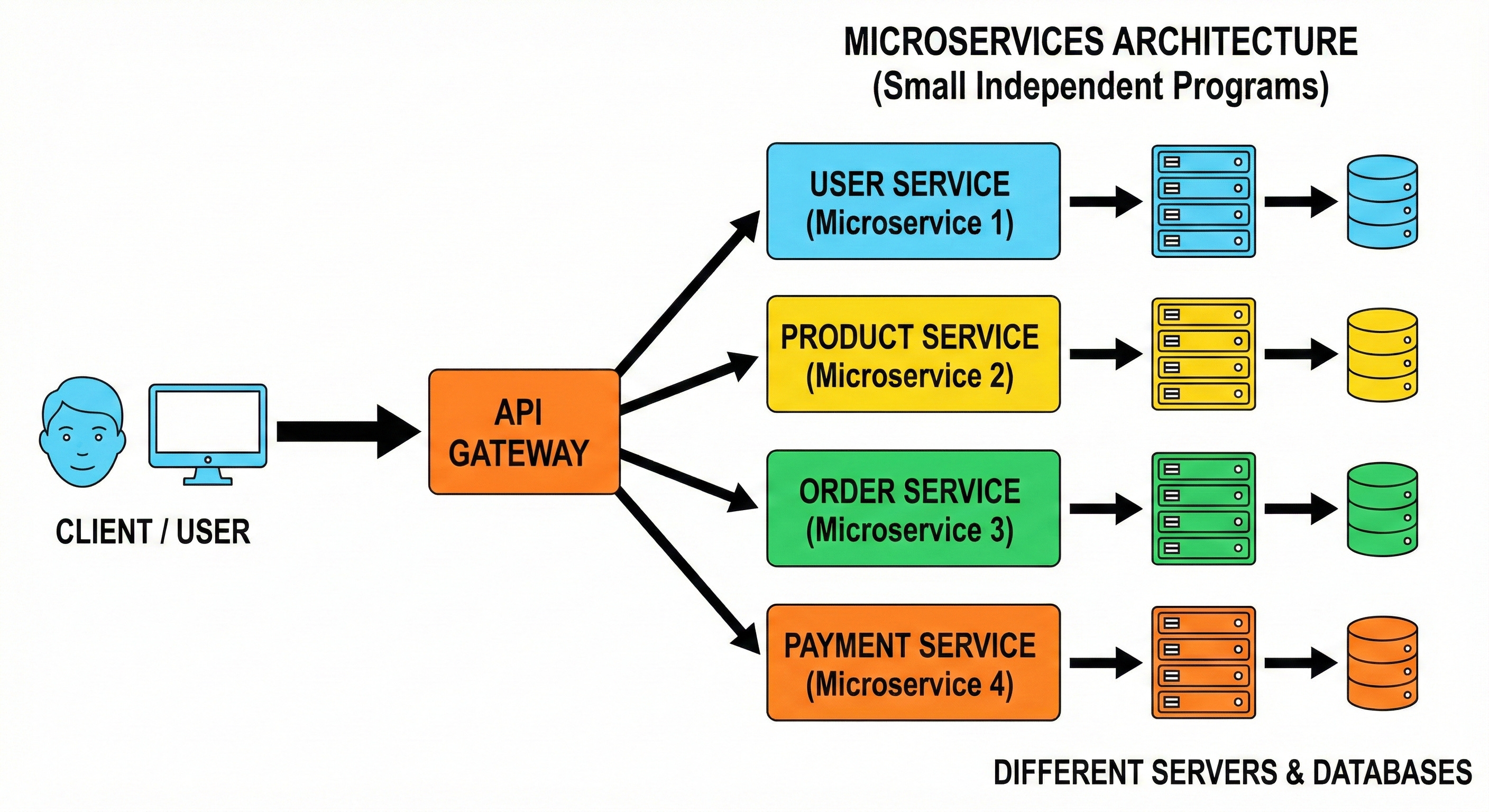
In theory, this sounds clean and highly organized. Behind the scenes, it introduces massive network complexity.
When one microservice needs data from another, it cannot simply read the local memory. It must package the data, send it across a network, and wait for a response.
This packaging process is called Serialization. Turning data into a network-friendly format takes processing power. Sending it over the network introduces a physical time delay.
Furthermore, the network connection can drop at any second. Code that used to be a simple instant function call now requires complex error handling and retry logic.
A staff engineer will often argue to keep the application as a Monolith.
A Monolithic Architecture is a design where all the code runs as a single program on a single server. It requires zero network communication between internal modules.
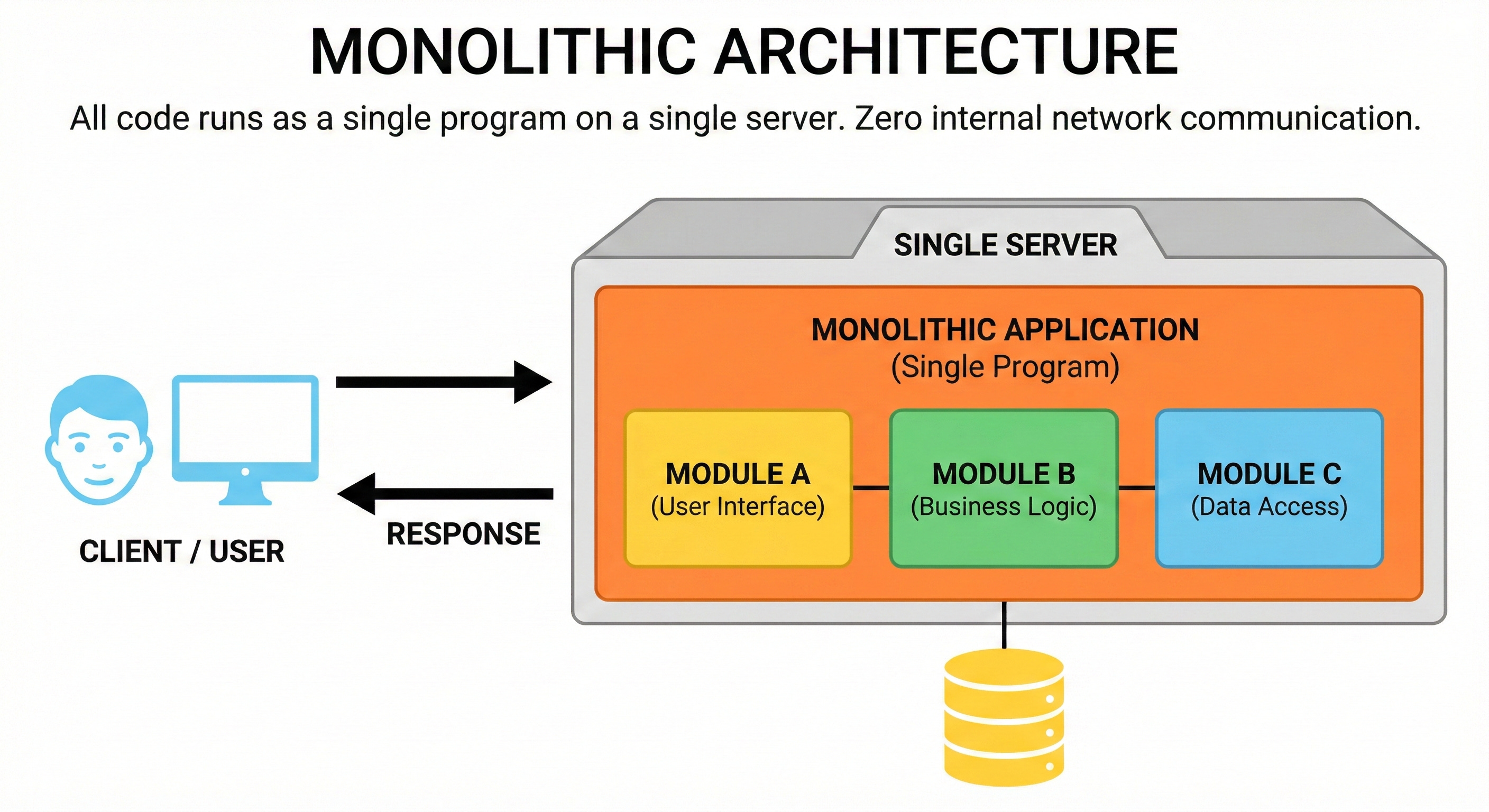
Staff engineers will organize the internal folders of the code strictly, rather than splitting the application across multiple servers. They achieve clean code separation without introducing dangerous network boundaries. They only move to microservices when it is absolutely necessary for organizational scaling.
Solving Data Problems at the Source
As applications grow, retrieving data from the database often becomes the biggest bottleneck. Clients might experience long loading screens while the server searches for their information.
Keep reading with a 7-day free trial
Subscribe to System Design Nuggets to keep reading this post and get 7 days of free access to the full post archives.