
System Design Interview: How to Architect an API Gateway
Learn the technical mechanics behind API Gateways. Understand protocol translation, circuit breaking, and load balancing for massive distributed backend systems.

Building large-scale software applications introduces massive architectural challenges.
In the early stages of development, software is usually built as one giant codebase. All the logic lives on a single server in a unified environment.
As the application grows, engineers split this massive codebase into smaller independent programs called microservices.
This architectural shift solves deployment bottlenecks but creates a massive communication problem. A frontend application must suddenly connect to dozens of different backend servers just to load a single interface. Managing these distinct network connections becomes incredibly difficult and insecure.
The API Gateway pattern was created to solve this exact structural nightmare.
The Core Problem of Distributed Systems
To understand why a centralized gateway is necessary, we must analyze how software networks operate. Every engineering decision is a response to a specific structural limitation.
The Monolithic Approach
Older software systems were built using a monolithic architecture.
A monolith contains all application code within one single deployable unit. The user profile code, the billing code, and the messaging code all share the exact same memory space.
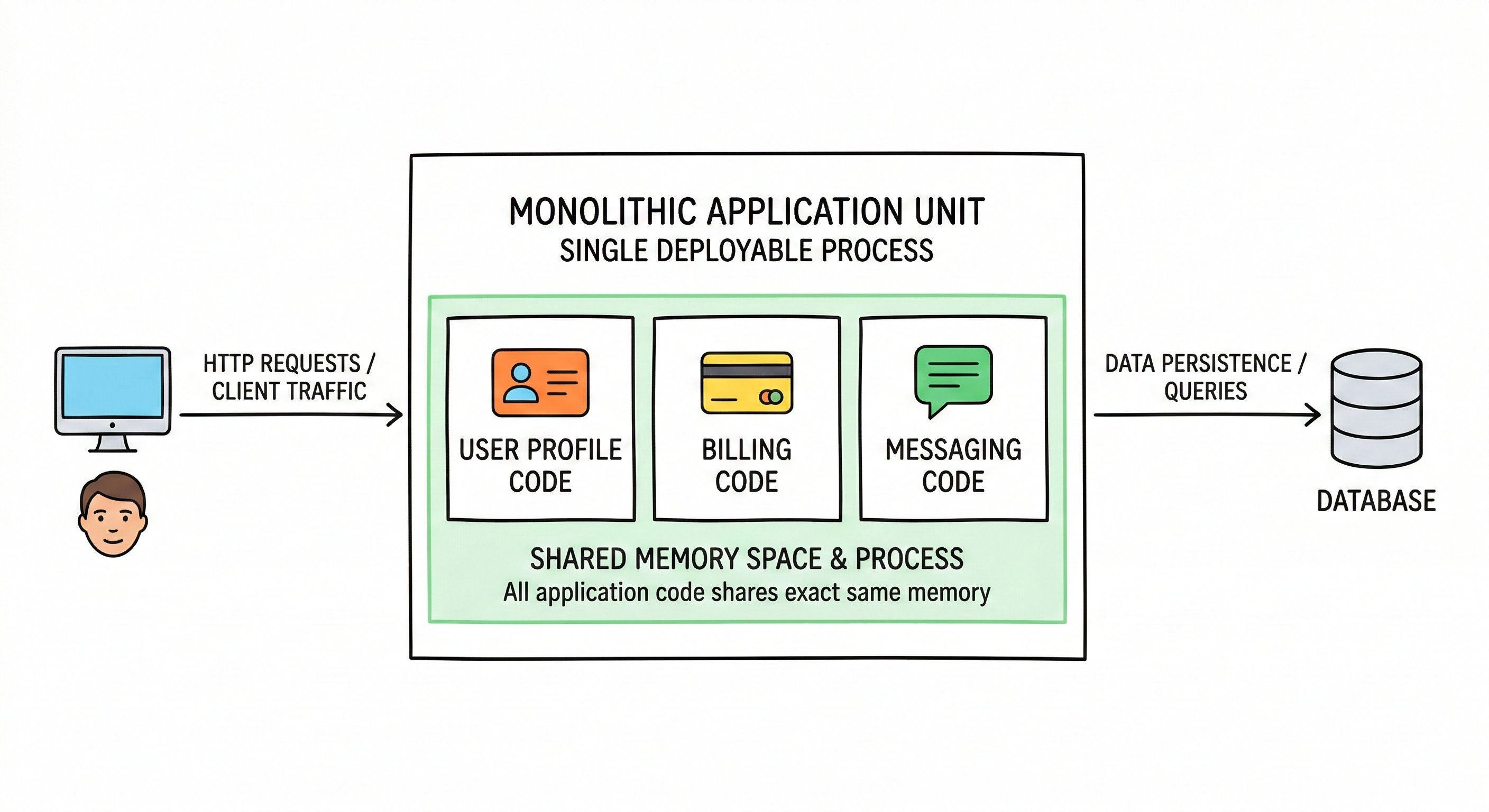
In a monolith, network communication is extremely simple.
The frontend client application sends a request to one specific server address. That single server processes the request internally and sends the response back. There is no complex network routing required because everything lives in one single place.
The Shift to Microservices
As applications scale to millions of users, the monolithic approach fails. Monoliths are difficult to update, slow to deploy, and hard to scale efficiently. Engineering teams solve this by adopting a microservices architecture.
A microservice is a small standalone program that handles one specific business function. Instead of one massive application, the system becomes a collection of fifty small applications. These small applications communicate with each other over a network.
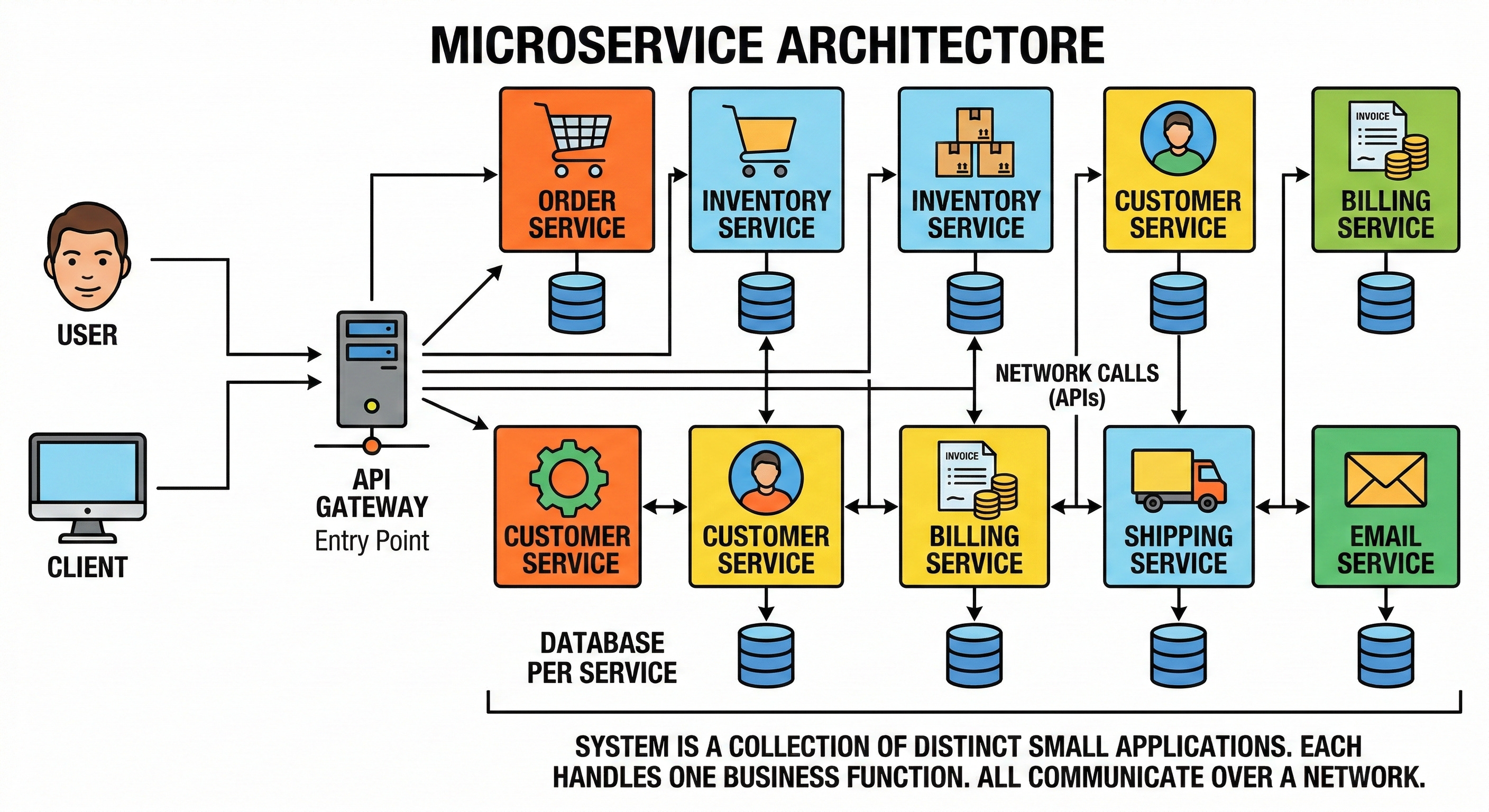
This makes development faster but severely complicates the network topology.
The Chatty Client Issue
In a microservices environment, the frontend client faces a major problem.
To load a complete user dashboard, the client might need data from five different services. It needs user details from the user service and transaction history from the billing service.
Without a central coordinator, the client must make five separate network requests across the public internet. This is known as the chatty client problem. Making multiple external network requests drains battery life on mobile devices and increases loading times significantly.
The public internet is slow, and multiple trips cause terrible performance.
Security and Network Exposure
Direct communication also creates massive security vulnerabilities.
If the client talks directly to fifty microservices, all fifty microservices must be exposed to the public internet. Every exposed service is a potential target for malicious attacks.
Furthermore, every single microservice must independently verify user security credentials.
If a security bug is discovered in the authentication logic, engineers must patch fifty different codebases. This duplicated effort wastes valuable development time and increases the risk of critical security failures.
What Actually is an API Gateway?
An API Gateway is a dedicated server that acts as the single point of entry for a distributed system. It sits exactly between the frontend client applications and the internal backend microservices.
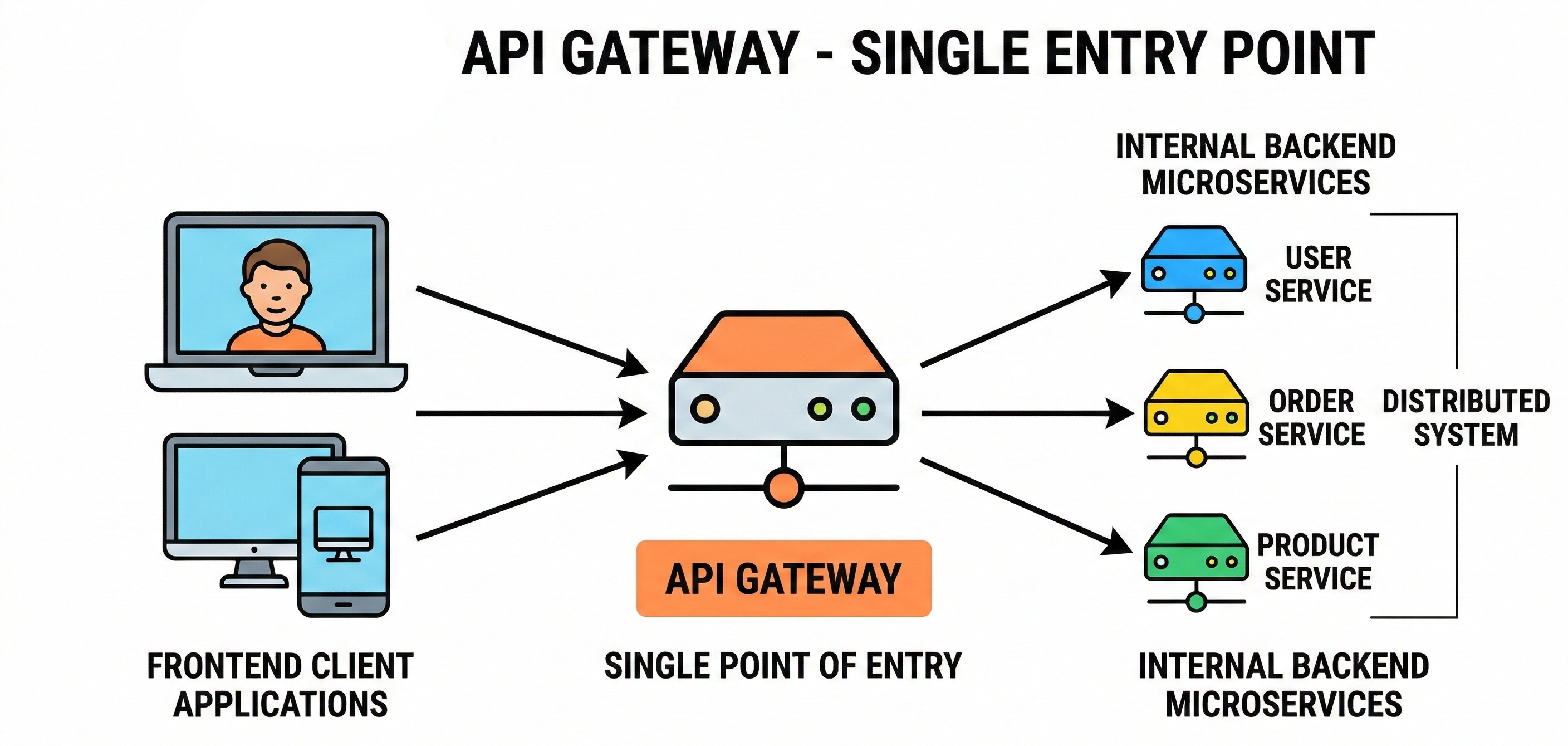
A Centralized Network Node
Instead of the client communicating directly with fifty different backend servers, it only communicates with the gateway. The client sends all its network requests to one single address. The gateway receives these requests and forwards them to the correct internal destinations.
Keep reading with a 7-day free trial
Subscribe to System Design Nuggets to keep reading this post and get 7 days of free access to the full post archives.