
Why Senior Engineers Don’t Just Recite CAP Theorem in Interviews
The Difference Between Knowing CAP and Using the Judgment It Represents, Explained for Engineers Targeting the Senior Level


There is one piece of knowledge that nearly every candidate brings to a system design interview.
The CAP theorem is among the first things people learn when studying for these interviews, and it is among the most confidently recited.
Candidates mention it early and often, treating it as proof that they understand distributed systems.
The problem is that at the senior level, often called L5 at large technology companies, reciting the CAP theorem does almost nothing. It does not impress the interviewer, it does not differentiate the candidate, and in some cases it actively works against them.
Many candidates are surprised by this, because they were told that knowing CAP was essential. They learned it, they recited it, and it did not help.
The reason is a misunderstanding about what senior interviews measure.
Knowing a named theorem is the kind of knowledge that everyone has, which makes it table stakes rather than a differentiator.
What separates a senior candidate is not whether they can name the theorem, but whether they can apply the judgment it represents to the specific problem in front of them.
This guide explains why knowing the CAP theorem will not help pass an L5 interview, and what actually does.
It covers why the fact is table stakes, the difference between reciting and applying, the common way CAP is misunderstood, and what the senior bar truly tests. It is written for engineers who studied the theory and are wondering why it is not paying off.
A Quick Word on What L5 Means
The label varies between companies, but the general idea is consistent.
L5, often called senior engineer, is the level where an engineer is trusted to make sound decisions with little direction and to handle ambiguous problems on their own.
The jump to this level is largely a jump in judgment rather than in raw knowledge.
This matters for understanding why CAP knowledge falls flat.
The senior bar is about applying knowledge well, not about possessing it.
A fact that every candidate knows cannot, by itself, demonstrate the judgment that defines the senior level.
With that in mind, here is why the most memorized fact in system design does so little.
Reason 1: Everyone Knows It, So It Proves Nothing
The first reason is simple.
The CAP theorem is so widely studied that nearly every candidate can recite it. Knowledge that everyone has cannot distinguish one candidate from another. It is the baseline, not the bar.
When a candidate states the theorem, the interviewer hears something they have heard from countless others. It does not stand out, and it does not provide evidence of anything beyond having studied the basics.
At the senior level, the interviewer is looking for what sets this candidate apart, and a recited fact that everyone shares does the opposite.
This is the core misunderstanding.
Candidates treat CAP as a strong signal, when in reality it is the absence of a signal. Stating it neither helps nor hurts on its own, and the candidate who relies on it has shown nothing distinctive.
Reason 2: Reciting a Theorem Is Not Applying Judgment
The second reason cuts deeper.
Knowing the CAP theorem and using the judgment it represents are entirely different skills.
The theorem is a piece of theory.
The senior bar is about applying theory to a concrete situation.
A senior candidate does not announce the theorem. They make a specific decision about a specific part of the system, such as choosing strong consistency for one type of data and accepting eventual consistency for another, and they explain why each choice fits the requirements.
The theorem is implicit in their reasoning, but the value is in the contextual decision, not in the named result.
This is the gap that catches many candidates. They demonstrate that they know the theory but never demonstrate that they can apply it.
At L5, the application is everything, and the recitation is nothing without it.
Reason 3: The Theorem Is Often Misunderstood
The third reason is that CAP is frequently misunderstood, and reciting the common oversimplification can actively hurt a candidate.
The popular version says a system must pick two of three properties, consistency, availability, and partition tolerance. This framing is misleading.
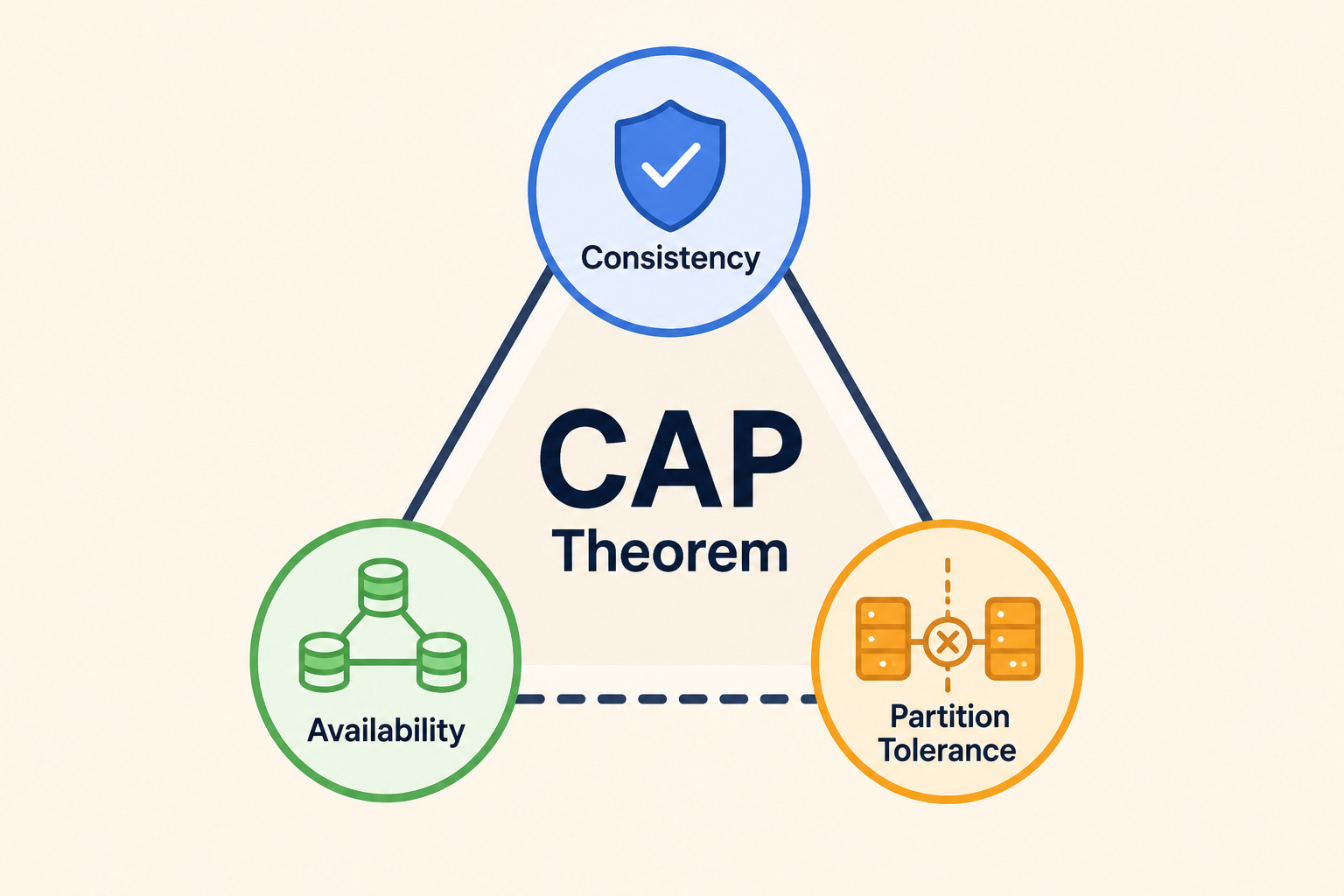
In a real distributed system, network partitions will happen, so tolerating them is not optional.