
System Design Interviews: How to Defend Your Architecture Under Pressure
Learn why the first 20 minutes of a system design interview are just the warmup and how to ace the rest.

System design interviews often follow a predictable pattern.
The session usually begins with a structured exchange of information.
You and the interviewer define the scope of the problem. You estimate the scale of the system. You move to the whiteboard or the shared digital canvas to draw the high-level design.
For the first portion of the interview, the focus is on placement and connection.
You draw boxes to represent servers, databases, and load balancers. You draw lines to represent the flow of data between them.
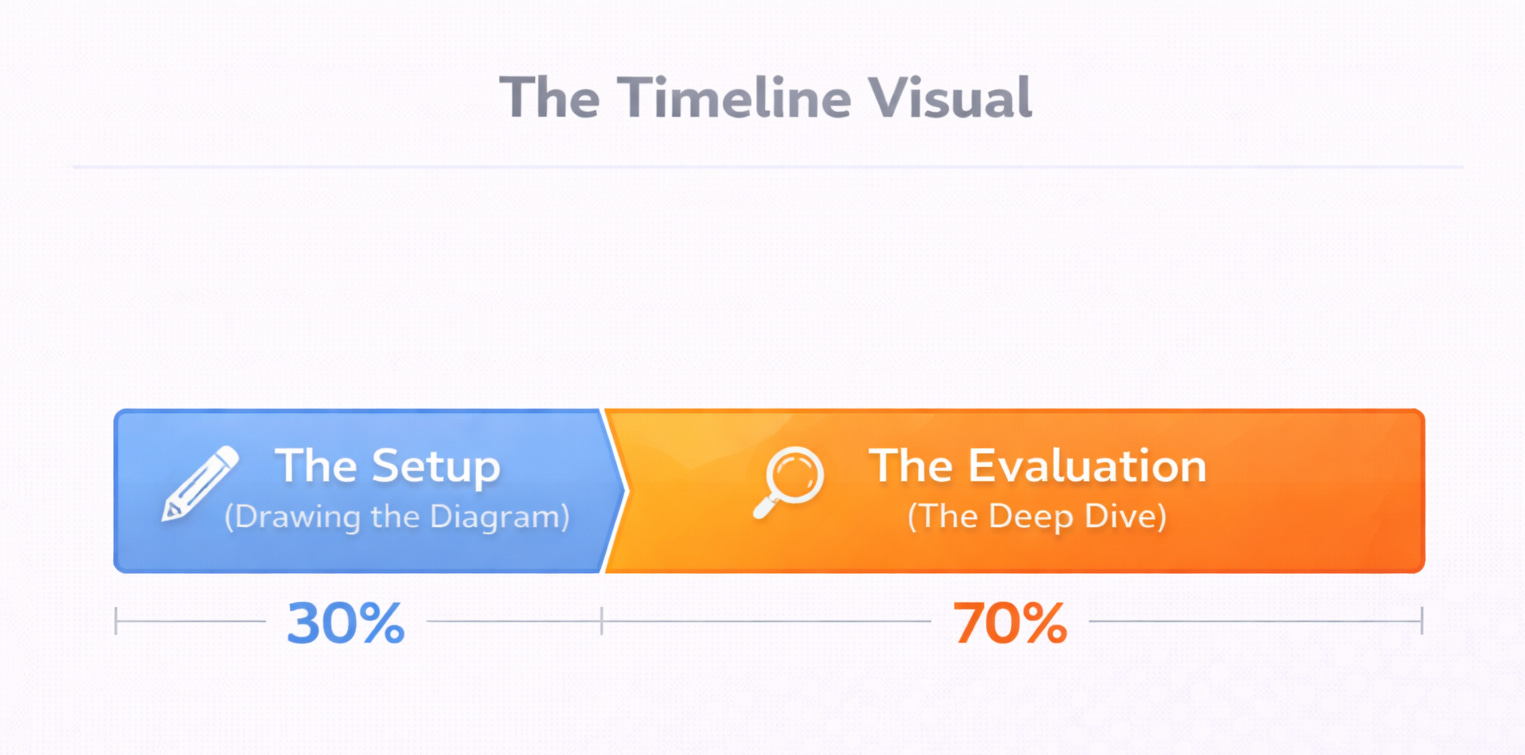
However, a distinct shift occurs roughly halfway through the session. The interviewer stops looking at the overall shape of your design. They stop nodding when you add standard components.
The dynamic changes from a collaborative building exercise to a rigorous interrogation.
This transition point is where the actual evaluation begins. The diagram you created is merely a prerequisite. The outcome of the interview depends entirely on your ability to defend that diagram under pressure.
The Limitation of Static Diagrams
Many candidates believe the primary goal of the interview is to produce a complete visual artifact. They focus their mental energy on ensuring every component is present and every connection is logical. They worry about choosing the correct specific technology for the database or the cache in the first fifteen minutes.
While these choices are relevant, they are rarely the deciding factor for a senior engineering role.
The diagram serves as a visual representation of the system. It allows the participants to establish a shared context. However, a static drawing does not explain how the system behaves when the workload increases unexpectedly. It does not explain how the system recovers when a critical component stops functioning.
In a system design interview, the interviewer assumes you can memorize a standard architecture. They assume you have studied the basic patterns for building common web applications.
Because memorization is possible, the diagram itself provides limited evidence of your engineering intuition.
The interviewer does not prioritize the boxes after minute twenty because the boxes represent “what” the system is.
The interviewer is interested in “how” and “why” the system functions. They want to uncover the logic that governs the connections between the components.
The Shift to Non-Functional Requirements
Once the basic flow is established, the discussion moves to non-functional requirements. These are the constraints that define the quality of the system rather than its features.
This is where the difficulty increases.
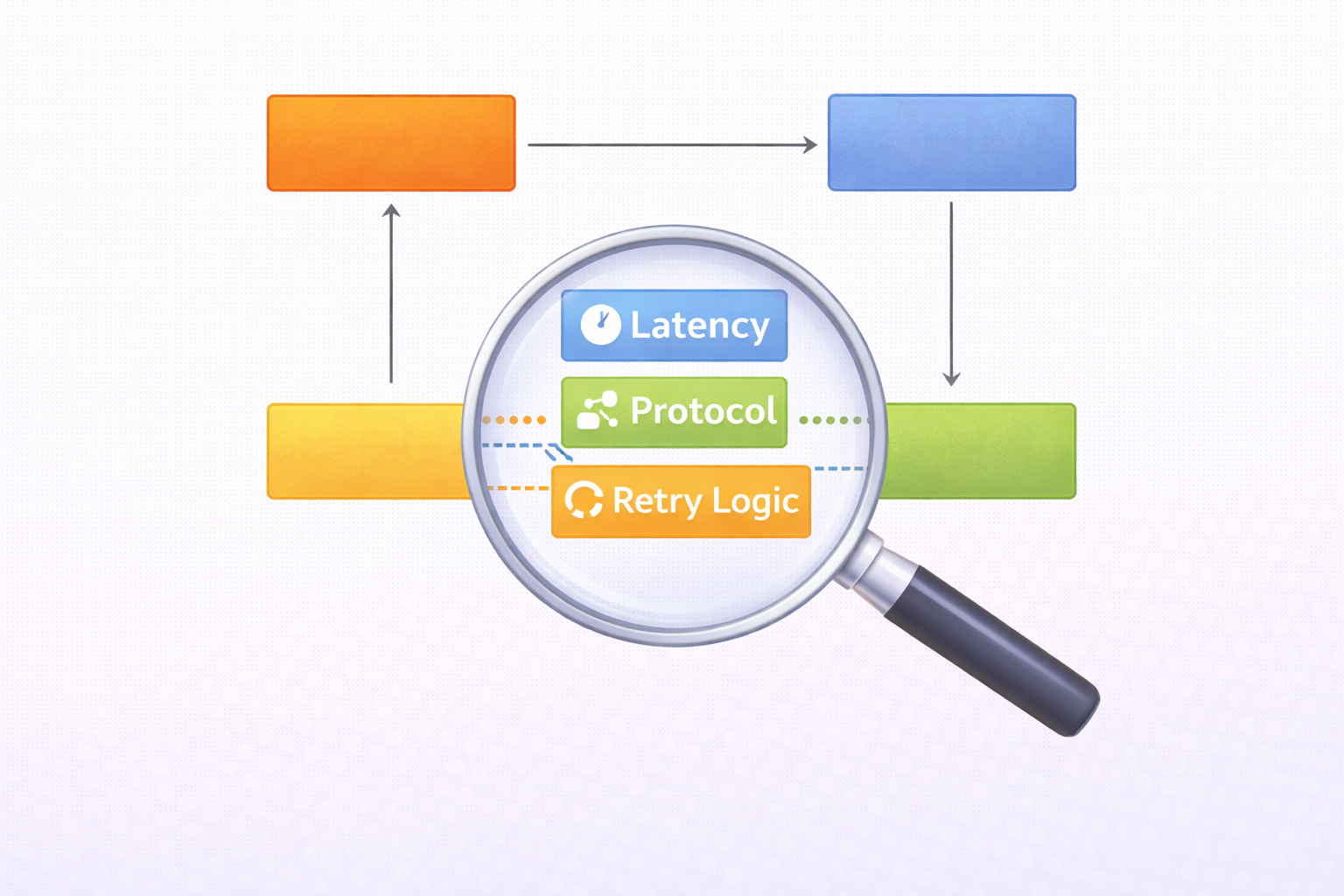
The interviewer will select a specific connection between two components. They will ask what happens if the response time for that connection increases. They will ask what happens if the data transmitted over that connection is corrupted or lost.
At this stage, the whiteboard becomes less useful. You must rely on your understanding of fundamental computer science concepts. The discussion moves to latency and throughput.
Latency is the time delay between the initiation of a request and the receipt of a response. It is a measure of speed.
Throughput is the rate at which the system can process requests. It is a measure of capacity.
After minute twenty, the interviewer wants to know how you balance these two metrics.
If you optimize the system to handle a massive number of requests per second, you might inadvertently increase the delay for each individual request.
If you attempt to make every request instant, you might reduce the total volume of traffic the system can support. Explaining this balance demonstrates that you understand the operational reality of the system.
Data Consistency
The most common area of scrutiny after the initial design phase is data handling. Drawing a database on the whiteboard is a simple task. Explaining how that database maintains accuracy when thousands of users modify data simultaneously is a complex task.
The interviewer will often introduce a scenario where two concurrent requests attempt to modify the same record.
This forces the discussion toward concurrency controls and consistency models.
You must explain how the system determines which modification is valid. You must discuss locking.
