
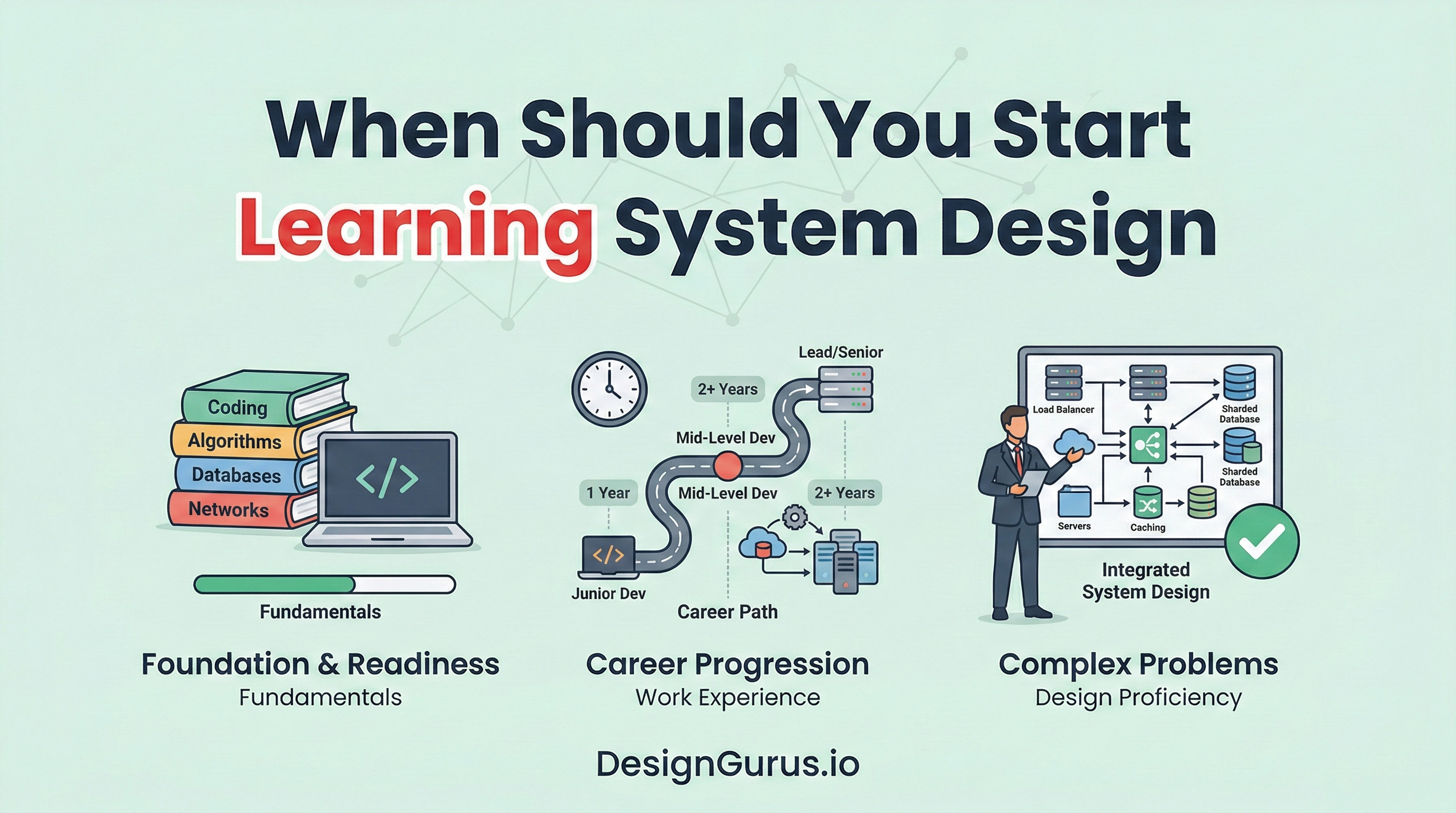
When Should You Start Learning System Design
A complete beginner guide detailing exactly when to learn system design, how to understand architecture, and the practical steps to start practicing.

Software applications frequently function flawlessly during their initial development phases.
A developer writes functional code on a single machine and successfully passes all local testing. Everything operates exactly as intended within this isolated technical environment.
However, a massive structural failure often occurs the moment that same application launches to a large public audience.
When hundreds of thousands of concurrent network requests hit the application, the single server completely stops responding. The central processor reaches maximum computational capacity almost instantly. The available system memory fills up, and database queries slow down to an absolute crawl.
Eventually, the entire software infrastructure collapses under the heavy computing pressure.
Writing elegant or highly efficient code cannot prevent these massive structural failures.
A single computer possesses strict physical hardware limits that no amount of clean code can bypass. Understanding how to structure software to handle massive scale is the only technical solution.
This specific engineering practice prevents applications from crashing by safely distributing the computing workload.
What System Design Actually Means
System design is the structured process of defining the architecture of a complex software application. It involves making critical decisions about how different servers and databases will communicate over a network.
The main goal is to ensure your software can handle high traffic and remain completely stable.
When you first learn to program, your focus is entirely on basic logic.
The goal is to write a script that successfully completes a specific task.
This usually involves a single file of code running on a single computer. System design shifts this focus entirely.
Instead of writing instructions for one machine, your focus becomes orchestrating a network of machines. It deals with the continuous movement of digital data from a user interface to a vast server network.
This broad perspective is what separates basic programming from architectural engineering. It is the crucial step required to build enterprise grade software.
The Exact Timeline For Your Learning Journey
You might wonder if you should study architecture alongside your first programming language. The short answer to this common question is no.
System design requires a solid technical foundation to understand properly.
If you try to learn architecture before understanding basic syntax, the concepts will feel incredibly overwhelming.
There is a clear progression that builds the necessary foundational knowledge.
Let us break down the ideal timeline for your learning journey.
Master Programming Fundamentals First
During your first few months of learning to code, system design should be ignored completely.
Your only goal should be mastering fundamental programming concepts. Understanding variables, loops, and conditional statements is strictly required.
You must learn how to manipulate basic data structures like arrays and objects.
You should also focus heavily on writing clean and readable code. Fixing basic logic bugs and reading standard error messages are critical skills to build.
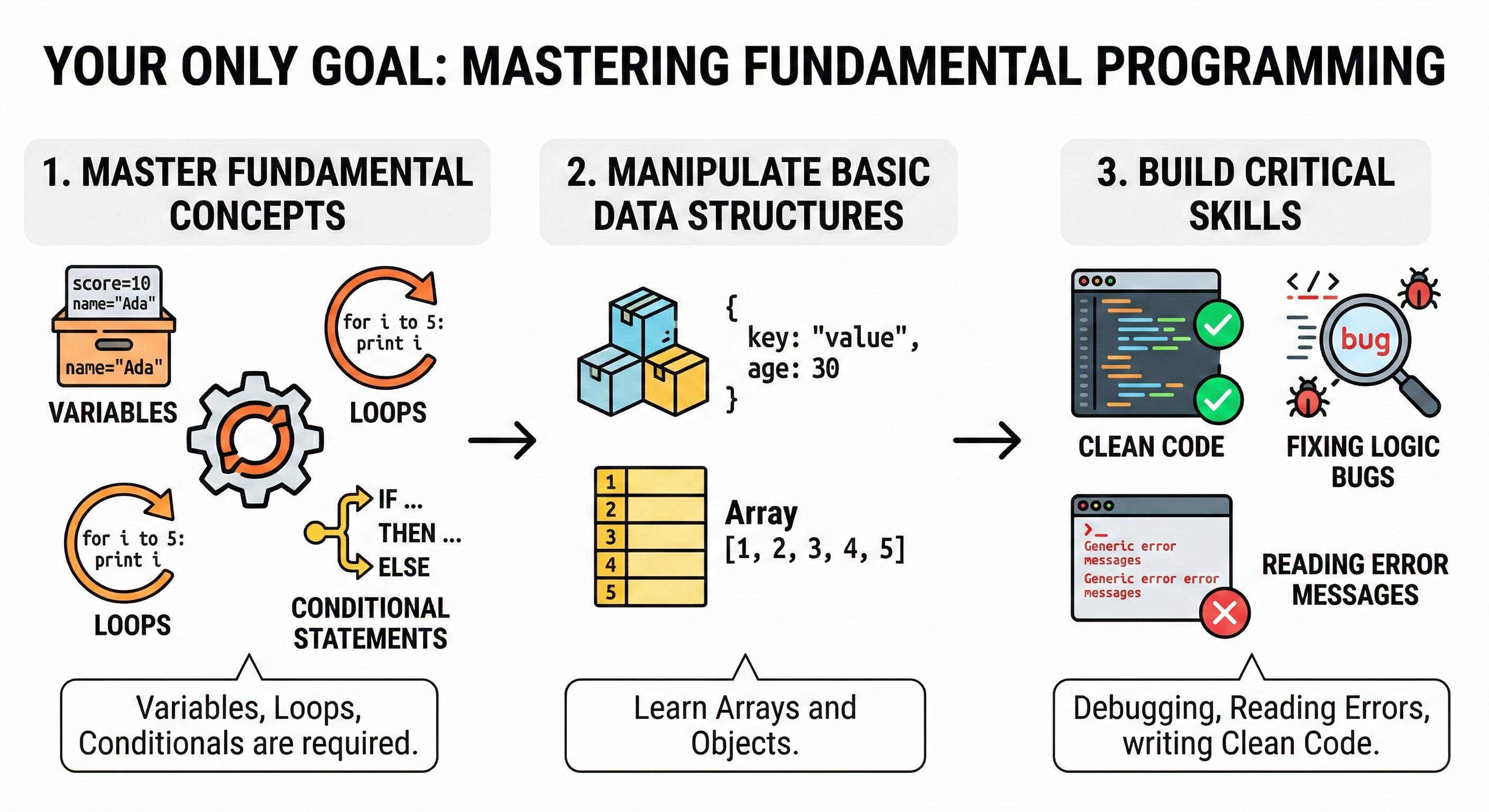
Until you can confidently write a program that solves a basic logical problem, architecture will not make sense. Your technical foundation must be extremely solid first.
Build Functional Web Applications Next
Once you understand basic programming, your next step is building full applications.
This involves learning how a frontend interface communicates with a backend server. Connecting a simple database to your code is also a mandatory requirement.
This phase is commonly known as full stack development.
Keep reading with a 7-day free trial
Subscribe to System Design Nuggets to keep reading this post and get 7 days of free access to the full post archives.