
Understanding Split Brain for System Design Interviews
Learn how network partitions cause split brain and discover architectural strategies to protect distributed databases.

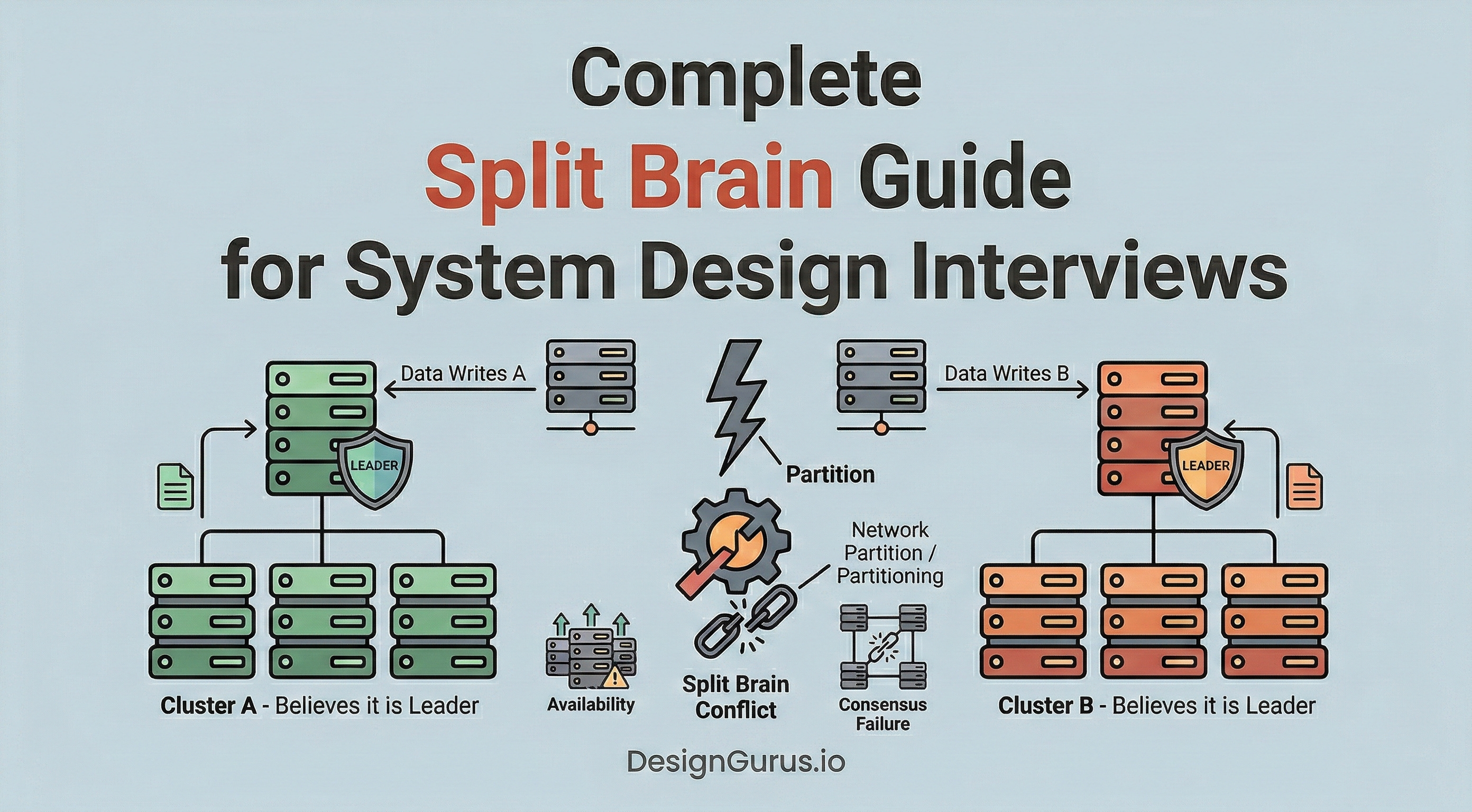
Modern software applications process massive amounts of incoming digital traffic every single day.
A single computer cannot compute this massive workload independently.
Software engineers connect multiple computers together over physical network cables to share the heavy computing load. These connected computers must constantly exchange data to maintain perfectly accurate records.
However, physical network hardware is inherently fragile and fails without warning. Network routers freeze, and physical routing cables break unexpectedly.
When this infrastructure breaks, the connected computers instantly lose all contact with each other. The unified application architecture shatters into completely isolated segments.
This sudden architectural isolation creates a highly destructive software emergency. The isolated segments might independently attempt to assume complete control of the entire database structure. The isolated segments will then blindly overwrite internal records with entirely conflicting data points.
Mastering this specific software failure is absolutely essential for building resilient applications and passing technical system design interviews.
The Foundation of Distributed Systems
To understand this technical failure, we must examine how modern databases store information.
A robust database never operates on just one single machine. Relying on one machine creates extreme risk because internal hardware components frequently malfunction.
Instead, engineers design architectures using a Cluster, which is a unified group of separate machines functioning together.
Each individual machine inside this technical cluster is called a Node. These nodes transmit raw data back and forth constantly over the internal network. They share user records, verify internal system health, and securely coordinate processing tasks.
To an external software application, the entire node cluster appears as one single highly reliable database.
Primary Leaders and Secondary Followers
For a cluster to process information accurately, one specific node is officially designated as the Primary Leader.
The primary leader holds the exclusive responsibility for processing all new data written to the system.
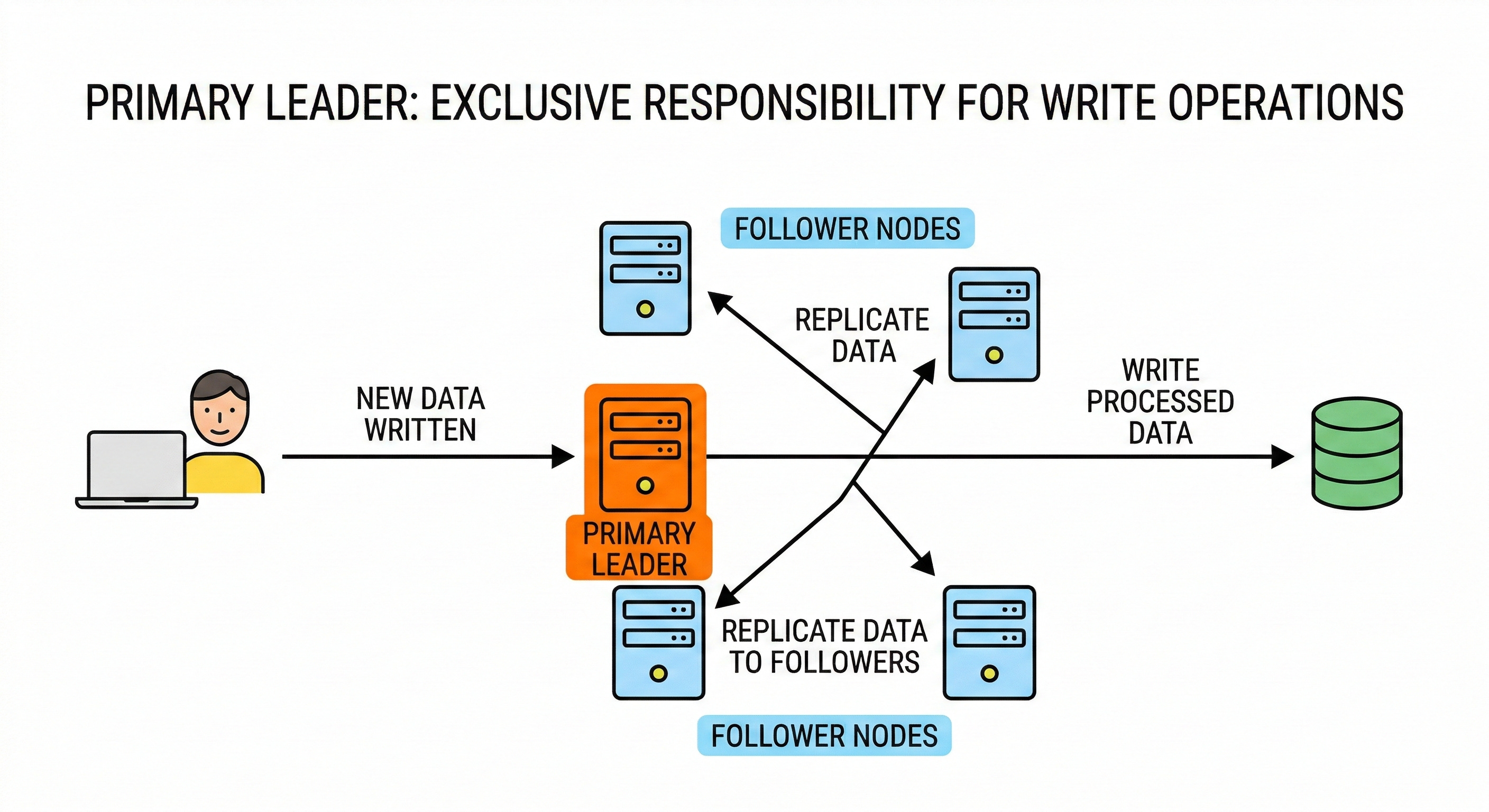
The remaining nodes in the cluster operate purely as Secondary Followers.
The secondary followers strictly copy the processed data from the primary leader to maintain secure digital backups.
This strict leadership hierarchy keeps the database perfectly organized.
As long as the network functions properly, the primary leader dictates the absolute truth.
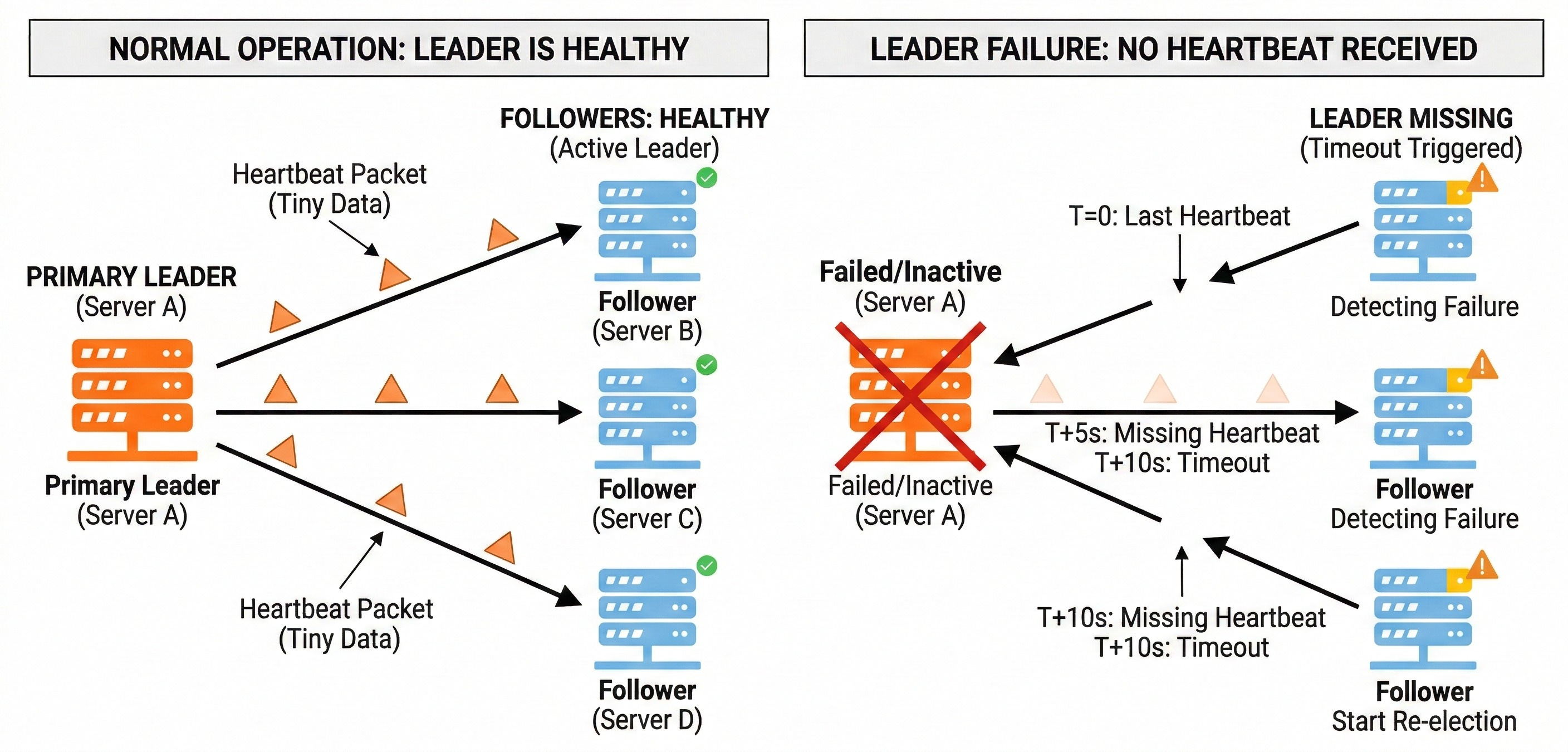
To monitor this truth, the primary leader continuously sends automated digital signals called Heartbeats.
A heartbeat is a tiny data packet confirming the primary leader is still healthy and actively functioning.
The Problem of Network Partitions
The technical crisis begins when the network connection between the nodes starts to malfunction.
Often, the primary leader does not actually crash or lose electrical power.
Instead, the physical network switch connecting the primary leader to the secondary followers completely stops routing traffic. The database nodes are perfectly fine, but the invisible digital pathway between them is destroyed.
When nodes cannot communicate with each other over the network, engineers call this a Network Partition.
Keep reading with a 7-day free trial
Subscribe to System Design Nuggets to keep reading this post and get 7 days of free access to the full post archives.