
L4 vs. L5 System Design Answers: What Interviewers Actually Hear
What L4 Engineers Say in System Design Interviews and What L5 Engineers Say Instead, Broken Into Ten Concrete Examples You Can Learn From

Most engineers preparing for a senior system design interview assume the gap between L4 and L5 is about knowing more. More components, more technologies, more patterns. They study harder and wider, trying to fill what they imagine is a knowledge deficit.
The gap is not about knowledge. It is about how knowledge is used.
In most system design interviews, the L4 candidate and the L5 candidate know roughly the same concepts. They have both heard of caching, sharding, circuit breakers, and consistency models.
The difference is what happens when they deploy that knowledge in the room.
The L4 answer names the component. The L5 answer justifies it, costs it, and connects it to the requirements.
The L4 answer solves the problem.
The L5 answer owns the problem, including the parts that can go wrong.
This difference is visible in specific moments, and those moments are the ones that move the needle on a scorecard.
An interviewer listening to two candidates discuss the same design will hear completely different things, not because one knows more but because one is reasoning at a different level.
This article shows that difference concretely.
Ten real system design moments, each with the answer an L4 candidate typically gives and the answer an L5 candidate gives instead, with an explanation of exactly what changed and why it matters.
The goal is to make the gap visible and therefore closeable, because once you can see precisely what L5 sounds like, you can practice toward it rather than guessing.
Why the Gap Looks the Way It Does
Before the pairs, a brief explanation of where the gap comes from, because understanding its origin makes the examples more instructive.
L4 engineers are evaluated on whether they can contribute reliably to a system, solve defined problems, and implement solutions correctly. Their system design answers reflect this: they name the right components, propose reasonable solutions, and demonstrate that they understand the system well enough to build it.
L5 engineers are evaluated on whether they can own a system end to end, including the requirements, the trade-offs, the failure modes, and the non-obvious consequences of design decisions.
Their answers reflect this: they do not just solve the problem, they define what the problem actually is, they justify every significant decision by naming what it costs, they proactively surface the ways the design could break, and they drive the conversation rather than responding to it.
The L5 answer is not longer for the sake of being longer.
It is more complete because it covers the dimensions that L4 answers skip: the trade-off named explicitly, the failure mode raised proactively, the constraint acknowledged, the decision justified by the requirements rather than by generic best practice.
With that frame, here are the ten pairs.
1. Choosing a Database
The question: What database would you use for storing user profiles?
L4 says:
“I’d use PostgreSQL. It’s reliable, widely used, and supports the data we need.”
L5 says:
“User profiles are structured and relational, so a relational database fits naturally. I’d go with PostgreSQL here.
The data has defined fields, we’ll want transactional guarantees when updating profile information, and we’ll likely need to join profiles with other tables for things like preferences and account settings.
The trade-off is that as user count grows into the hundreds of millions, the write path will need attention.
We can scale reads with replicas fairly easily, but writes will eventually require us to think about sharding by user ID.
For now, a single primary with read replicas gets us far, and we can revisit partitioning when we have the data to justify it.”
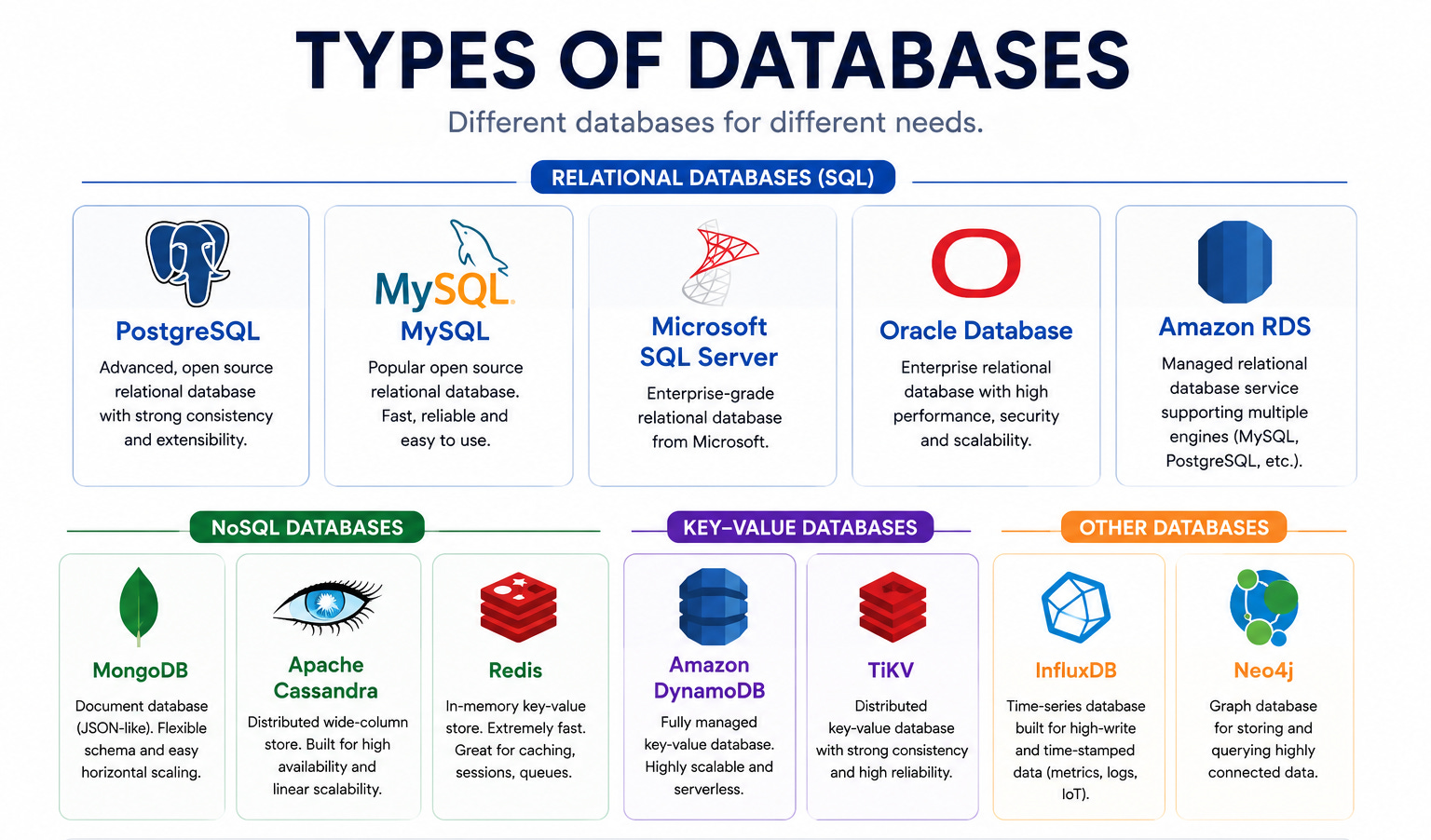
What changed: The L4 answer names a technology and gives two generic reasons that could apply to almost any database choice.
The L5 answer ties the choice explicitly to the shape of the data and the access patterns, names the trade-off on the write path at scale, and explains the scaling trajectory, including what the current choice defers and when to revisit it.
The decision is the same, but the L5 answer makes the reasoning visible.
2. Adding a Cache
The question: How would you handle the read load on the user profile service?
L4 says:
“I’d add a Redis cache in front of the database to reduce read load.”
L5 says:
“Most of the read traffic on profiles is repetitive, since the same profiles get read many times between updates, so caching is a good fit here. I’d use Redis with a cache-aside pattern: read from the cache first, fall back to the database on a miss, and populate the cache for subsequent reads.
The trade-off is staleness.
Profile data changes infrequently, so a short TTL of a few minutes is probably acceptable. I’d make it configurable per field type since some data, like a username, changes rarely and can be cached longer, while something like a notification preference might need a shorter window.
The main risk to plan for is a cache stampede if a popular profile’s key expires and many requests hit the database simultaneously. I’d handle that with request coalescing so only one request recomputes while the others wait.”
What changed: The L4 answer identifies the correct component and the correct pattern in one sentence.
The L5 answer justifies why caching fits this specific data, names the pattern, explains the staleness trade-off and how to tune it, and proactively raises the failure mode (stampede) with a mitigation.
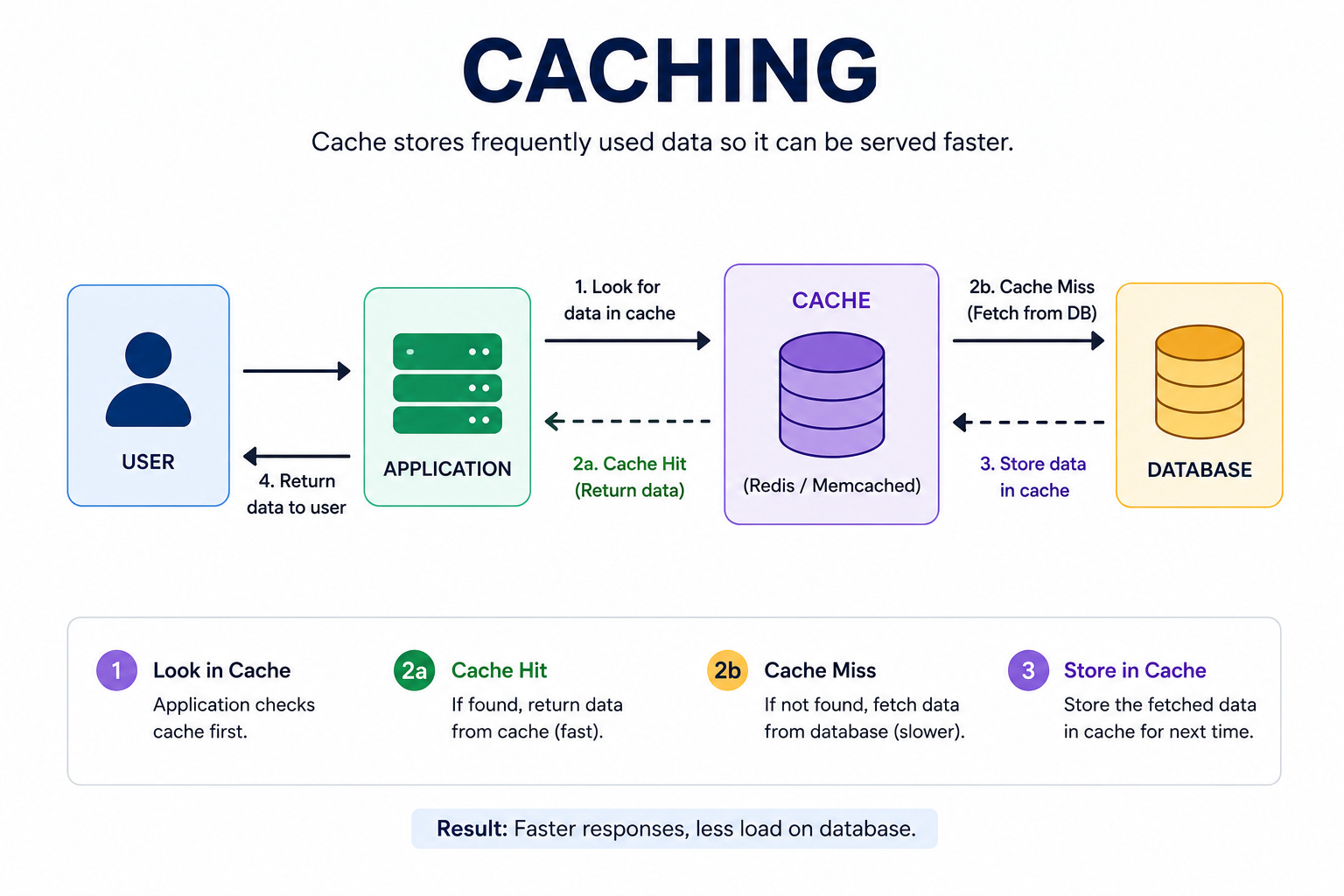
The L5 candidate did not wait to be asked about failure modes. They raised them because that is what owning the design looks like.
3. Handling Scale
The question: How would you scale this service to handle ten times the traffic?