
The 5 Things That Instantly Make You Look Junior in a System Design Interview
From database choices to scaling issues, find out what instantly makes you look junior in a system design interview.

This blog covers:
Prioritizing requirements over immediate coding
Understanding architectural trade-offs and tools
Mastering horizontal scaling and redundancy
Designing for system failure and reliability
Optimizing performance with caching strategies
Software applications often collapse under their own weight.
A feature that functions perfectly for ten users can easily crash when ten thousand users try to access it simultaneously.
This fragility is rarely due to a coding error or a syntax mistake. It is almost always a failure of architecture.
System design is the discipline of preventing these collapses. It is the art of structuring data and components so they remain stable as demand grows. Mastering this skill is what separates a junior developer from a senior software architect.
In an interview setting, your ability to prevent these failures is being tested. The interviewer is looking for specific indicators that you understand the complexity of large-scale systems.
Unfortunately, many candidates inadvertently display habits that signal a lack of experience. These signals are not about getting the “wrong” answer, but about approaching the problem with the wrong mindset.
By identifying and eliminating these five specific behaviors, you can demonstrate the maturity and foresight required for senior engineering roles.
Signal 1: Diving Straight into the Solution
The most immediate signal of inexperience occurs the moment the problem is presented.
The interviewer provides a broad, ambiguous prompt.
A junior candidate often responds by immediately drawing boxes, defining database schemas, or selecting specific technologies.
This reaction suggests a fundamental misunderstanding of the engineering process.
In professional system design, the details determine the architecture.
A system built for a local university requires a completely different structure than a system built for a global audience. Without knowing the constraints, it is impossible to design a viable solution. Moving too fast implies that you are guessing rather than engineering.
The Importance of Requirements Gathering
To avoid this mistake, you must spend the first portion of the interview defining the scope.
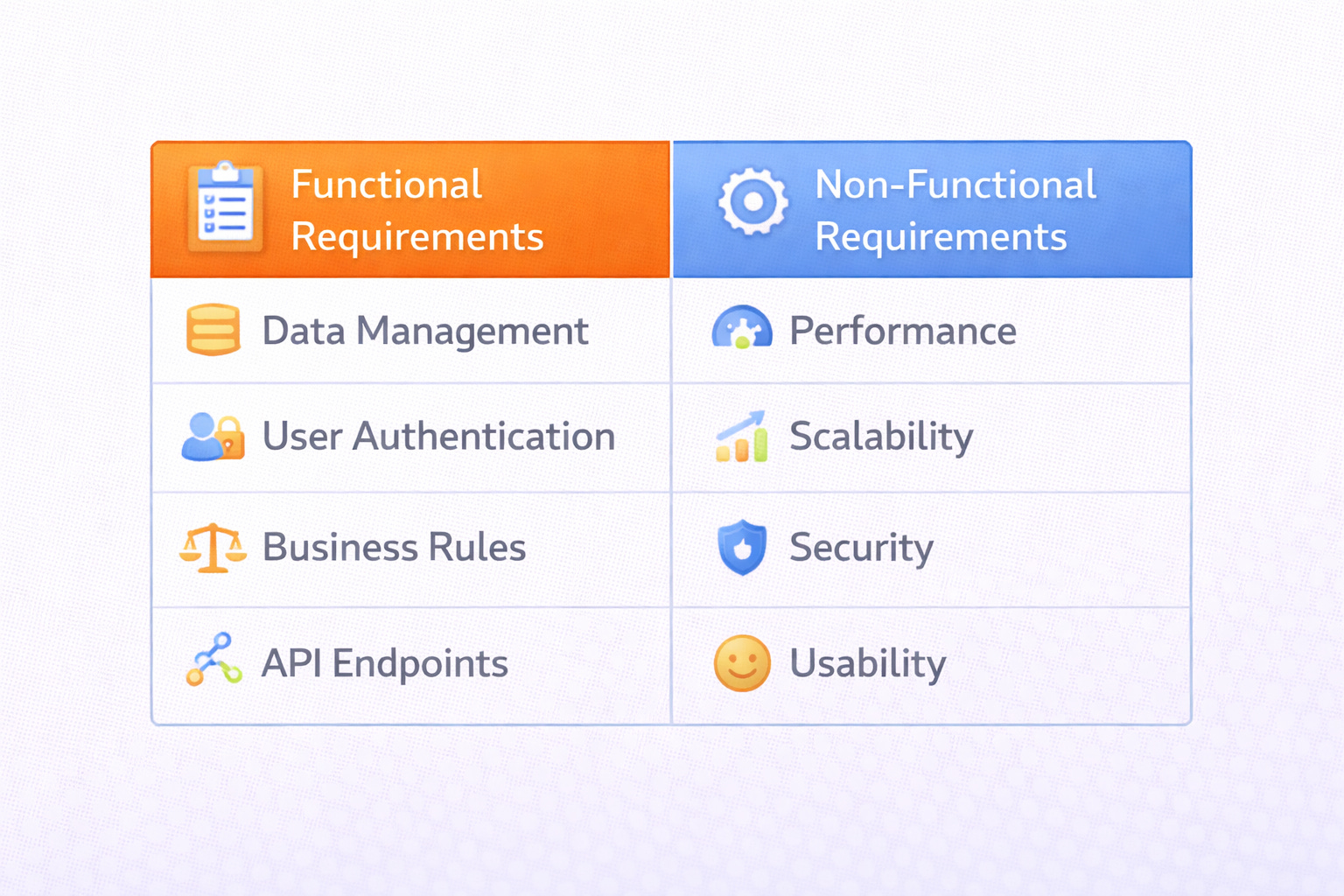
This involves establishing two critical types of requirements.
Functional Requirements define what the system must do. These are the core features of the application.
For a video streaming service, functional requirements might include uploading a video, viewing a video, and leaving a comment.
Non-Functional Requirements define how the system performs. This includes metrics such as Scalability (the volume of users), Latency (the speed of response), and Availability (the system’s uptime).
A senior engineer pauses to ask clarifying questions before drawing a single line.
They ask about the expected number of daily active users.
They ask how much data needs to be stored. They ask if the system needs to be optimized for writing data or reading data. Clarifying these constraints proves that you build solutions based on reality, not assumptions.
Keep reading with a 7-day free trial
Subscribe to System Design Nuggets to keep reading this post and get 7 days of free access to the full post archives.