
The First 10 Minutes of System Design Interview: A Step-by-Step Cheat Sheet
Learn exactly how to approach the first ten minutes of a system design interview with this beginner-friendly technical guide.


Digital platforms face a massive engineering hurdle when network traffic spikes unexpectedly.
A standard backend server easily processes a small volume of data requests. However, a sudden surge in digital interactions easily overwhelms physical hardware constraints.
The entire infrastructure locks up, and the software goes completely offline.
Building a technical foundation that handles massive scale without failing is a highly complex task.
This exact challenge is the primary focus of a system design interview. Candidates must demonstrate the ability to architect large distributed networks under strict time limits.
The opening ten minutes of this technical interview strictly dictate the final outcome. This initial phase determines the entire direction of the proposed software architecture.
If the foundational boundaries are incorrectly defined, the final design will inevitably fail.
Navigating the Ambiguous Prompt
When an interviewer presents a system design prompt, the question is always intentionally vague.
A prompt might simply ask an engineer to design a global file storage platform. This intentional vagueness serves as a test of analytical thinking and communication skills.
Junior developers often make a critical error at this exact moment. They rush straight to the whiteboard and begin drawing database tables and server boxes. Building a solution before fully understanding the underlying software problem guarantees a failed interview.
The secret to passing is treating the first ten minutes as a structured fact-finding mission.
The goal is to shrink a massive, terrifying prompt into a manageable technical project. This requires asking highly specific questions to uncover the true scope of the software.
Let us explore the exact steps needed to build this perfect technical foundation.
Phase One: Defining Software Requirements
The very first action an engineer must take is narrowing the scope of the project.
A broad software prompt must be broken down into specific operational constraints. We achieve this by dividing the software rules into two distinct categories. These categories are functional requirements and non-functional requirements.
Identifying Functional Requirements
Functional requirements define exactly what the software system actually does. These are the core digital actions that the software will execute for the end user.
A client device uploading a text document is a clear functional requirement. A client device deleting a user profile is another functional requirement.
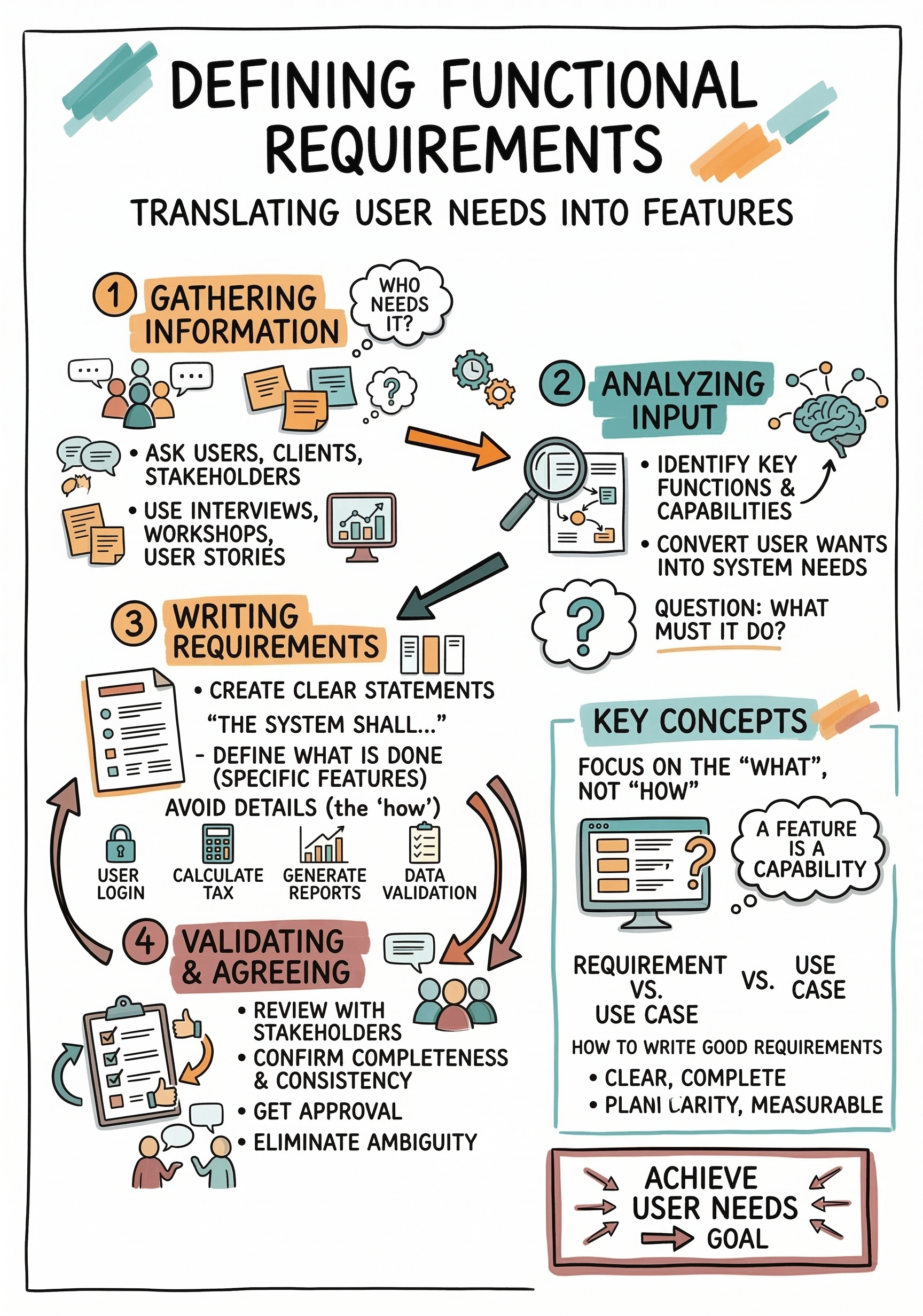
An engineer must ask the interviewer which specific technical features are mandatory.
The goal is to isolate three or four primary actions to prevent scope creep.
Scope creep happens when a software project slowly expands to include unnecessary features.
Limiting the feature list keeps the proposed architecture highly manageable.
The system no longer needs to support every possible user interaction imaginable. It only needs to process the specific tasks written clearly on the whiteboard.
Establishing Non-Functional Requirements
While functional requirements dictate what the software does, non-functional requirements dictate performance standards. This is where engineers define the reliability and speed of the backend infrastructure.
Non-functional requirements explain how the system behaves under extreme digital stress.
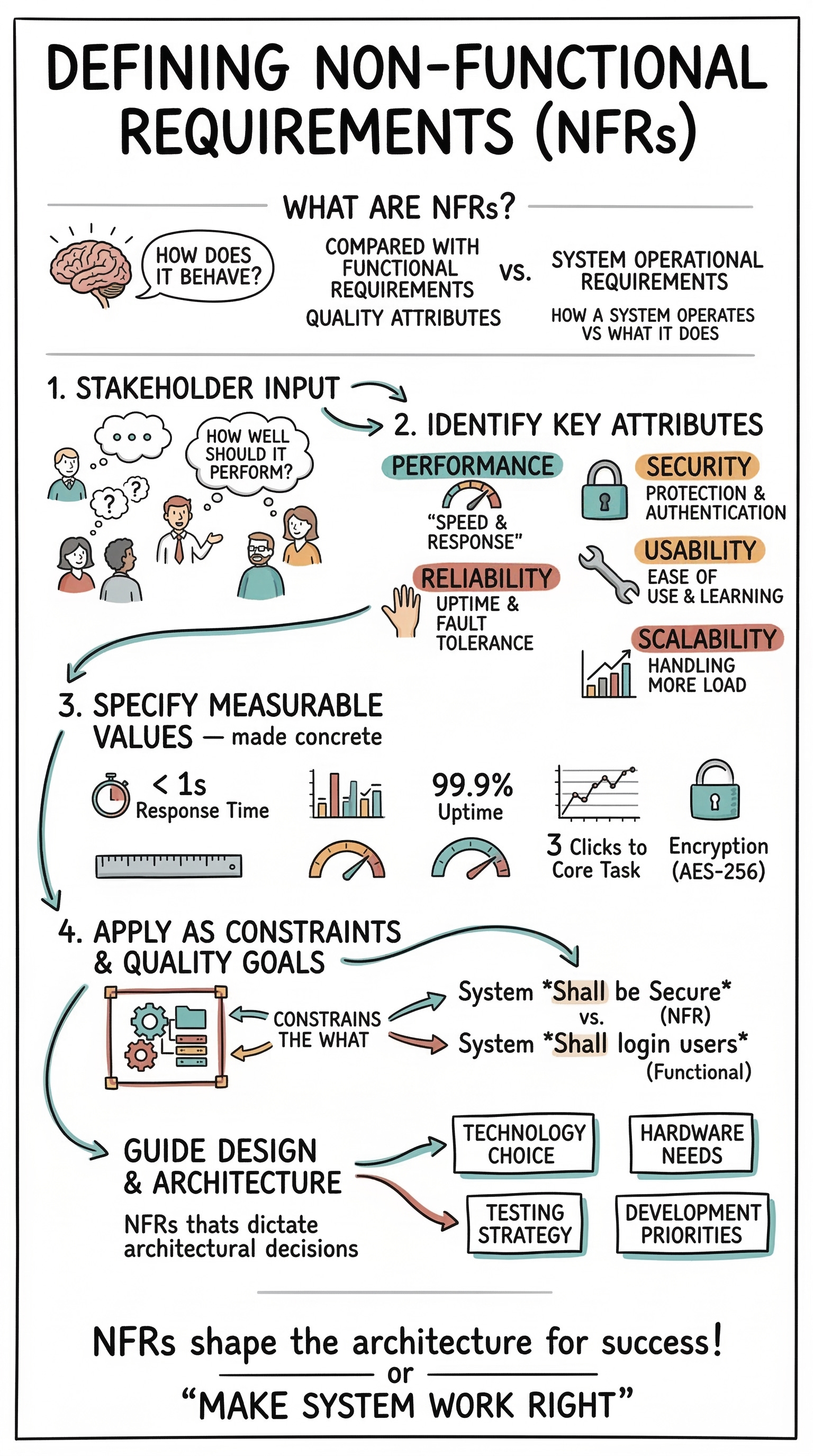
One critical performance standard is system availability.
Availability means the software system remains operational and accessible most of the time.
If a processing server loses power, the system should ideally stay online and route traffic elsewhere.
Another crucial standard is network latency.
Latency refers to the exact time required for a system to process a network request.
A low-latency system processes data incredibly fast, returning a response almost instantaneously.
