
System Design Interview: API Gateway vs. Service Mesh (The Senior’s Perspective)
Master the difference between an API Gateway and a Service Mesh for your system design interview. Learn about North-South vs. East-West traffic, the sidecar proxy pattern, and mTLS.

Modern software engineering frequently involves breaking massive applications into hundreds of smaller independent programs. These independent programs must communicate over a network to function correctly and generate responses.
As the number of connections grows, managing this network traffic becomes a massive technical hurdle. Without a proper structural foundation, applications suffer from slow performance and severe security vulnerabilities.
Software developers need clear architectural boundaries to handle routing, authentication, and monitoring across all these moving parts.
Failing to organize this data flow leads to unreliable systems that crash under heavy load.
Understanding how to control these network requests is a critical part of mastering large-scale distributed systems. Knowing exactly which infrastructure tools to implement is essential for building highly scalable software.
The Core Problem of Network Communication
In a traditional software architecture, all code lives inside a single large program on one isolated server.
Functions call other functions directly within the local memory of that specific server.
This direct memory access is incredibly fast, highly reliable, and very easy to monitor. However, massive monolithic codebases eventually become difficult to deploy and impossible to scale efficiently across multiple servers.
To solve this scaling problem, engineering teams split the large program into smaller pieces called microservices.
Each microservice handles one specific operational task and runs on its own isolated virtual server.
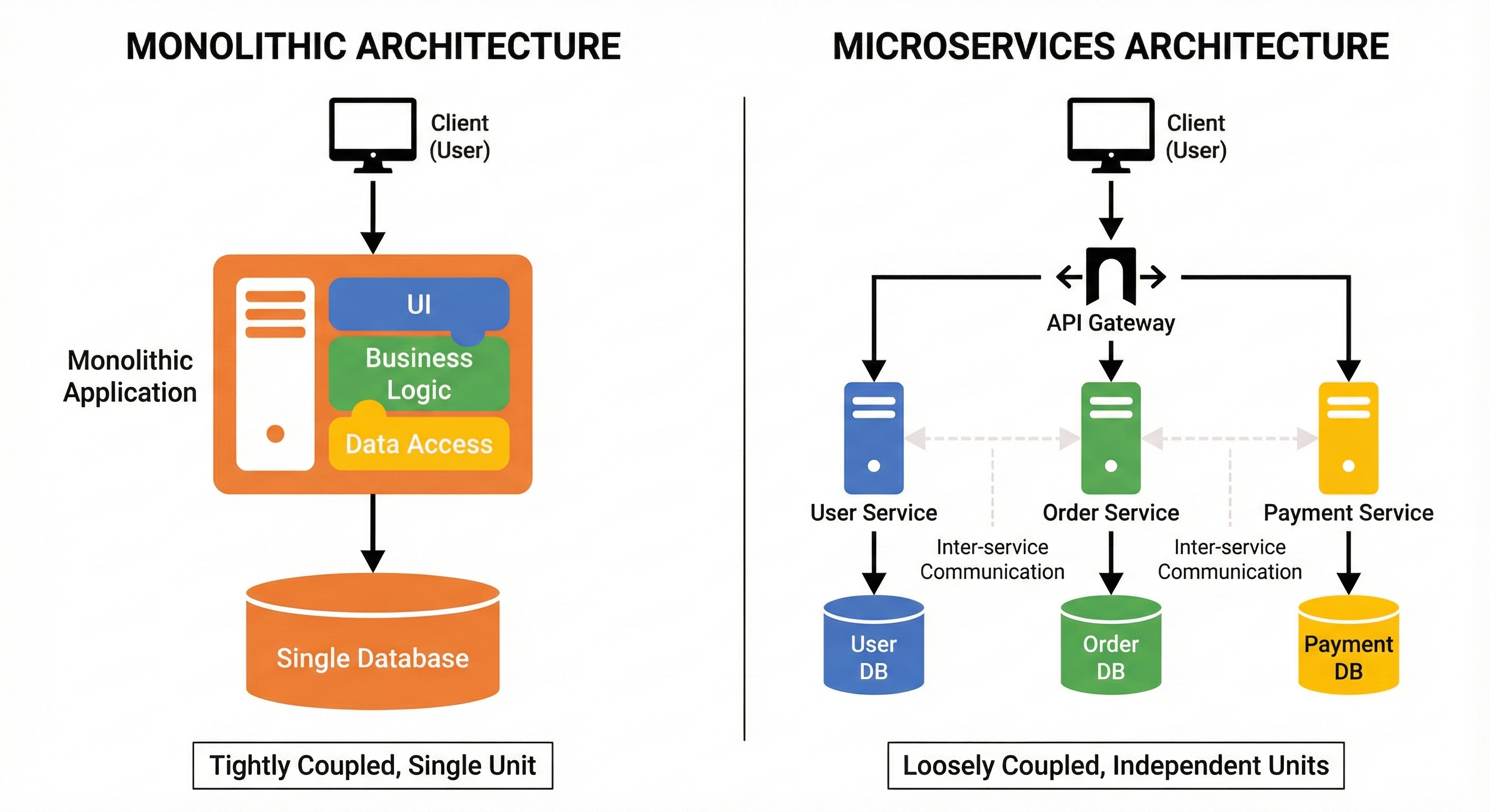
Because these services run on completely different servers, they can no longer use local memory to share data. Instead, they must send digital messages to each other over a physical computer network.
Network communication introduces a completely new layer of complex difficulties to software design.
Computer networks can fail randomly, data packets can get lost in transit, and malicious users can intercept sensitive messages. Software engineers must build systems to track these messages, secure the network connections, and ensure data reaches the correct destination safely.
This fundamental operational requirement led to the creation of specialized architectural networking components.
Understanding the API Gateway
An API Gateway is a dedicated centralized server that acts as the absolute single entry point into a backend system. It sits at the very edge of a private network directly facing the public internet.
All external clients must send their data requests directly to this specific gateway server first. The external clients might be mobile applications, web browsers, or third party desktop software.
The primary job of the API Gateway is to accept external network traffic and route it to the correct internal service. In system design terminology, this flow of data from external clients to the internal network is called North-South traffic.
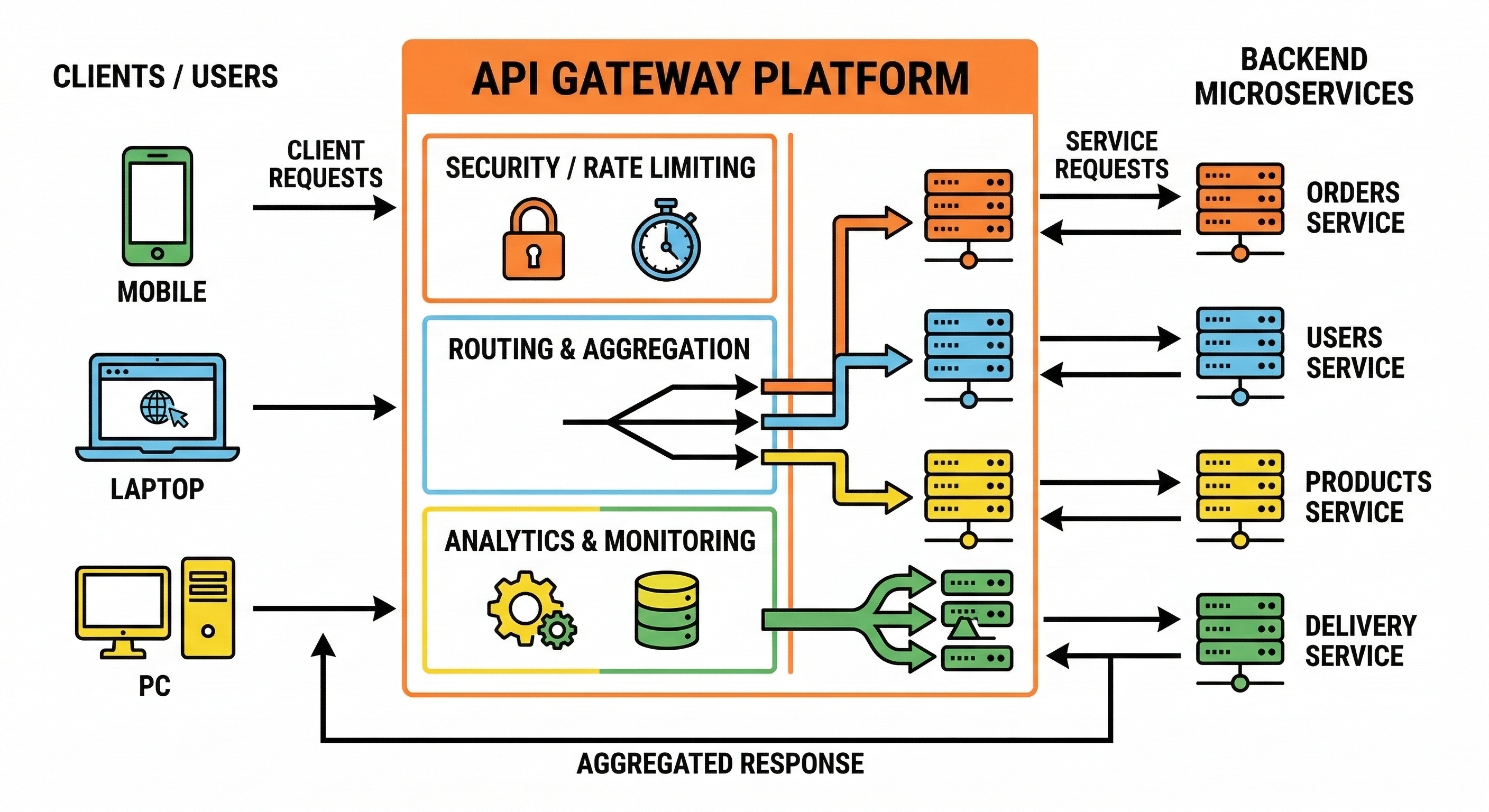
The gateway intercepts this incoming traffic before it ever touches any sensitive internal database servers. It acts as a protective shield and a traffic director for the entire private network.
Keep reading with a 7-day free trial
Subscribe to System Design Nuggets to keep reading this post and get 7 days of free access to the full post archives.