
Decoding API Architecture: REST, GraphQL, and gRPC Explained
Master API design for your system design interview. Learn the fundamentals of client-server communication, HTTP methods, REST vs. GraphQL vs. gRPC & defensive patterns like rate limiting & pagination.

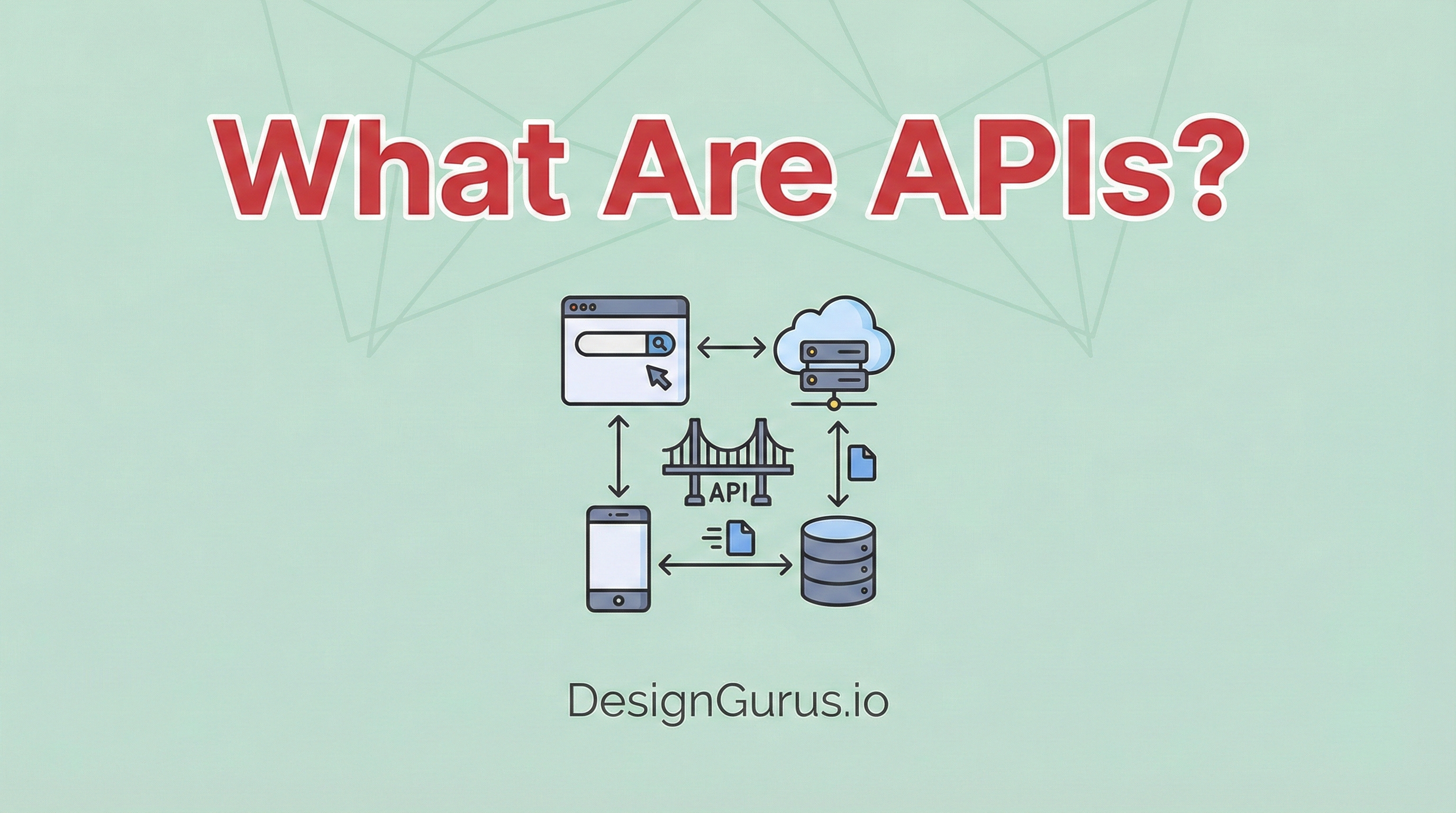
Modern software architecture heavily relies on distributed systems.
Applications rarely exist as massive, isolated blocks of code today. Development teams break large applications into smaller, independent services.
This separation makes code easier to maintain and update.
However, this isolation creates a massive technical barrier. Independent software programs cannot natively read the internal memory of other remote programs.
Giving public facing software direct access to private backend storage introduces catastrophic security vulnerabilities. Software components must share data continuously to function, but they need a highly secure and structured mechanism to do so.
This is the exact technical problem an Application Programming Interface solves. Understanding this mechanism is critical for mastering system design.
An API acts as a strict digital boundary between independent systems. It allows drastically different software components to interact safely and predictably.
To understand how this works behind the scenes, consider the internal process of data retrieval. The requesting software constructs a specific digital message asking for internal data.
The API receives this incoming message and validates the formatting. It also verifies the hidden security credentials required for access.
If the message is perfectly formatted, the API retrieves the data from the database. It then packages the data and sends it back to the requesting software.
This entire interaction happens in milliseconds. It keeps the internal database logic perfectly hidden and secure.
The Mechanics of Network Communication
Software programs cannot communicate using human language. They require a rigid and mathematical set of rules to exchange information.
Without these strict rules, network communication would instantly collapse into chaos.
The Client and Server Model
The foundation of system design is the client-server model.
The Client is the software application that actively requests data.
The Server is the powerful remote machine that holds the data and processes the logic.
The client always initiates the communication cycle. The server waits passively for incoming messages.
The API acts as the protective software layer sitting directly between them. The client never touches the server database directly.
The Anatomy of a Request
When a client needs data, it must build a highly structured network message. This message is called a Request.
If the request is missing any required parts, the server will immediately reject it.
A standard request consists of four primary structural components.
The first component is the Endpoint.
An endpoint is a specific network URL that points to a distinct digital resource.
One endpoint might handle creating user accounts. A completely different endpoint might handle processing payment transactions.
The second component is the Method.
The method acts as an action verb. It tells the server exactly what kind of database operation the client wants to perform. Using the incorrect method will cause the request to fail.
The third component is the Headers.
Headers are hidden pieces of metadata attached to the request. They provide the server with crucial context.
Headers specify the data format and carry the required security passwords.
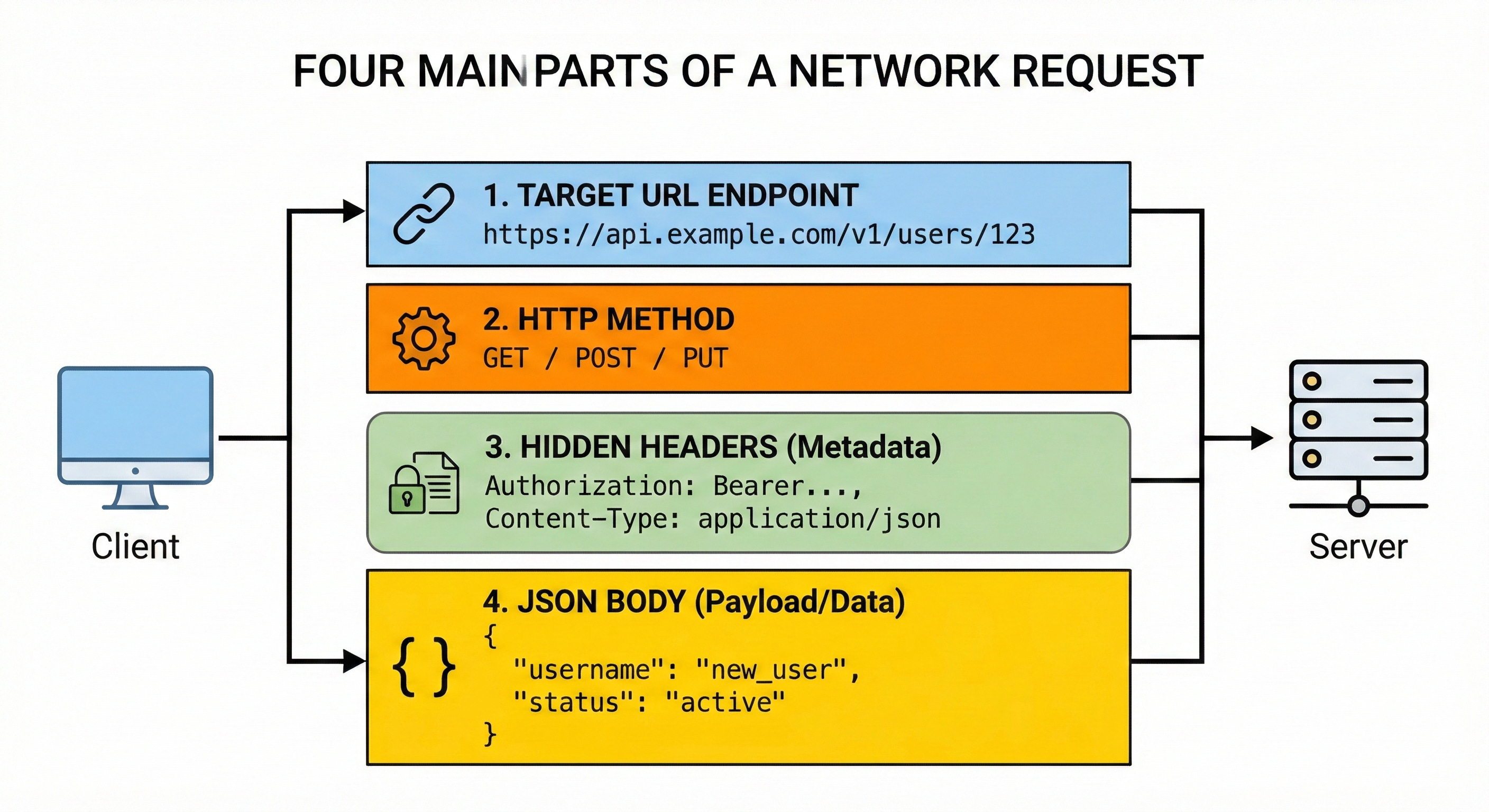
The fourth component is the Body.
The body contains the actual data payload the client wants to transmit. If a client is uploading a new text document, the text goes inside the body. Not all requests require a data body.
HTTP Methods Explained
Understanding the four primary methods is essential for system design. These methods define the exact boundaries of what a client can do. They map directly to standard database operations.
Keep reading with a 7-day free trial
Subscribe to System Design Nuggets to keep reading this post and get 7 days of free access to the full post archives.