
System Design for Absolute Beginners: Where to Start and What to Learn First
Learn the foundational concepts of system design. Discover how to architect scalable applications, understand load balancing, and store data efficiently.


Software development often begins in a localized environment where a single computer processes every single line of code.
This localized setup functions perfectly for basic testing and minor workloads. However, deploying that same software to a global network introduces severe technical complications.
A standard computer possesses limited processing power and finite memory capacity.
When millions of concurrent network requests hit a single machine simultaneously, the hardware resources exhaust rapidly.
The computer attempts to queue the incoming network traffic, which creates massive delays in response times.
Eventually, the hardware simply stops responding completely, causing the entire software application to crash.
System design is the specialized engineering discipline that directly addresses these massive traffic failures. It involves planning the structural framework of a software application before writing any functional code. Proper architectural planning ensures that software remains highly available and consistently fast under extreme pressure.
The Foundation of Network Communication
The Client and Server Model
To understand system design, one must first grasp how basic network communication operates.
The entire internet relies on the client-server model.
A client is the software interface making a network request.
A server is a powerful remote computer that receives the request and processes the required logic.
When a client needs information, it formats a text-based network request and transmits it over the internet. The server receives this specific message and computes the necessary data. The server then formats a response and sends it back to the waiting client interface.
This continuous cycle of requests and responses forms the backbone of all modern software applications.
Behind the scenes, this communication requires strict adherence to network protocols.
A protocol is simply a defined set of rules dictating how data must be formatted for transmission.
If the client sends a request that violates these strict formatting rules, the server will reject it immediately.
The Challenges of Scaling
As software grows in popularity, the sheer volume of incoming network requests increases exponentially.
A single server can only process a mathematically finite number of operations per second. When the incoming traffic exceeds this mathematical limit, developers must scale the underlying hardware.
Scaling is the technical process of increasing the computational capacity of a software system.
Developers generally choose between two distinct scaling methodologies.
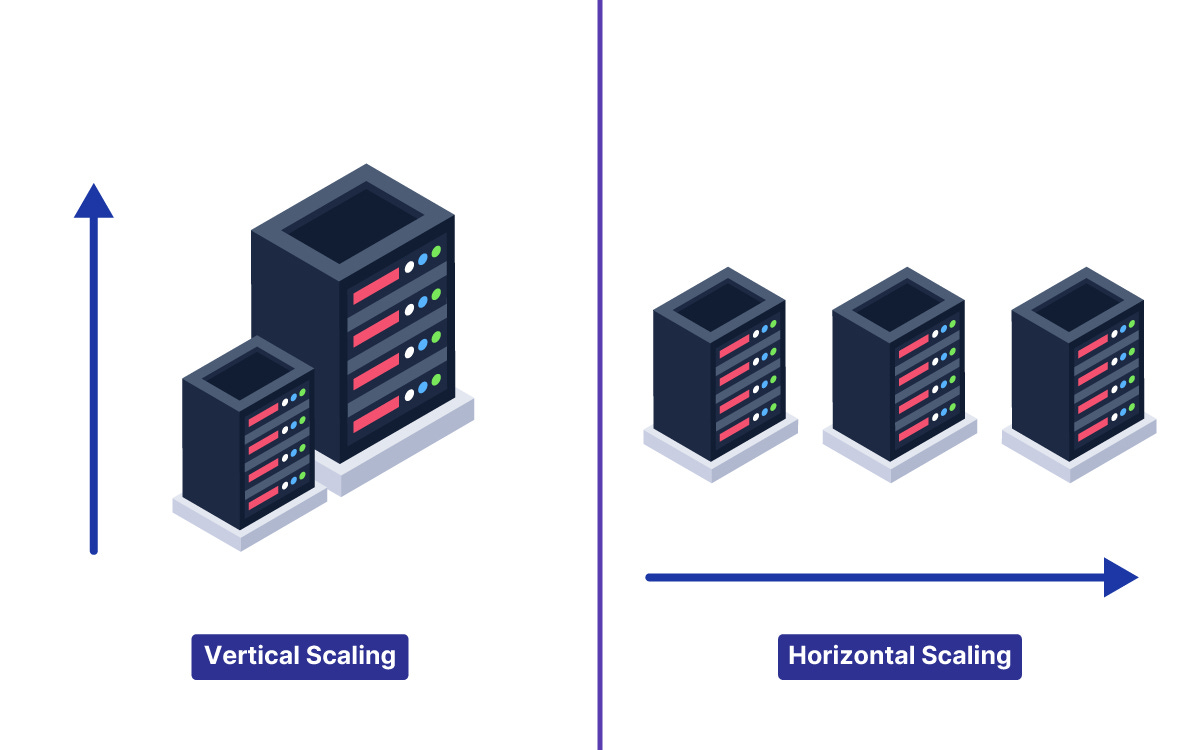
Vertical scaling involves adding more physical power directly to the single existing server. Engineers upgrade the machine by installing faster processors or adding larger memory modules.
The software codebase remains completely unchanged because the exact same computer is simply running much faster.
Vertical scaling is incredibly easy to implement initially. However, it possesses strict physical limitations that cannot be bypassed.
A computer motherboard can only hold a specific maximum amount of memory chips.
Furthermore, relying on one massive server creates a dangerous single point of failure for the entire application.
Expanding with Horizontal Scaling
Horizontal scaling offers a completely different technical approach to expanding system capacity.
Instead of heavily upgrading one single machine, engineers connect multiple standard computers together over a shared network.
This creates a large cluster of independent machines that divide and conquer the total processing workload.
When incoming network traffic spikes, the system automatically boots up additional servers to handle the load. When the traffic volume decreases, the system safely powers down the extra servers to conserve computing resources.
This dynamic architectural flexibility allows software platforms to handle virtually unlimited amounts of active internet traffic.
Horizontal scaling removes the single point of failure risk from the network architecture.
If one individual server experiences a critical hardware crash, the remaining servers instantly absorb the missing workload. The overall software application remains online and completely functional.
Directing Traffic with Load Balancers
Routing Incoming Traffic
Implementing horizontal scaling introduces a complex new routing challenge.
If an application runs across fifty different servers, incoming network traffic needs a clear destination.
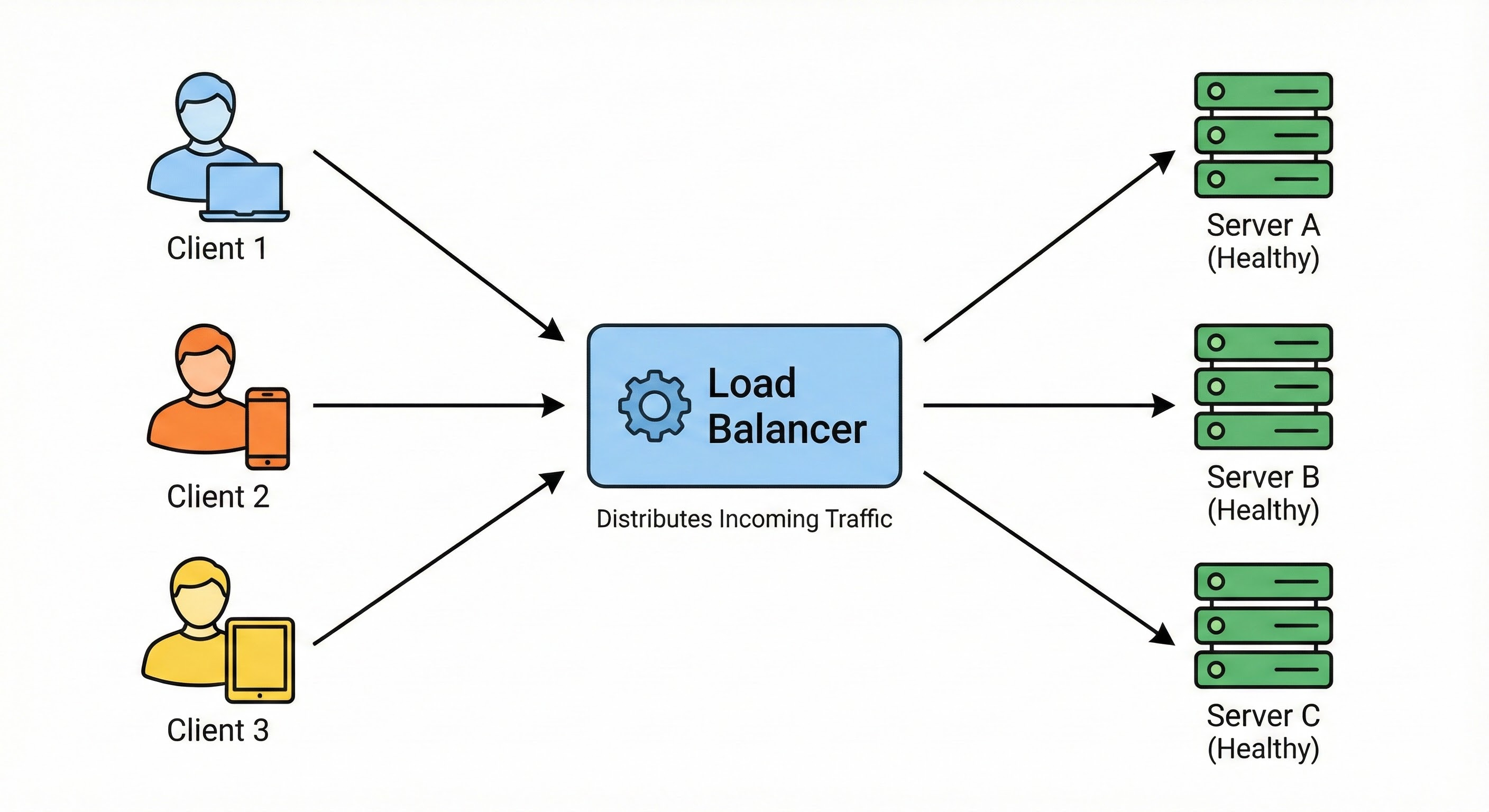
A load balancer is a specialized routing component that solves this exact distribution problem.
The load balancer sits directly in front of the application server cluster. It acts as the single primary entry point for every single incoming client request.
When a request arrives, the load balancer intelligently decides which specific server should process the data. It then securely forwards the network request to that exact machine for immediate execution.
To distribute the workload evenly, load balancers utilize specific mathematical routing algorithms.
A basic algorithm might distribute incoming requests sequentially in a continuous rotating loop across all active machines.
A more advanced algorithm mathematically calculates the current active connections and routes data to the least busy server.
Monitoring Server Health
Load balancers also perform continuous health checks on every connected machine in the server cluster.
Keep reading with a 7-day free trial
Subscribe to System Design Nuggets to keep reading this post and get 7 days of free access to the full post archives.