
Misconceptions About Microservices: Why a Monolith Might Be Exactly What You Need
The biggest misconception in system design is that microservices are always better. Learn the truth and how to make architecture decisions that actually work.

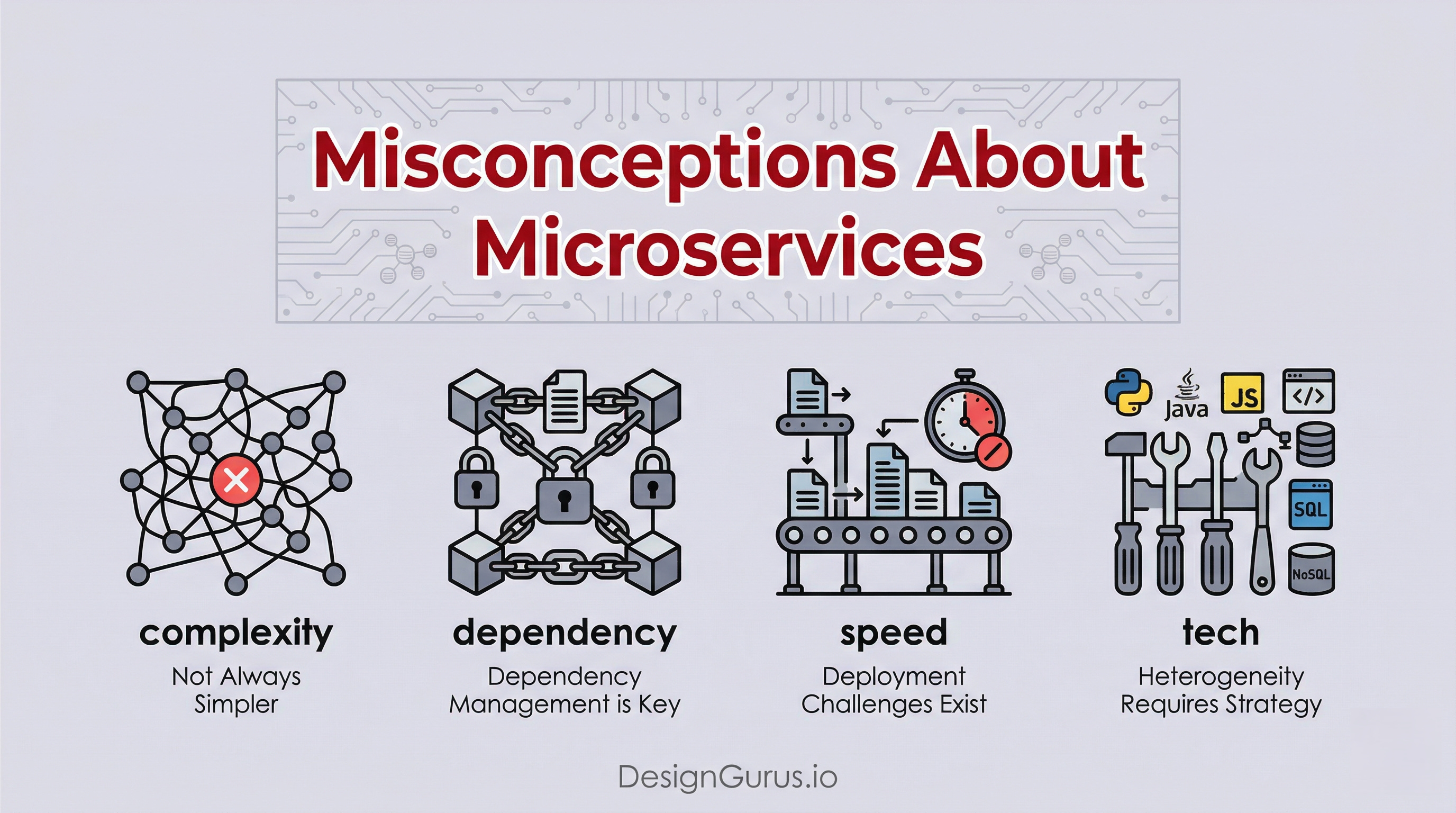
Something feels off in the way software architecture gets taught online.
Open any tech blog, scroll through any YouTube tutorial, or peek into any system design course, and there is one idea repeated so often it has become almost religious: microservices are the modern way. Monoliths are the old way. The implication is clear. If you are building something new, you should be breaking it into tiny independent services from day one. Anything else feels outdated.
But here is the thing. That advice has caused more damage than it has prevented. Teams have spent months untangling problems that only exist because they chose microservices too early. Projects have burned through budgets chasing an architecture pattern built for companies with hundreds of engineers, not a team of five sitting in the same room.
The truth? A monolith is not a bad word. It is, in many situations, the smartest choice you can make. And understanding when to use one versus the other is one of the most valuable skills a developer can build.
This blog is going to break all of that down. No hype. No trends. Just honest, practical thinking about how software architecture decisions actually get made in the real world.
Before jumping into the debate, let’s make sure the basics are clear.
What Exactly Is a Monolith?
A monolith is a software application where all the code lives in a single codebase, gets built together, and gets deployed as one unit. Your user authentication, your payment processing, your notification system, your dashboard... they all live under one roof.
When you make a change to any part of it, you rebuild and redeploy the whole thing.
Now, that might sound limiting. But think about what that gives you.
One codebase to search through. One deployment to manage. One place to look when something breaks. For a small team, this is not a limitation. It is a superpower.
What Are Microservices?
Microservices are the opposite approach. Instead of one big application, you break your system into many small, independent services. Each service handles one specific job. Each service has its own codebase, its own database (ideally), and gets deployed on its own.
The user authentication service is separate from the payment service. The notification system runs independently. They all talk to each other over the network, usually through APIs or message queues.
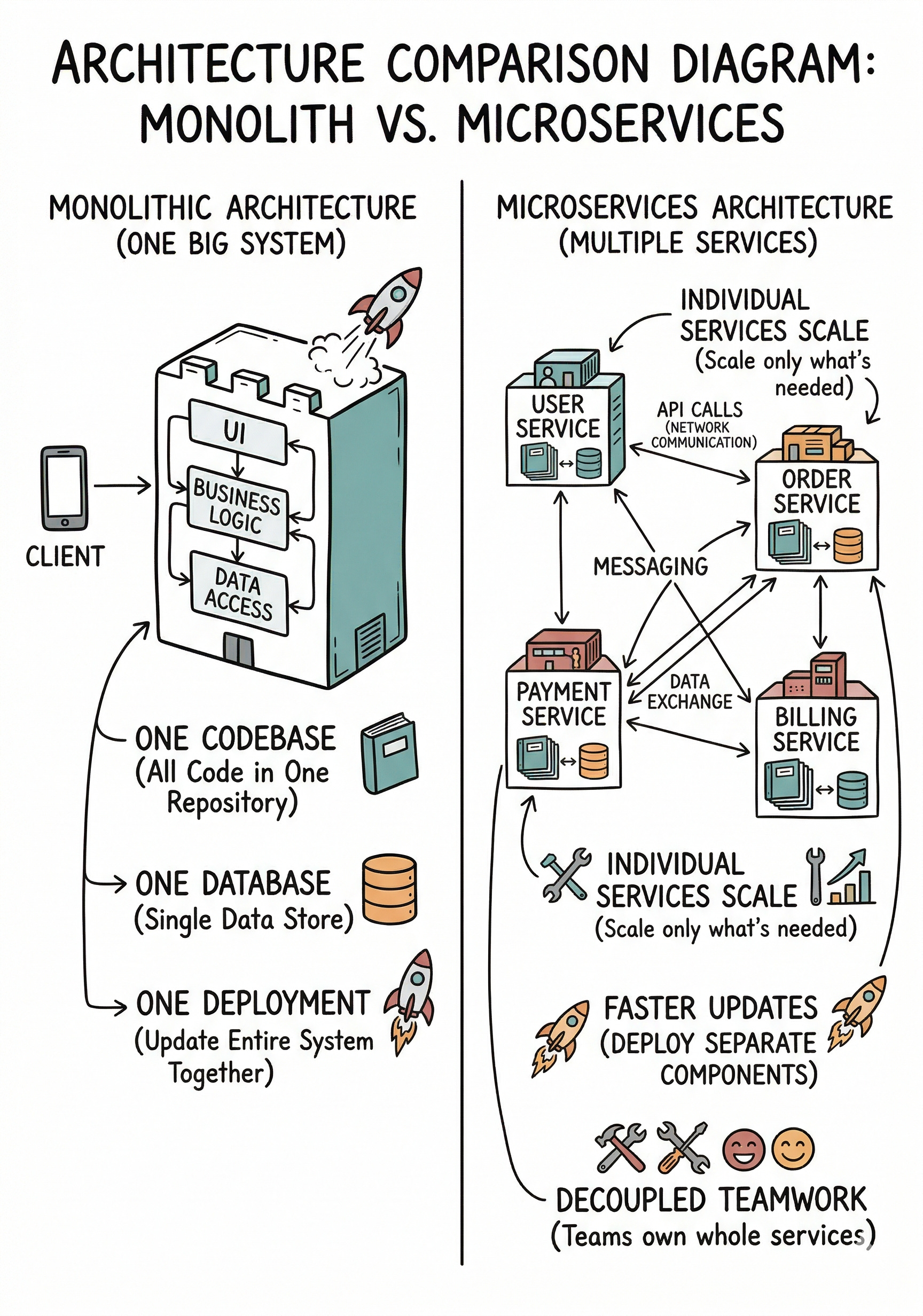
Sounds clean and organized, right? It can be.
But that “talking to each other over the network” part?
That is where things get complicated fast.
The Biggest Misconception: Microservices Are Always Better
Let’s just say it plainly.
The biggest misconception about microservices is that they are always better than a monolith. They are not. Not even close.
This misconception spreads because people hear how Netflix, Amazon, and Google use microservices.
And they think, “Well, if it works for them, it must be the right way.”
Keep reading with a 7-day free trial
Subscribe to System Design Nuggets to keep reading this post and get 7 days of free access to the full post archives.