
Front-End vs. Back-End vs. System Design – What’s the Difference in Interviews?
Confused by the different software interview formats? I break down the key differences between Front-End, Back-End, and System Design interviews, including top questions and prep strategies for each.

Are you confused about the difference between front-end, back-end, and system design interviews?
One minute you’re preparing for layout bugs and JavaScript quirks, the next you’re debugging SQL queries or being asked to design the next Netflix.
It’s easy to feel overwhelmed when interview prep seems to cover everything from CSS flexbox to distributed caching.
These interviews test very different skills, follow different formats, and require very different prep strategies.
Front-end interviews often dig into UI rendering, styling quirks, and JavaScript behavior in the browser.
Back-end rounds dive deeper into data structures, algorithms, APIs, and server-side problem solving.
System design interviews? They zoom out—testing your ability to architect scalable, real-world systems from scratch.
This blog will walk you through the key differences between these interview types—what they assess, what questions to expect, and how to tailor your preparation for each.
Let’s break it down.
Why Different Interviews for Different Roles?
Modern software engineering is a broad field.
The skills needed to craft a beautiful user interface in the browser are quite different from those needed to design a robust server or architect an entire system from scratch.
Employers know this, so they tailor interviews to match the role:
Front-End Interviews focus on the user-facing parts of software – think of everything that runs in a web browser or mobile app. It’s about creating experiences that users see and interact with.
Back-End Interviews drill into server-side logic, databases, and the heavy-lifting behind the scenes – the machinery that powers apps and websites.
System Design Interviews step back and look at the big picture: how do you design an entire system or feature end-to-end to be scalable, reliable, and maintainable?
Each interview type has its own flavor. To use a quick analogy, imagine building a house:
A front-end interview is like discussing the interior design – how the rooms look and feel.
A back-end interview is like talking about the building’s structure and foundation – will the house stand and function properly?
A system design interview is like being the architect of the whole neighborhood – planning where the houses, roads, and utilities go for the best overall community design.
Now, let’s unwrap each of these interviews one by one and see what’s behind the door.
Front-End Interviews: Pixels, Pages, and a Bit of Puzzle
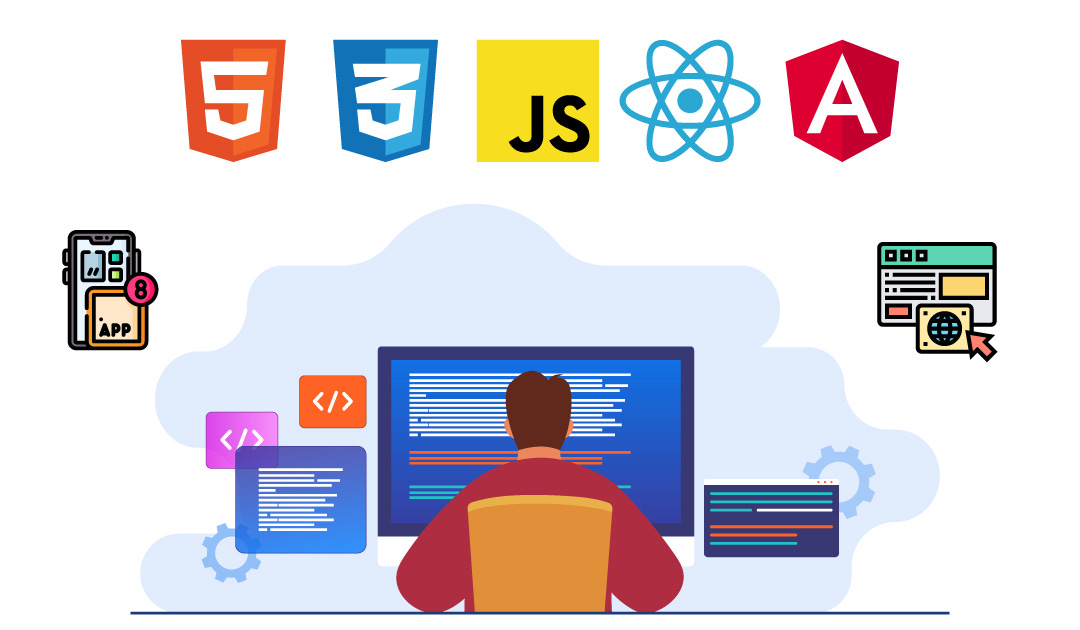
Front-end interviews are typically all about what happens on the client side – that means the browser for web developers (or the UI layer in general).
If you’re interviewing for a front-end developer role, be prepared to talk about and demonstrate your skills in HTML, CSS, and JavaScript (and often, a popular framework like React or Angular).
Don’t be surprised if you’re asked to build a simple UI component on the spot or to debug a snippet of JavaScript.
These interviews often include a coding exercise focused on front-end problems – for example, you might be given a list of requirements and asked to create a dynamic webpage or to fix a buggy UI.
Domain Knowledge Over Algorithms
Unlike general software engineer interviews, front-end interviews tend to put less emphasis on complex algorithms and more on intricate domain knowledge – things like how to make a responsive design, understanding CSS specificity rules, or explaining how the browser rendering pipeline works.
Yes, you still need to know your basics (data structures can come up, and a little algorithmic thinking helps when manipulating the DOM or optimizing an app), but you’re more likely to be asked about asynchronous JavaScript or how to improve page load times than about implementing a red-black tree from scratch.
Topics and Questions for Front-end Interviews
Here are some common things front-end interviewers love to explore:
HTML/CSS Mastery: They might ask about semantic HTML tags, CSS Flexbox/Grid, or how to create layouts and responsive designs. For example, “How do you approach making a website mobile-friendly?” or “Can you explain the box model and how margin/padding work?”
JavaScript Deep Dives: Be ready for questions on closures, event loop, promises/async-await, and maybe a tricky coding problem that involves manipulating the DOM or using JavaScript array methods. They want to see if you can solve logic problems with JS in the browser environment.
Frameworks and Tools: If the job description mentioned a framework (React, Vue, Angular), expect a couple of questions around it. E.g., “What are the lifecycle methods in React?” or “How do you manage state in a React application?” They might also touch on build tools (Webpack, Babel) or using APIs on the front-end (AJAX, fetch API).
Performance and Debugging: Front-end is not just making things look good, but also feel good. You could be asked how to optimize a webpage’s load time, or how to debug a slow-rendering component. For instance, “What strategies do you use to improve website performance?” might pop up.
UX and Product Thinking: Especially for more senior front-end roles, interviewers may gauge if you have an eye for user experience. “How would you improve the user interface of [some app]?” or scenario-based questions where you need to balance good design with technical feasibility.
Interview Format
Many front-end interviews involve a live coding exercise on a laptop (sometimes in a shared environment or a take-home assignment).
You might be asked to build a simple app or feature.
Other times, you’ll have whiteboard discussions about architecture – yes, front-end system design is a thing! (e.g., designing a component library or an app’s front-end architecture).
But typically, the emphasis is on practical skills: writing and understanding front-end code.
Preparation Tips
To shine in a front-end interview, here’s what you can do:
Build small projects: Nothing prepares you better than hands-on practice. Create a few mini websites or app features from scratch. This gives you stories to talk about and confidence in coding live.
Review fundamentals: Make sure you know your core web concepts (how the browser works, HTTP basics, how to call APIs, etc.). Revisit those CSS layouts and JavaScript quirks.
Practice common challenges: Center that div, implement a dropdown menu, fetch and display data from an API. These practical tasks often show up.
Brush up on vocabulary: MVC, SPA, SSR vs CSR, RESTful APIs – front-end devs throw around a lot of acronyms. Make sure you can explain common concepts clearly.
Use resources: There are great front-end interview prep resources out there (like the Front End Interview Handbook and platforms like GreatFrontEnd). Since front-end interviews emphasize domain expertise, make sure you’re comfortable with the latest trends and tools in the front-end world.
Front-end interviews can be fun and creative – they let you showcase your knack for making things user-friendly and appealing.
And remember, it’s perfectly fine to talk through your thought process.
If you’re not sure how to do something in CSS, you might say, “I’d normally Google the exact syntax, but I recall that flexbox could help here by…” – showing you know what to do even if you don’t recall every detail by heart.
Back-End Interviews: Data, Depth, and Debugging
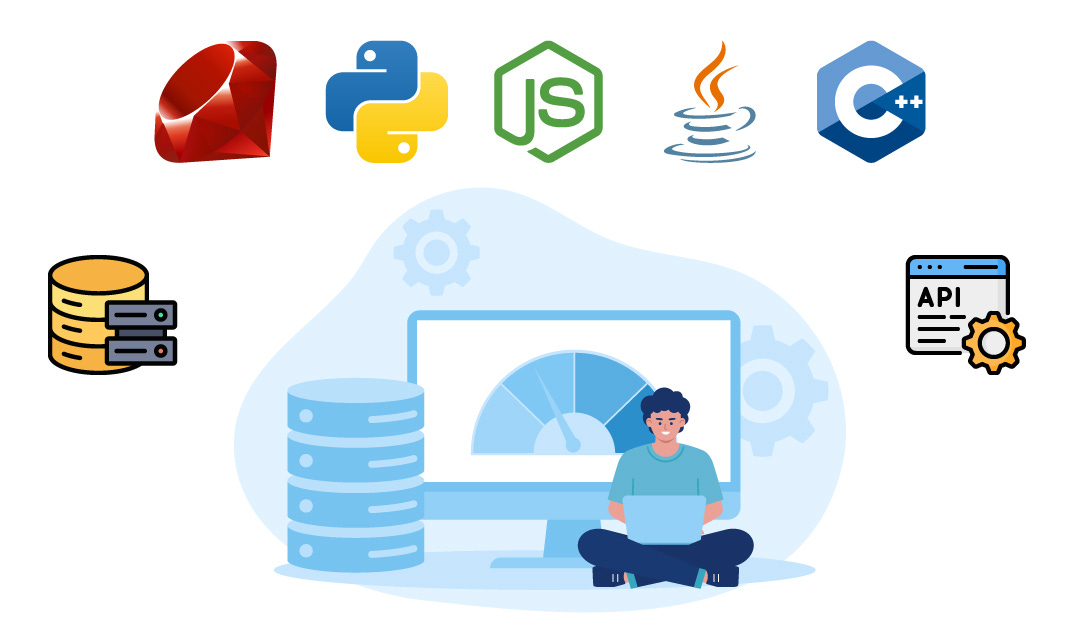
Now, switching gears to the back-end side of things – the part of the iceberg beneath the water.
Back-end interviews tend to feel more traditional in the sense of the classic software engineering interview.
If front-end interviews were about making things look good and run in a browser, back-end interviews are about making things work behind the scenes.
You’ll likely face coding challenges that test your understanding of data structures and algorithms (yes, those LeetCode problems).
Interviewers want to know if you can write efficient, correct code to solve problems – think processing data, searching, sorting, optimizing for performance.
Don’t be surprised when a back-end interview question sounds like a CS exam question: “Design a data structure for…”, “Find the longest substring without repeating characters”, or “How would you implement a search feature for a library catalog?”
But it’s not all abstract puzzles.
Back-end roles often involve building APIs, dealing with databases, and integrating systems.
So interviewers might also probe your knowledge of databases (SQL vs NoSQL), caching, message queues, server architecture, and so on.
You could get questions like, “How would you design a database schema for an e-commerce store?” or “How would you scale an API to handle a million requests per minute?”
Algorithms and Problem-Solving
Unlike front-end interviews which lean a bit away from heavy algorithms, back-end interviews usually double down on algorithmic thinking.
Companies figure that a strong back-end engineer should be able to handle tricky logic and large data efficiently.
So, expect to write code during the interview – often in a language of your choice – to solve algorithmic problems.
Efficiency matters, so be ready to discuss time complexity (“Is your solution O(n), O(n log n)? Why does that matter here?”).
This is where all that practice with arrays, linked lists, trees, graphs, dynamic programming, etc., pays off.
System Knowledge
Back-end interviews can also blur into system design territory, especially for mid-level and senior roles.
You might get a smaller-scale design question, like “Design a URL shortening service” or “How would you design the backend for a social media feed?”
Here, they’re looking for knowledge of system components:
Can you think of using a database, a cache (like Redis), load balancers, etc.?
How would the pieces interact?
It’s partly a coding question and partly an architecture question.
Don’t worry – if you’re a junior candidate, they’ll keep it reasonable (they might guide you or simplify the scenario).
If you’re more experienced, expect a bit more open-ended discussion.
Topics and Questions for Back-end Interviews
Back-end interviews might include:
Data Structures & Algorithms: As mentioned, everything from arrays and hash tables to trees, graphs, and algorithms for sorting, searching, and pathfinding is fair game. They want to see you can solve logical problems under time pressure.
Language & Frameworks: If the role is specific (say, a Java backend role or Node.js role), you might get language-specific questions. “What are the features of Java 17 you like?” or “How do you handle asynchronous operations in Node.js?” But generally, strong fundamentals trump specific framework knowledge in interviews.
Databases: You should know the basics of writing SQL queries and designing schemas. They might ask about normalization, indexing, or differences between SQL and NoSQL. For instance, “When would you choose a NoSQL database over SQL?” or “Explain what an index is and how it improves query performance.”
Distributed Systems Basics: At higher levels, back-end interviews might ask about things like how to ensure a server can handle heavy load, or how microservices communicate. “What is load balancing and why is it important?” or “How would you ensure data consistency between services?” could come up.
APIs and Web: Since many backend roles involve building APIs, you might get questions on REST principles, designing endpoints, or handling authentication/security in a backend service.
Preparation Tips
Here’s how to prepare for a back-end interview:
