
From Monolith to Microservices – 7 Steps to a Smooth Migration
Learn how to migrate a monolithic app to a microservices architecture in 7 steps. Discover planning techniques, risk mitigation strategies, and incremental approaches to break down a monolith app.

This guide outlines steps for decomposing a monolith into microservices while minimizing risk. Learn how to evaluate if microservices are right for you, plan a gradual migration, and execute it with minimal disruption.
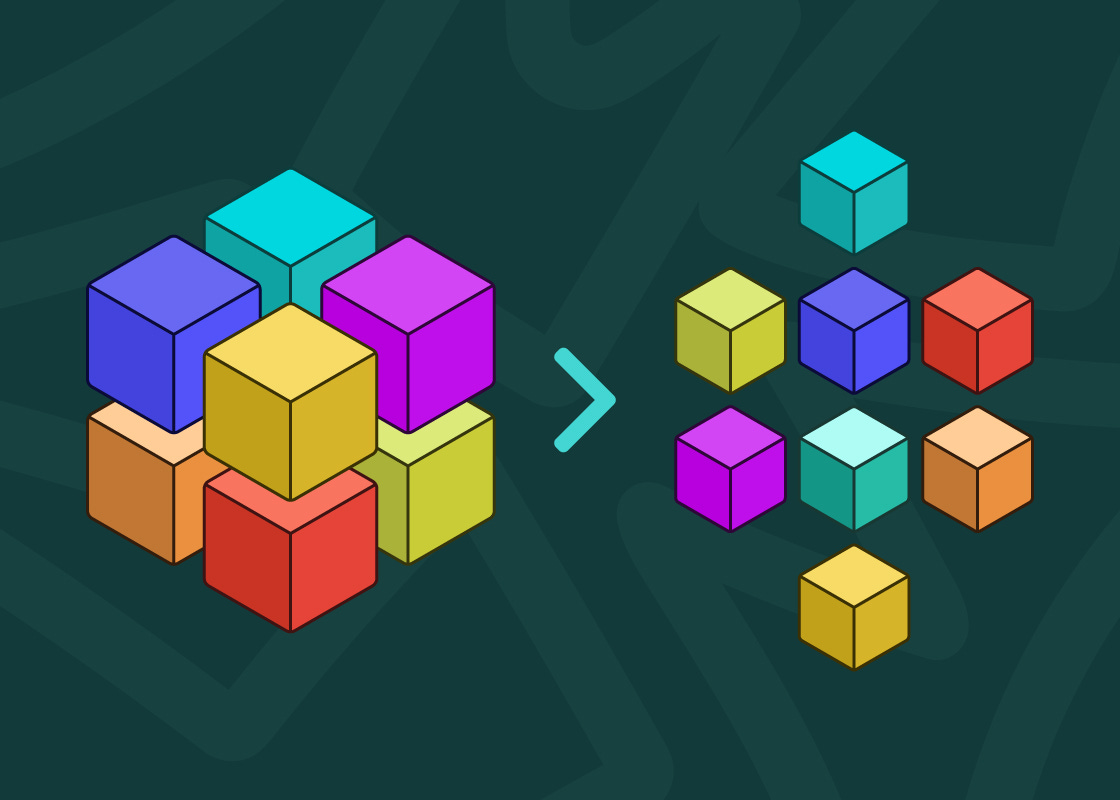
Imagine a single codebase running your entire application – a monolith where a tiny change means redeploying everything.
It worked fine for a while, but now it’s slowing you down.
Deployments take ages, a bug in one module can crash the whole system, and scaling means launching all components rather than just the one that needs it.
Sound familiar?
Microservices architecture promises a way out – breaking the monolith into smaller, independent services that can be developed, deployed, and scaled individually.
But how do you get there without breaking everything in the process?
In this guide, we’ll walk through how to plan a microservices migration step-by-step, so you reap the benefits of microservices without lighting your current system on fire.
Let’s get in!
Step 1: Decide If You Should Break the Monolith
Before jumping on the microservices bandwagon, take a step back.
Do you really need to break your monolith?
Microservices are trendy (and often awesome), but they’re not a silver bullet.
Not every monolithic application will benefit from being split up.
The first step is to evaluate if a microservices architecture will solve the problems you have.
Ask yourself some key questions:
Are you struggling with long development cycles or deployments?
Do certain parts of your app need to scale independently due to heavy load, while others don’t?
Is a single bug or crash taking down the whole system?
Are different teams tripping over each other in one codebase?
If you answered “yes” to issues like these, those are strong signs that breaking the monolith could help.
Monoliths often become bottlenecks when a project grows big and bulky.
Microservices can address performance issues, improve fault isolation, enable partial scaling of just the busy components, and let teams work more autonomously on separate services.
On the other hand, if your application is small, simple, or working just fine, a microservices migration might be overkill.
Not every monolith should be decomposed into microservices.
Keep microservices as a solution for specific pain points – otherwise, you may introduce complexity with no real benefit.
Step 2: Prepare and Plan Your Migration
So you’ve decided microservices might be worth it.
Great!
Now, planning is your new best friend.
A microservices migration isn’t an ad-hoc refactoring; it’s a strategic project that touches code, data, and people.
Before you write a single line of new service code, do your homework:
Align on Clear Goals: Pin down why you’re doing this. Clearly define the outcomes you expect (e.g., independent deploys for each module or reducing deployment time drastically). Make sure all stakeholders and team members understand and support these goals.
Do a Thorough System Audit: Study the current monolith’s architecture in detail. Identify modules, dependencies, and hidden couplings. Often, long-lived monoliths have spaghetti dependencies. This research will highlight which parts can be separated and which are intertwined.
Create a Migration Roadmap: Plan the journey in phases rather than a big bang. Outline what you’ll extract first, second, and so on. Prioritize based on business impact and difficulty. Also plan for contingencies – decide how you will handle critical issues or roll back if needed.
Allocate Time and Resources: Don’t treat microservice migration as a background task. Dedicate time in your schedule and involve the whole team if possible. Make sure expectations are realistic, as this is a significant effort.
By doing the prep work, you set a solid foundation.
Think of it like preparing for a big move from a house – you need to know what you’re taking, what needs boxing up separately, and the route you’ll drive.
Step 3: Define Clear Microservice Boundaries
One of the trickiest parts of breaking a monolith is deciding where to cut it.
A monolithic app might not have clean separations of functionality initially, so you have to define your future microservices boundaries thoughtfully.
This is where some domain-driven design thinking can help.
You’re looking for parts of the system that have a cohesive purpose and could operate independently with their own data.
For example, in an e-commerce application, you might have domains like User Account Management, Product Catalog, Order Processing, Payment, Shipping, etc.
Each of these could be candidates for its own microservice.
The goal is to avoid carving by technical layers and instead carve by functionality.
When picking the first service to extract, start small and simple if you can.
Identify a component that’s relatively loosely coupled to the rest of the system.
A good first microservice could be a peripheral function like a reporting module or notification sender.
By choosing a non-critical service to start, you create a safe sandbox to learn and make mistakes without risking core business operations.
Collaborate with both tech and business folks to define boundaries effectively.
Map out how data and requests flow through the system. This often reveals natural seams where you can cut the monolith apart with the least pain.
Any areas that are tightly coupled will need extra care.
Step 4: Set Up Infrastructure and Organize Teams
Microservices will fail spectacularly if you try to manage them with the same processes and setup as your old monolith.
Before you split anything, set the stage with the right infrastructure and team structure.
Tooling & Environment: At minimum, you’ll want automated CI/CD pipelines, containerization tools, orchestration, centralized logging, monitoring, and an API gateway. These allow you to build, test, and deploy each service independently and reliably.
Team Restructuring: Microservices thrive under cross-functional teams that own a service end-to-end. Ensure your organization is ready to support autonomous teams, because microservices imply a more decentralized way of working. Encourage a mindset of service ownership – “you build it, you run it.”
Step 5: Choose the Right Migration Strategy
You have a plan, you know your boundaries, and your tooling is ready – time to actually start migrating!
But how do you move functionality out of the monolith safely?
The answer: incrementally.
One proven approach is the Strangler Fig Pattern.
You gradually create new microservices around the edges of the monolith and route requests to them one piece at a time, eventually replacing the old monolith.
Another option for critical pieces is a parallel run, where the new service runs side by side with the monolith’s version until you’re confident in the results.
For embedded functionality, you can use Branch by Abstraction, where you abstract features behind an interface before migrating them.
Regardless of the pattern, always migrate in small steps.
Deploy one service, test it, validate it, then move on.
Use feature flags, gradual rollouts, and rollback strategies to keep risk low.
Step 6: Test Everything Thoroughly
When you start slicing up a mission-critical system, you can’t afford to wing it on testing.
Unit and Integration Tests: Cover both the new microservice and the remaining monolith.
Contract Tests: Formalize expectations between services to catch incompatibilities early.
Automated and Manual Testing: Test in staging environments, run performance checks, and use synthetic transactions.
Monitoring and Observability: Monitor closely before, during, and after migration. Gradual rollouts with strong monitoring ensure users aren’t affected by behind-the-scenes changes.
Step 7: Handle Data and Database Challenges
Handling the database is one of the hardest parts of breaking a monolith.
In many monolithic architectures, all components share one big database.
In microservices, the ideal end-state is each service having its own datastore.
To minimize risk, many teams start by keeping the monolithic database in place initially, then gradually migrating data to separate databases. This avoids immediate data splits, but you must clearly define ownership of tables to avoid conflicts.
Over time, you can migrate data into service-specific databases.
Expect to handle eventual consistency, since you lose neat cross-system ACID transactions.
Techniques like the saga pattern, event-driven data updates, or application-level referential integrity become essential.
The key is to plan your data strategy early to avoid future pain.
Final Thoughts
Moving from a monolith to microservices is a journey – often a long one – but with patience and planning, it’s absolutely achievable.
Remember that microservices are not a cure-all for every problem.
However, if you’ve identified genuine reasons to break up your monolith, the payoff can be huge: faster deployments, more scalable systems, and teams that can work in parallel without stepping on each other’s toes.
Take it one service at a time, celebrate small wins, and be prepared to adjust course as you learn.
By using a gradual, well-tested approach, you can minimize risk and avoid big bang disasters in this migration.
FAQs
Q1: When should I break a monolith into microservices?
Break a monolith only when it solves specific problems such as long development cycles, scaling bottlenecks, or high fragility. If your monolith still works well and is manageable, you may not gain much from microservices and could add unnecessary complexity.
Q2: What is the strangler fig pattern in microservices migration?
The strangler fig pattern allows you to gradually replace a monolith with microservices. You create a new service for a specific function and route relevant calls to it, while the rest still goes to the monolith. Over time, more services take over, and the monolith shrinks until it’s completely replaced.
Q3: How can I minimize risk during a monolith to microservices migration?
Minimize risk by migrating in small steps, using incremental rollouts, thorough testing, and parallel runs for critical features. Always have a rollback plan and closely monitor system performance during each stage of the migration.