
Why Your Load Balancer is the Bottleneck (and How to Fix It)
Is your Load Balancer crashing your app? Discover 5 advanced scaling strategies, from DNS Round Robin and Layer 4 vs. Layer 7 routing to Direct Server Return (DSR), to eliminate bottlenecks.

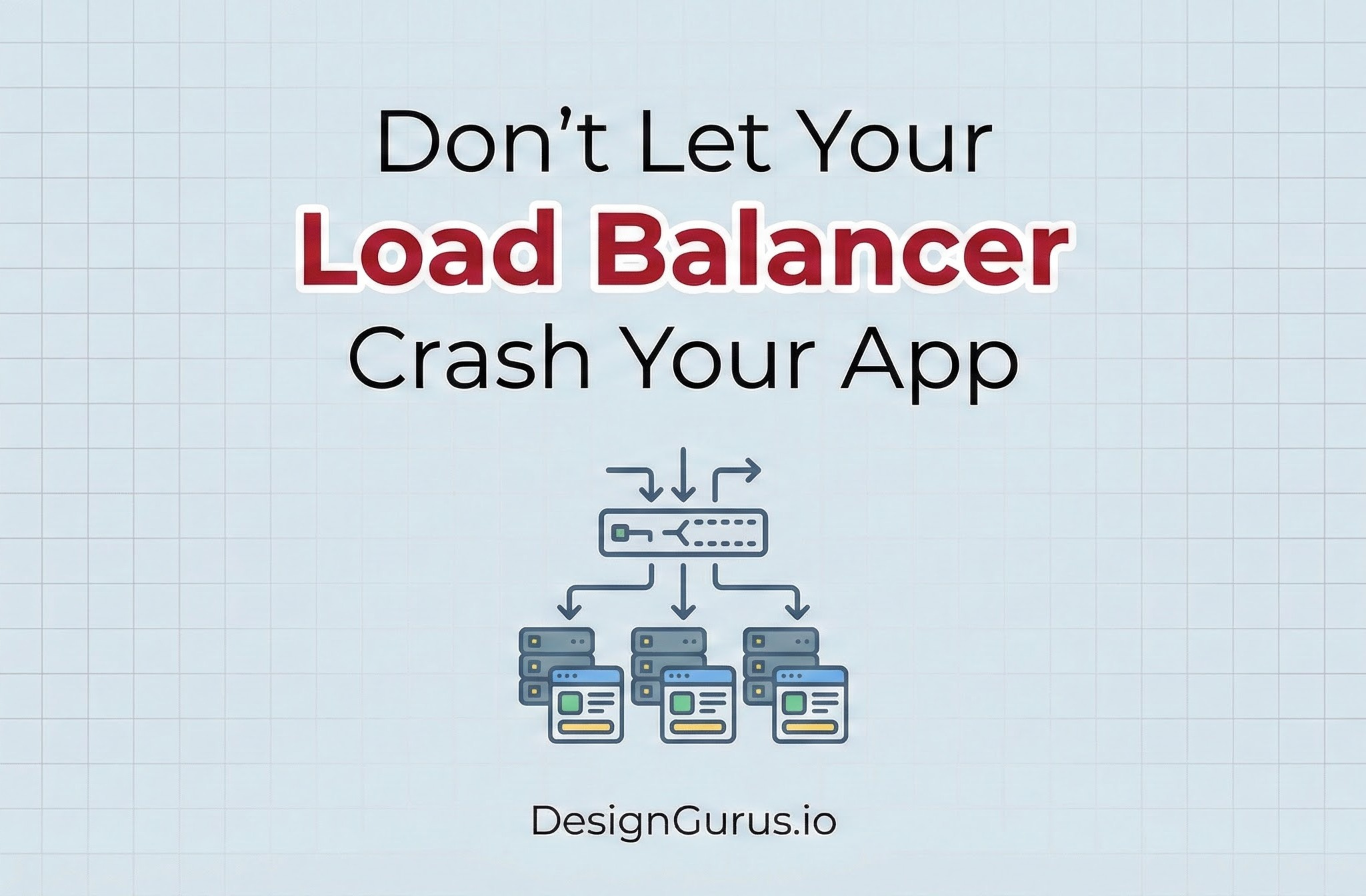
You spend months building an application.
You optimize the code. You set up a database capable of handling millions of records. You launch the product, and it goes viral.
Suddenly, you have more users than you ever dreamed of.
To handle this traffi,c you do the smart thing.
You add a Load Balancer. This is a server that sits in front of your application servers and distributes the user traffic evenly. It ensures no single server gets overwhelmed.
But then something strange happens.
Your application servers are running smoothly.
Your database is bored and waiting for queries. Yet users are complaining that the site is slow or unreachable.
You check your monitoring tools and realize the irony. The very tool you introduced to handle scale has become the problem. Your load balancer has become the bottleneck.
It separates the junior developers from the senior architects.
Most people know how to add a load balancer. Very few know what to do when the load balancer itself is the problem.
Today, we are going to explore why this happens and the specific strategies used by tech giants to fix it.
