
Write-Ahead Logs: The System Design Concept Behind Every Reliable Database
Learn how write-ahead logs protect databases from crashes and data loss. Covers sequential vs random writes, append-only logging, checkpointing, crash recovery, group commits, & log-based replication.

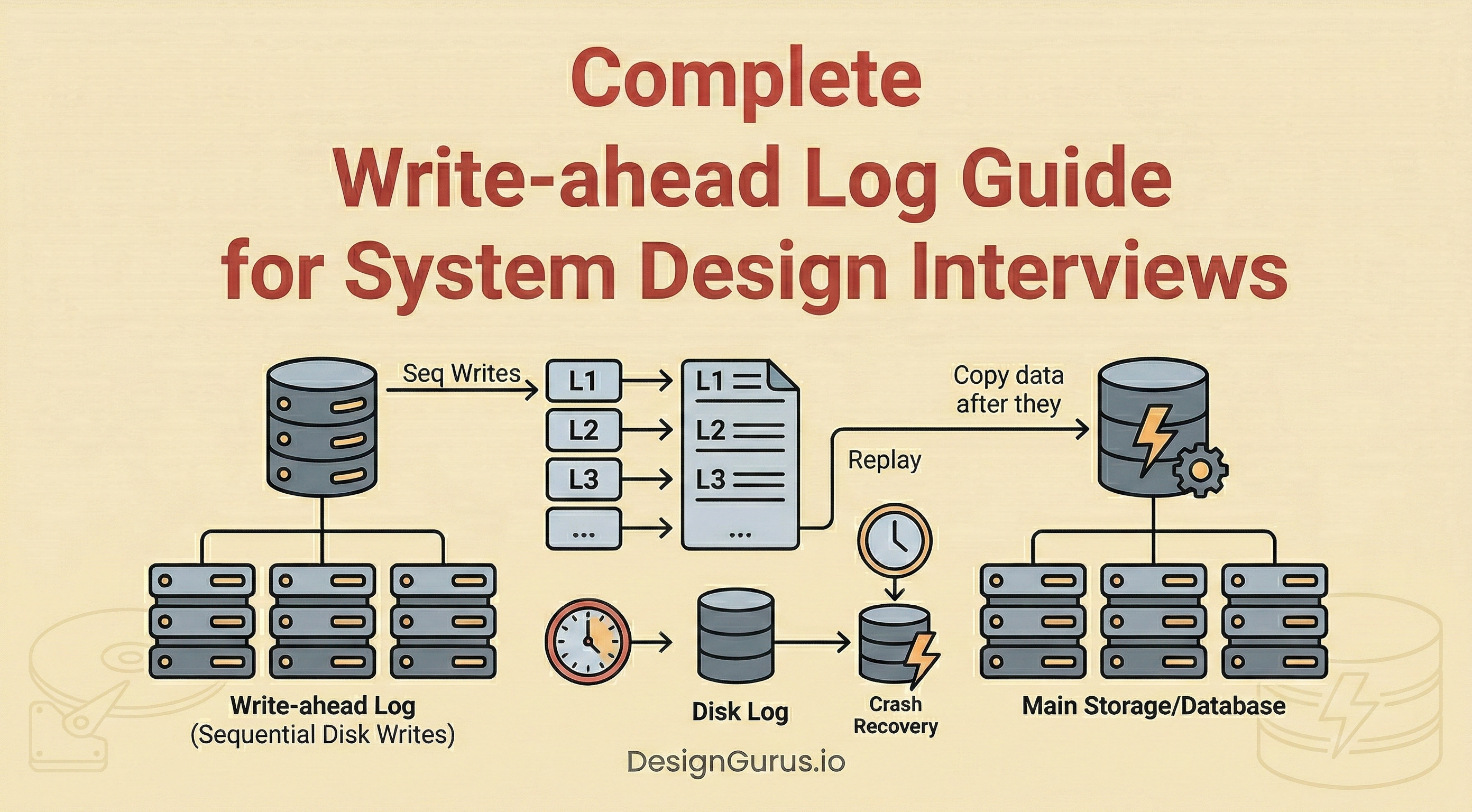
Hardware failures happen constantly in software engineering. Servers lose electrical power unexpectedly. Operating systems halt active computer processes without any warning.
When a system processes thousands of operations per second, a sudden loss of power creates a massive risk of permanent data corruption.
The main problem lies in how computers handle temporary and permanent data storage. System memory is incredibly fast but loses all held data when the machine powers down. Hard drives keep data permanently safe without power but operate very slowly.
Engineers must find a way to make databases both incredibly fast and perfectly safe against sudden power failures.
The write-ahead log provides the exact technical solution to this complex storage problem. It allows a database to record new operations quickly and securely on a permanent disk.
The system does this before making any heavy structural changes to the main database files.
The Core Problem With Data Storage
To truly understand this concept, we must first look at how databases manage data internally.
Modern computer servers use two completely different types of storage components.
The first component is the main system memory.
The second component is the permanent storage drive.
System memory is extremely fast and highly responsive. However, system memory is also entirely volatile.
Volatile means that the hardware requires a constant stream of electricity to hold information.
If the power cable is unplugged, every single piece of data inside the system memory disappears instantly.
Permanent storage drives operate as the exact opposite. They are non-volatile, meaning they keep data safe even when sitting entirely without power.
The major downside to permanent storage drives is their speed. Reading and writing data to a permanent drive is significantly slower than using system memory.
The Speed Versus Safety Conflict
Databases are designed to be extremely fast.
To achieve high speeds, a database will pull frequently accessed information from the slow permanent drive into the fast system memory.
When an update command arrives, the database modifies the information directly inside the fast system memory.
At this exact moment, the updated data only exists in the volatile memory layer. The permanent drive still holds the older, outdated version of the data.
If the database sends a success message to the client right now, it creates a massive technical risk. A sudden power loss would destroy the updated data forever.
The Problem With Direct Disk Writes
To prevent data loss, the database could try writing the update directly to the permanent drive immediately. However, databases store information using complex structural trees.
Updating a single piece of data requires the drive to find a specific location, update it, and potentially reorganize the tree.
This specific process is known as a random write operation.
The storage hardware must jump around to different random locations to complete the save. Random write operations are the slowest possible actions a storage drive can perform.
If a database waits for a random write to finish for every single request, the entire application will freeze completely.
What is a Write-ahead Log?
A write-ahead log perfectly solves the conflict between memory speed and disk slowness. It is a highly specialized, continuous text file stored directly on the permanent storage drive.
The database uses this file to record a strict history of every action it plans to take.
The fundamental rule of this mechanism is incredibly strict.
The database must successfully write a descriptive record of the update to the log file before it actually modifies the main database tables. The system essentially writes down its intended action ahead of time.
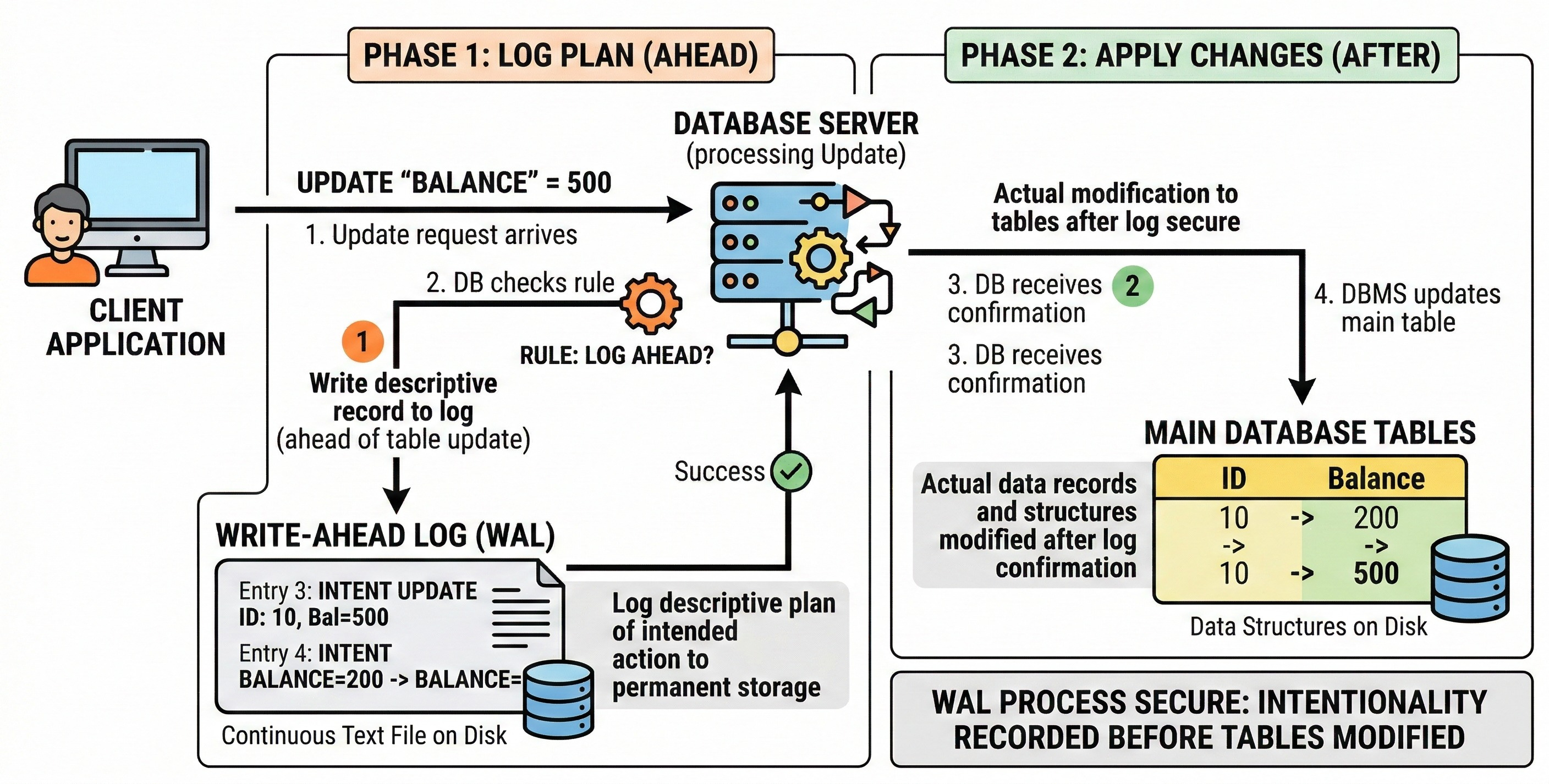
This simple rule guarantees that a permanent trail exists for every single operation.
The Append-Only Mechanism
This log file operates using a strict append-only structure.
Append-only means the database is only allowed to add new text to the very end of the file.