
System Design Made Simple: 5 Essential Books and Resources for Beginners
A beginner-friendly guide to the top system design books and online resources. Learn the fundamentals, build confidence, and prepare smarter for system design interviews with these must-read picks.

This blog highlights five of the best books and online courses to help you master system design. Whether you’re a beginner or prepping for a system design interview, these resources (from classic textbooks to interactive courses) will teach you how to design scalable, distributed systems and ace those tough architecture questions.

Most developers can code their way through algorithm challenges, but when it comes to system design interviews, things get tricky.
Candidates often struggle with vague questions (“Design YouTube”), balancing trade-offs under pressure, or not knowing where to even begin.
Do you talk about databases first?
Load balancers?
APIs?
The lack of a clear framework leaves many engineers overwhelmed and second-guessing themselves.
The reality is that preparing for system design interviews requires more than raw coding skills.
You need to build a mental toolkit: understanding scalability, databases, caching, and how to explain design decisions confidently.
And if you don’t know where to start, then some tried-and-tested books and courses can guide you, showing not just what to learn but how to approach design problems.
In this blog, we’ll walk through the top 5 system design books and resources that will help you prepare smarter.
These picks blend deep theory with hands-on practice, giving you everything you need to go from confused to confident in your next big interview.
1. Designing Data-Intensive Applications (Martin Kleppmann) – Book
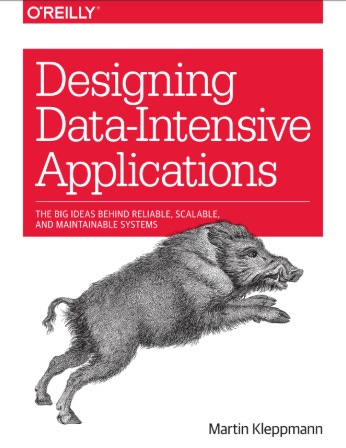
If you want to get to the heart of how large-scale systems work, this book is a gem.
Often nicknamed “DDIA,” it’s considered a must-read for backend engineers serious about architecture.
Kleppmann’s writing breaks down the deep theory behind databases, distributed systems, and scalability without assuming too much background.
The book covers fundamental topics like data replication, consistency models, and distributed transactions – all those big concepts that come up in real systems.
What makes it stand out is the use of real-world examples to illustrate design trade-offs.
Readers love how it bridges theory and practice.
In short, Designing Data-Intensive Applications doesn’t just prepare you for interviews; it prepares you for a career in building reliable, scalable systems.
It’s dense at times, but incredibly rewarding – think of it as leveling up your architecture mindset.
2. Grokking the System Design Interview – Online Course
For those who prefer interactive learning, Grokking the System Design Interview by Design Gurus is a wildly popular online course – and for good reason.
Created by ex-FAANG engineers, it distills years of experience into a proven step-by-step framework for system design.
It’s often called the “gold standard” of system design courses, boasting thousands of positive reviews and learners worldwide.
The content is beginner-friendly yet comprehensive: from caching and load balancing to database sharding and messaging queues, every concept is explained with clarity and practical examples.
One of the biggest benefits of this course is its organized approach – it teaches you how to tackle any design question systematically, starting from requirements gathering all the way to final architecture.
Learners also appreciate the practical case studies where you design systems like Instagram and Uber step-by-step.
With its reputation and structured lessons, this course has become a top resource for anyone aiming to ace a system design interview.
3. System Design Interview – An Insider’s Guide (Alex Xu) – Book
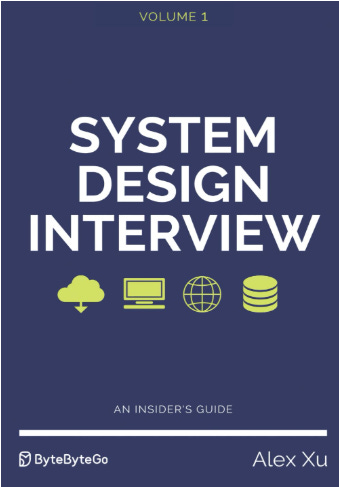
When it comes to interview-specific prep, Alex Xu’s book has become almost legendary.
This is the book you grab when you have a system design round coming up at FAANG or any big tech company.
Why?
It’s tailored specifically for cracking system design interviews.
The guide walks you through a structured approach: how to clarify requirements, how to outline a high-level design, and how to discuss trade-offs confidently.
What stands out are the real-life case studies inside – you’ll find step-by-step designs for systems like a URL shortener, Instagram, and Dropbox.
Each chapter is basically a mock interview question, with diagrams and solutions, so you learn by example.
The book emphasizes clear communication and covers what interviewers actually expect in a good answer. It’s fast-paced and very focused on the “interview mindset,” teaching you how to think out loud and tackle open-ended problems under pressure.
If you’re short on time and need a single resource to crack the system design interview, this insider’s guide is a top pick.
4. Grokking System Design Fundamentals – Online Course
New to system design?
Not sure where to start?
Grokking System Design Fundamentals by Design Gurus is the perfect entry-level course to build your foundation.
Offered by the same team, this course is designed for software engineers and students who have never done system design before.
It covers the core building blocks of scalable systems in a very approachable way.
Think of topics like the client–server model, how a database works, what caching is, and how load balancers distribute traffic, explained with simple analogies and minimal jargon.
Each module focuses on one concept, ensuring you grasp the fundamentals before moving on to more complex designs.
Many learners take this course before tackling the advanced Grokking interview course.
By the end, you’ll understand the key terminology and components (like DNS, CDN, and databases) and how they fit together in a system architecture.
With its structured lessons and strong ratings, this course is a great confidence booster for beginners.
5. The System Design Primer (GitHub Open-Source Repository) – Resource
Not a fan of spending money?
Or maybe you prefer a community-driven resource?
Look no further than The System Design Primer on GitHub.
This is a completely free, open-source repository that has become one of the most referenced system design resources online.
With a massive following, it covers a broad range of topics needed for designing large-scale systems.
The Primer breaks down complex topics in plain English, from horizontal scaling and database replication to caching strategies.
One of its strengths is a structured interview prep roadmap – it literally outlines how to prepare for system design rounds at major tech companies.
You also get plenty of practice questions and detailed solutions, complete with architecture diagrams, for common scenarios.
Because it’s open-source, it’s regularly updated by contributors, and you’ll find links to other curated resources.
Whether you’re brand new to distributed systems or brushing up before an interview, the System Design Primer is a must-have resource that costs nothing but your time.
Conclusion
System design is a big, broad field, but these resources make it accessible and even fun.
With these five resources – two game-changing books, two in-depth courses, and one awesome open-source guide – you have a well-rounded toolkit for mastering system design.
They complement each other too: for instance, read a chapter from a book to learn theory, then practice with an online course or GitHub example to apply it.
Start with the one that fits your learning style and experience level.
Before you know it, you’ll be conversing about scalability, reliability, and architecture trade-offs like it’s second nature.
Good luck, and happy designing!
For detailed system design study, explore Grokking the System Design Interview by DesignGurus.io.
FAQs (Frequently Asked Questions)
Q1: How can a beginner start learning system design?
Beginners should start with the fundamentals. Begin by learning core concepts like client-server architecture, scalability, load balancing, caching, and databases. A great approach is to use beginner-friendly resources like Grokking System Design Fundamentals. You can also explore the free System Design Primer on GitHub for a self-paced introduction. These resources will build your foundation before you tackle more advanced design problems.
Q2: Are online system design courses like “Grokking the System Design Interview” worth it?
Yes. If you prefer structured, guided learning, courses like Grokking the System Design Interview are highly valuable. They offer a step-by-step approach to solving design problems and include real-world case studies and diagrams. While books give you depth, an interactive course can provide clarity, mentorship, and up-to-date best practices, which many find well worth the investment.
This article seriosly comes at the perfect time. What if you’re asked to design something like a secure, distributed education platfom, where the user stories and ethical considerations are as challenging as the technical scalability problems?