16 Must Know API Concepts for Software Engineers
Understand 16 essential API fundamentals with clear explanations and quick examples to help you build better backend systems and ace interviews.

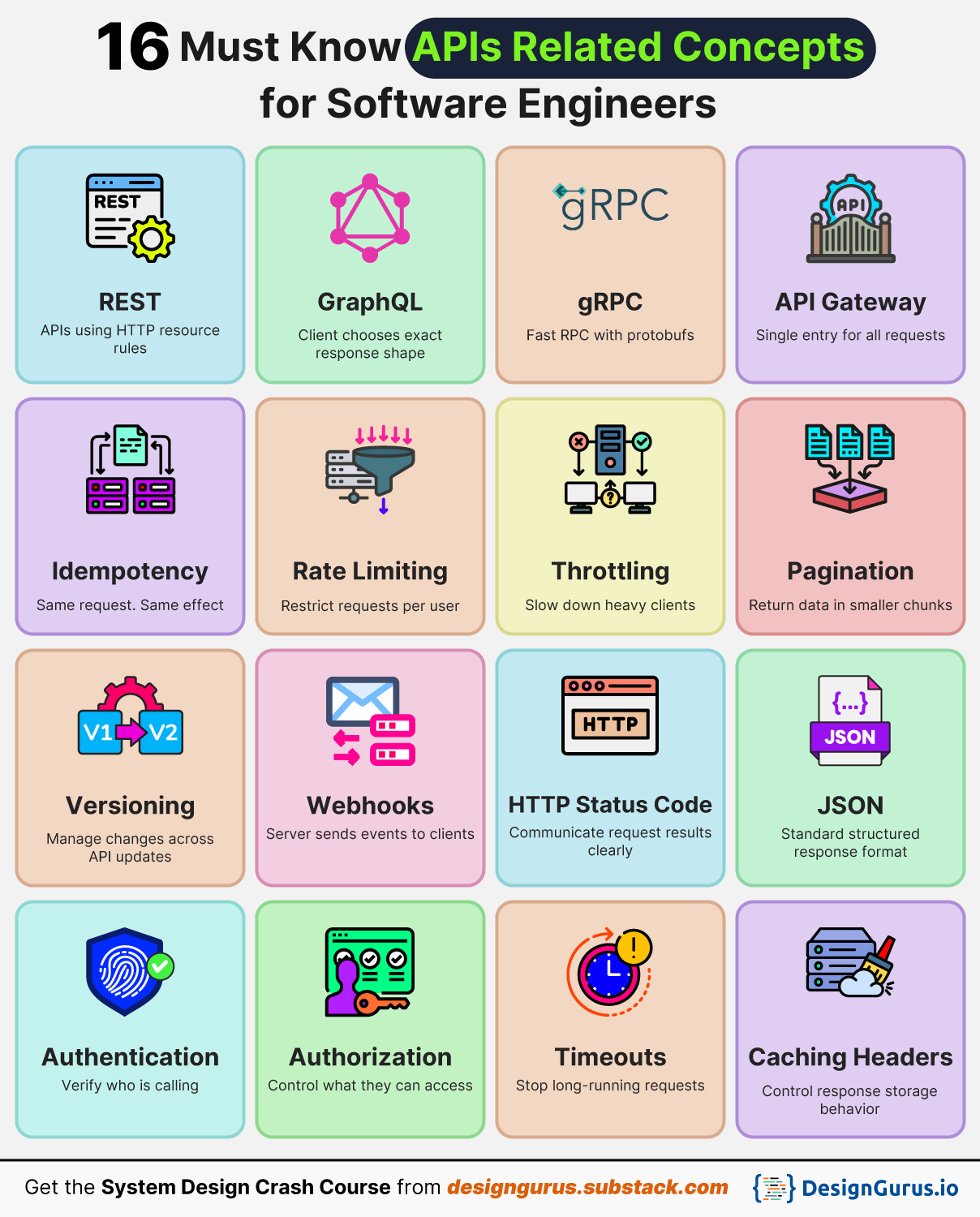
APIs look complicated when you see big systems, but the core ideas behind them are surprisingly simple.
Once you understand these sixteen concepts, most API designs start to make sense. These ideas also come up repeatedly in backend and system design interviews, so learning them will help you explain answers confidently.
Let’s quickly understand each of these concepts.
1. REST
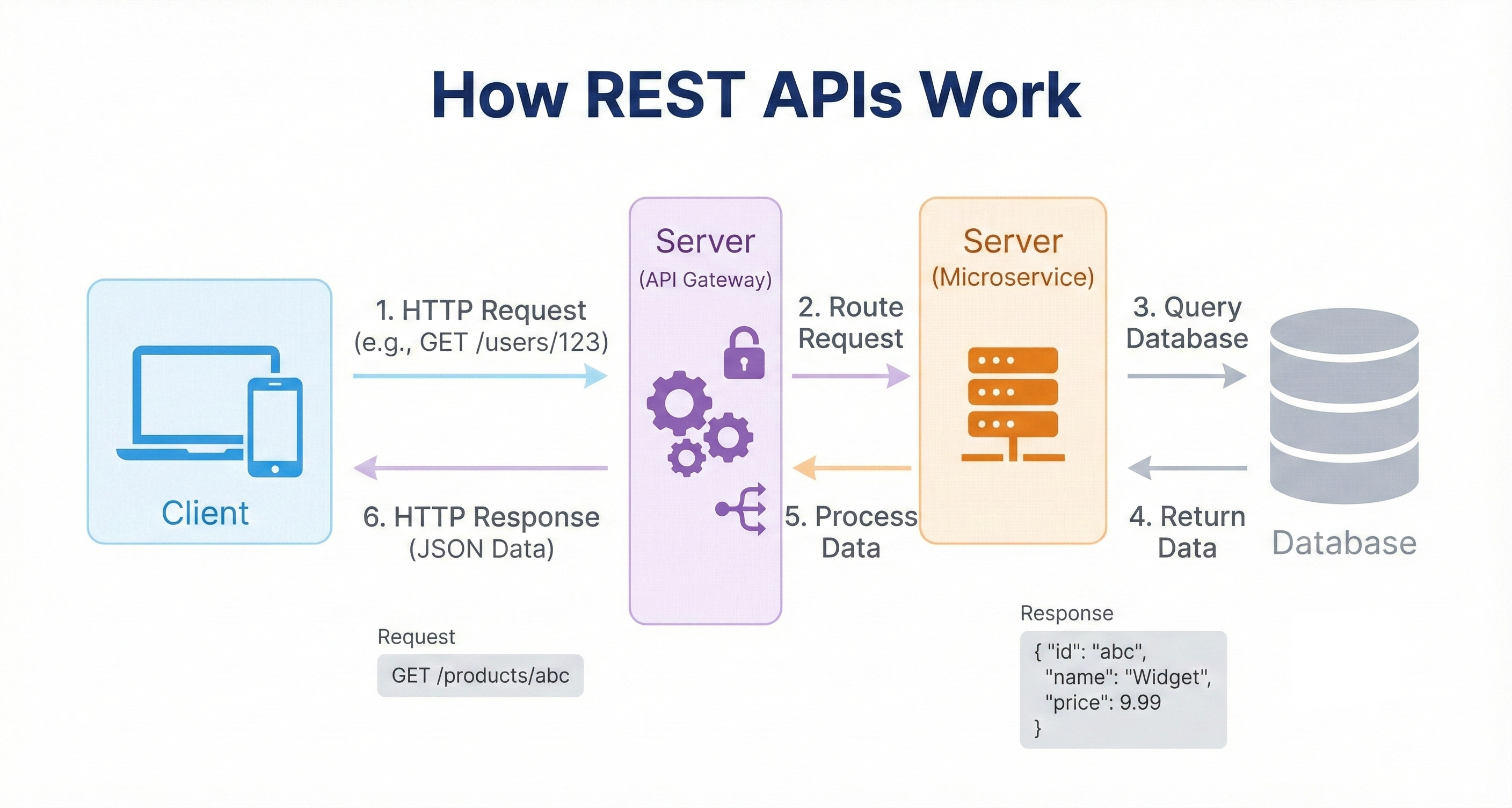
A REST API lets a client talk to a server using simple HTTP actions like GET, POST, PUT, and DELETE.
Each URL represents a resource, such as a user or a product.
The server responds with data formats like JSON.
REST is predictable because each verb has a clear meaning.
GET fetches data
POST creates something new
PUT updates existing data
DELETE removes it
This simplicity makes REST easy to learn. It also works well across browsers, mobile apps, and backend systems.
REST is one of the most commonly used API styles today.
Example
Imagine an online bookstore.
When you call GET /books, you get a list of books.
When you call POST /books, you add a new book.
When you call DELETE /books/10, you remove book number 10.
REST feels natural because every URL represents a resource and every verb represents an action.
2. GraphQL
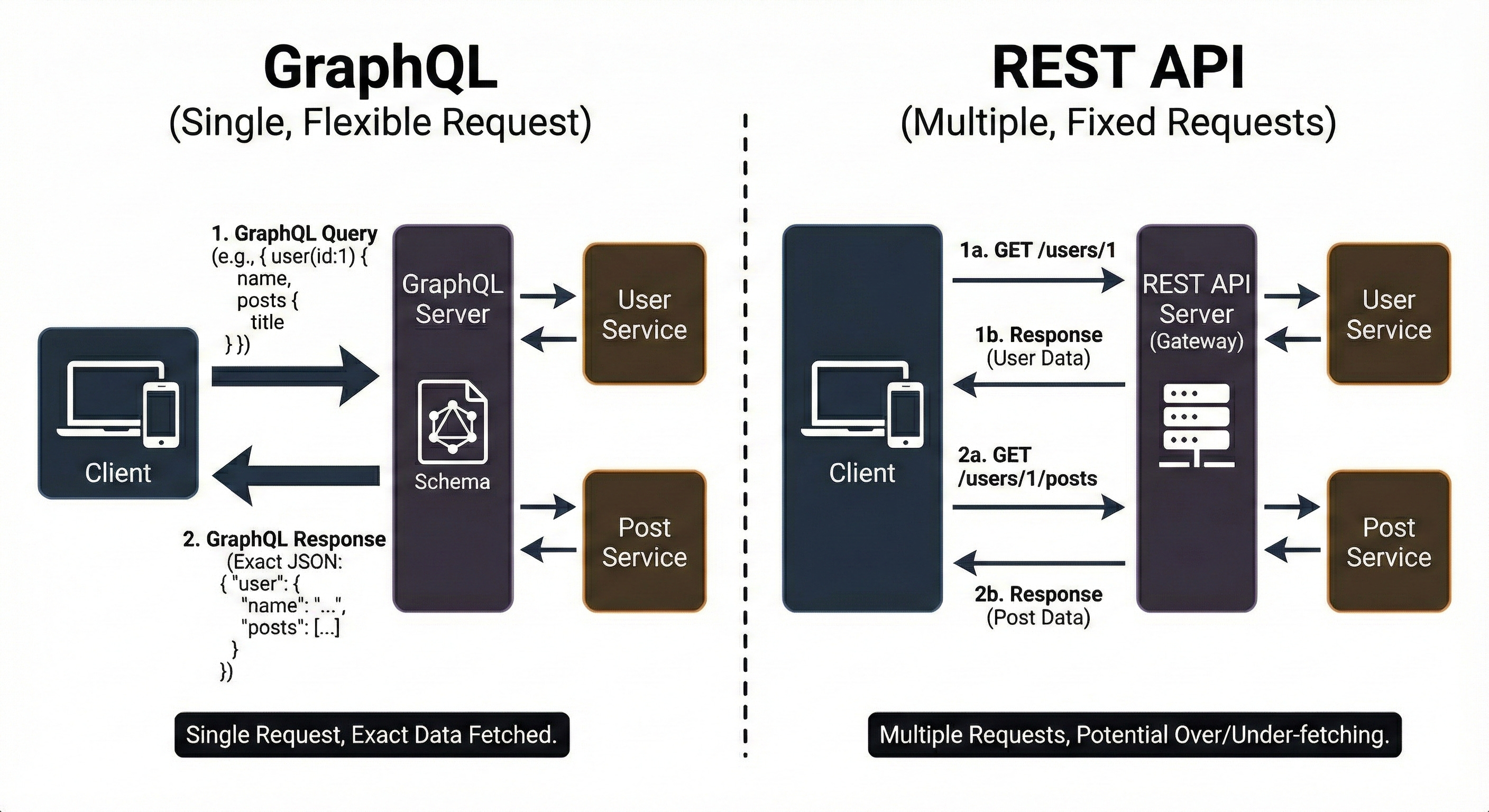
GraphQL lets the client choose exactly what data it wants.
The client sends a query that describes the fields it wants, and the server returns only those fields.
It replaces multiple REST calls with a single flexible query.
This cuts extra data transfer and gives the client more control over the response shape.
GraphQL uses a single endpoint instead of many URLs. It also supports queries, mutations, and subscriptions.
Developers like it because it reduces round trips to the server. GraphQL is perfect for apps with complex or flexible data needs.
Example
A mobile app wants to show only a user’s name and profile picture, not their full profile.
With GraphQL, the client asks the server for exactly those two fields in one request.
This avoids extra data and makes responses smaller and faster.
It is perfect for apps where different screens need different shapes of data.
This reduces data transfer and makes mobile apps faster.
3. gRPC
gRPC is a high speed communication method used mainly between backend services.
It uses binary data called protobufs, which are smaller and faster than JSON. These messages are faster to send and easier to parse.
gRPC supports real-time streaming between clients and servers.
It is commonly used in microservice systems where performance matters.
The strong type checks make communication safer.
gRPC is not ideal for browsers, but great for service to service communication.
Example
Two microservices in a large system need to talk thousands of times per second.
Instead of using slow text-based JSON, they use tiny binary protobuf messages.
This makes communication extremely fast and efficient.
gRPC is ideal for service-to-service communication where speed matters a lot.
A recommendation service calling a ranking service can use gRPC to send thousands of requests per second with very low delay.
It sends data over HTTP/2, which helps with speed and streaming.
This makes it a good choice for service-to-service calls inside large systems.
4. API Gateway
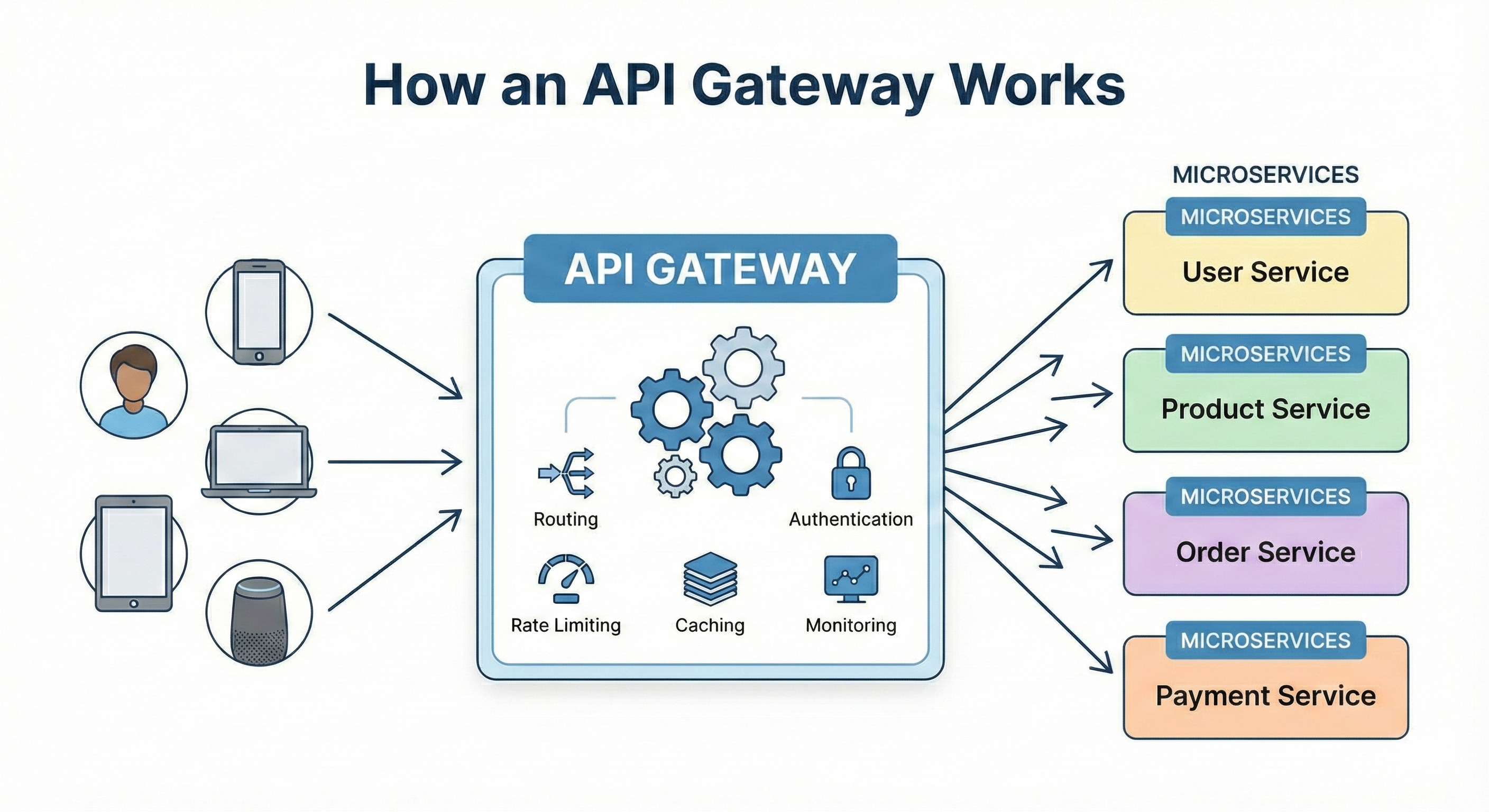
An API gateway is the single entry point for all client requests.
Instead of clients talking to many services, they talk only to the gateway.
It handles:
• routing
• authentication
• rate limits
• logging
• request shaping
This keeps microservices simple because they do not deal with external traffic.
Gateways also allow centralized security.
If you update one rule, it instantly applies to every request. They help teams scale and manage large systems.